
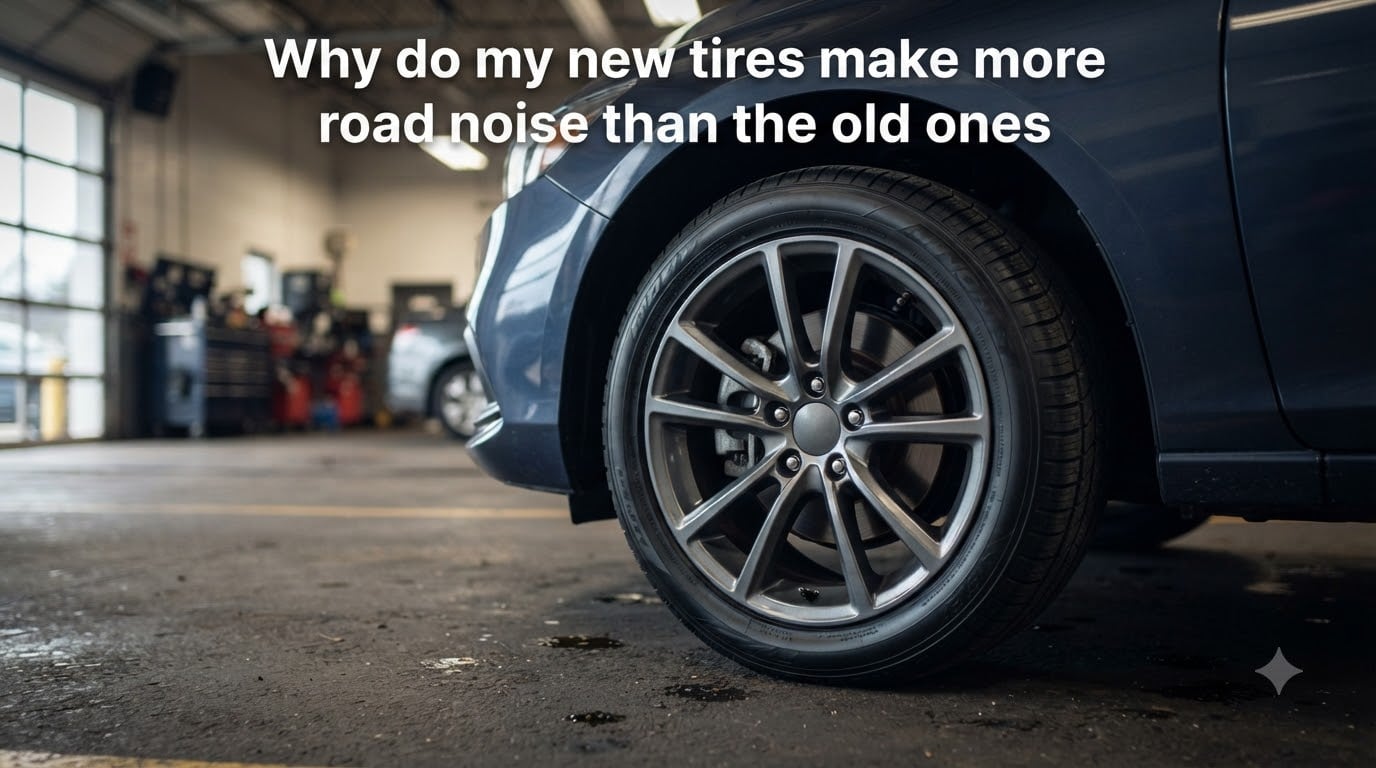
Yes, it is completely normal for new tires to make more road noise than old ones. Fresh tires have deeper tread grooves, stiffer rubber compounds, and a thin mold release film on the surface that all contribute to louder sound at first. Most drivers notice a meaningful reduction in noise after 300 to 500 miles of break-in driving.
If you have just installed new tires and the cabin suddenly sounds louder, you are not imagining things. I have talked to dozens of drivers who expected a quieter ride after spending money on fresh rubber and got the opposite. The reason comes down to physics: deeper tread blocks pump more air, and that air has to go somewhere.
In this guide, I will walk you through the main reasons new tires sound louder, the typical break-in timeline, how to tell normal noise from a real problem, and what you can do to make the cabin quieter. By the end, you will know exactly when to relax and when to head back to your shop.
Table of Contents
Why Do New Tires Make More Road Noise Than Old Ones
New tires are louder than worn ones for three combined reasons: deeper tread patterns, stiffer rubber compounds, and a thin mold release coating left over from manufacturing. Each factor creates more vibration and air movement at the contact patch, which translates directly into cabin noise.
Deeper Tread Patterns Create More Air Movement
The single biggest reason for the volume jump is tread depth. A brand-new tire may have 10/32 inch or more of tread, while a tire you are replacing might be down to 3/32 inch or 4/32 inch. Those extra grooves act like little pump chambers.
As the tire rolls, each groove compresses against the road and then snaps back open, pushing air out at the leading and trailing edges. More grooves means more compressed air, which means more sound. As the tread wears down over thousands of miles, the grooves get shallower, the air movement decreases, and the tire becomes quieter.
This is also why your old tires seemed quiet near the end of their life. They were worn smooth. A bald tire is technically the quietest tire you can run, but it is also the most dangerous in wet conditions.
Different Tire Design and Rubber Compounds
If you upgraded to a different tire model, the design itself is part of the noise change. Tread block size, siping pattern, and shoulder shape all influence how the tire interacts with the road surface. Aggressive shoulder blocks grip better in corners but generate more noise at highway speed.
Rubber compound matters too. Modern tires often use silica-rich compounds for fuel economy and wet traction. These compounds can sound harsher than older carbon-black-heavy formulations, especially when cold. Performance tires with stickier compounds are noticeably louder than touring tires with the same size and speed rating.
Mold Release Compound on Brand-New Tires
This factor gets overlooked in most articles, but it matters. Tire manufacturers spray a mold release agent into the curing mold before pressing the tire. A thin film of this compound remains on the tread surface when the tire ships from the factory.
That slick coating changes how the rubber grips the road for the first few hundred miles. Many drivers describe the break-in period as the tires feeling glassy or squeaky at first, then settling down as the release compound wears off. Forum users on Reddit and Tire Rack often mention the noise dropping noticeably somewhere between 200 and 400 miles.
How Long Does the Tire Break-In Period Last
Most tire manufacturers specify a break-in period of 300 to 500 miles for new tires. During this window, you can expect tire noise to gradually decrease as the mold release compound wears off, the tread surface lightly scuffs in, and the tread blocks settle into their final shape.
Here is what I typically tell drivers who ask about timing:
- First 100 miles: Noise is at its peak. The tires may feel slightly glassy in cold or wet conditions. Avoid hard cornering and aggressive braking if you can.
- 100 to 300 miles: You should notice the cabin drone softening, especially at steady highway speeds. The release film is mostly gone.
- 300 to 500 miles: Most of the break-in is complete. Tread blocks have seated and the rubber has reached its normal operating temperature range.
- Beyond 500 miles: If noise is still increasing rather than decreasing, something else is going on and you should investigate.
Note that cold weather stretches this timeline. Tires take longer to warm up and the rubber stays stiffer, so winter installations often take longer to quiet down than summer ones.
Tire Type and Noise Level Comparison
Not all tires are created equal when it comes to noise. The category you chose has a major impact on how loud your new tires will be, even before the break-in period starts.
Touring and Grand Touring Tires: The Quietest Category
Touring tires are designed specifically for comfort and low noise. They use smaller, more uniform tread blocks, fewer aggressive sipes, and softer shoulder designs. Highway tires in this category often register in the lower decibel range on the EU tire noise label.
If quietness is your top priority, this is where to look. The tradeoff is usually less aggressive wet traction and shorter tread life compared to performance categories.
All-Season Tires: Moderate Noise, Balanced Performance
All-season tires sit in the middle of the noise spectrum. They handle light snow and rain reasonably well, but the additional siping and tread complexity generates a moderate hum at highway speed. Most drivers find this acceptable for daily driving.
All-Terrain Tires: Noticeable Highway Hum
All-terrain tires have larger tread blocks, more open voids, and stiffer sidewalls for off-road durability. The tradeoff is significant highway noise, especially between 45 and 65 mph. Many truck and SUV owners report a clear drone that old highway tires did not produce.
Mud-Terrain and Aggressive Off-Road Tires: The Loudest Category
Mud-terrain tires are the loudest common category. The huge lugged tread blocks are designed to bite into mud and loose dirt, but on pavement they create substantial air-pumping noise. If you switched from a quiet highway tire to mud-terrains, expect the cabin to be dramatically louder at speed.
Performance Tires: Grip-Focused Compounds
Performance tires with stickier rubber compounds for dry grip often run louder than touring tires of the same size. The softer compound grips pavement better but transmits more vibration into the cabin.
What Different Tire Noises Mean
Not all tire noise is the same. The specific sound you hear can tell you a lot about whether it is normal break-in or a real problem. Here is a quick diagnosis guide.
Roaring Noise That Changes With Speed
A low, even roar that rises and falls with your speed is usually tread pattern noise. This is the normal hum new tires make. It is steady, it does not pulse, and it gets louder as you accelerate.
Humming Noise at Highway Speed
A steady hum that locks in around 50 to 70 mph often points to alignment, tire pressure, or uneven wear. New tires should not hum loudly if they are properly installed. If you hear humming after a fresh install, ask your shop to verify alignment and balance.
Thumping or Wobbling Noise
A rhythmic thump or a side-to-side wobble is never normal. It usually indicates an improperly seated tire bead, a balancing issue, or in rare cases a separated belt. Pull over and inspect the tire visually as soon as it is safe. Thumping that grows worse with speed means stop driving.
Whistling Noise Above 40 mph
A high-pitched whistle is uncommon but does happen with certain tire models, especially all-weather and winter tires with aggressive siping. Owners of Goodyear Assurance WeatherReady 2 and similar models have reported this. If the whistle is consistent and tied to speed, it is a tire design quirk and not a safety issue, but it can be annoying.
Helicopter or Flapping Noise
A helicopter-style whirring or flapping usually means a debris chunk stuck in the tread, a separated belt, or an object wedged between the tire and wheel. Inspect the tread visually before driving further.
When New Tire Noise Signals a Real Problem
Most new tire noise is harmless. But a few warning signs should send you back to your shop right away.
Noise That Gets Worse After 500 Miles
Normal break-in noise should plateau or decrease as you put miles on the tires. If the cabin is getting louder after the 500-mile mark, something is wrong. Possible causes include improper balancing, alignment drift, or a tire defect.
Vibration or Pulling to One Side
Vibration through the steering wheel or a pull to one side after a new installation almost always points to balance or alignment. New tires should ride smoother than old ones. If yours do not, have the installation checked.
Thumping or Wobbling at Any Speed
Thumping and wobbling are never part of normal break-in. These sounds indicate a tire that is not seated properly on the wheel, a balance weight that has come loose, or a tire with an internal defect. Do not continue driving at high speed until the issue is resolved.
New Tires Exposing Hidden Bearing Issues
This is one most drivers never think about. Worn tires are quieter because the rubber absorbs vibration. New tires transmit more road feel into the chassis, which can reveal a wheel bearing or suspension issue that the old, cushioned tires were hiding.
If you hear a grinding or roaring noise that does not change with speed, the cause may be a worn wheel bearing rather than the tires. Mechanic Stack Exchange contributors and Reddit users in r/askmechanics frequently confirm this pattern.
How to Reduce Road Noise From New Tires
If your new tires are louder than you would like, here are the practical steps I recommend in order of cost and effort.
- Check tire pressure against the vehicle placard on your door jamb. Overinflation by even a few PSI increases noise significantly.
- Rotate the tires front to back. If the noise moves with the tires, the issue is the tires. If it stays, the issue is the bearings or alignment.
- Verify wheel alignment and balance. Installation errors are common, and a fresh alignment costs little compared to a second shop visit.
- Drive at varying speeds to identify the trigger range. If noise peaks at 55 mph but quiets at 40 and 70, it is a resonance issue tied to tread pattern.
- Wait out the 300 to 500 mile break-in period. Most noise complaints resolve on their own within this window.
- Consider quieter tire models for your next replacement. Touring tires with smaller tread blocks and foam liners are noticeably quieter than all-terrain or performance alternatives.
Tire Pressure and Noise Levels
Tire pressure has a more direct effect on noise than most drivers realize. Overinflated tires produce a stiffer contact patch that transmits more road texture into the cabin. Underinflated tires flex more than designed, creating a low rumble from the sidewall flex.
Always inflate to the pressure listed on your vehicle door placard, not the number molded on the tire sidewall. The sidewall number is the maximum, not the recommended setting. Check pressure when tires are cold, before driving more than a mile, for an accurate reading.
A change of just 3 PSI in either direction can be audible inside the cabin, especially at highway speed. If your new tires sound loud, check pressure first before assuming it is a tire defect.
Frequently Asked Questions
Is it normal for new tires to make noise on the road?
Yes, it is completely normal for new tires to make more road noise than worn ones. Deeper tread grooves pump more air, the rubber compound is stiffer, and a thin mold release film remains on the surface for the first few hundred miles. Most tires quiet down noticeably between 300 and 500 miles of driving.
How do you reduce road noise from tires?
Start by checking tire pressure against your vehicle door placard, since overinflation by even a few PSI increases cabin noise. Verify wheel alignment and balance, rotate tires front to back to confirm the noise follows the tires, and wait out the 300 to 500 mile break-in period. If noise continues past 500 miles, return to your shop for inspection.
Why do my tires sound like they are roaring?
A steady roar that rises and falls with your speed is usually tread pattern noise from deeper grooves pumping air. This is normal for new tires and usually fades during break-in. If the roar is loudest at one steady speed and does not change, suspect alignment, balance, or a worn wheel bearing instead.
Why is my car so loud after getting new tires?
Your car sounds louder because new tires have deeper tread, stiffer compounds, and a slick mold release film that all create more air movement and vibration. Switching to a different tire category, such as moving from highway tires to all-terrain, also increases noise noticeably. Most of this resolves itself within the 300 to 500 mile break-in window.
Do tires get louder as they get older?
Generally no. Tires usually become quieter as they wear down because the tread grooves get shallower and pump less air. The exception is uneven wear patterns like cupping or feathering, which develop over time and can create rhythmic thumping or humming that increases with age.
What is the quietest tire for road noise?
Touring and grand touring tires are the quietest category, using smaller uniform tread blocks and softer shoulders to minimize air-pumping noise. Look for models with foam liners inside the tread, such as Continental ContiSilent technology, which can reduce cabin noise by several decibels compared to standard tires.
The Bottom Line on Why New Tires Make More Road Noise
New tires making more road noise than the old ones is completely normal and expected. The deeper tread, stiffer compound, and factory mold release all contribute to extra sound for the first 300 to 500 miles. Most drivers notice a clear reduction in noise as the tires break in and the tread surface scuffs smooth.
If your noise plateaus or fades during the break-in window, you have nothing to worry about. If it gets worse, comes with vibration, or shows up as thumping or wobble, head back to your shop for a balance, alignment, and installation check. And remember that fresh tires can sometimes expose a wheel bearing or suspension issue that your worn tires were quietly absorbing, so a quick inspection is never wasted time.