
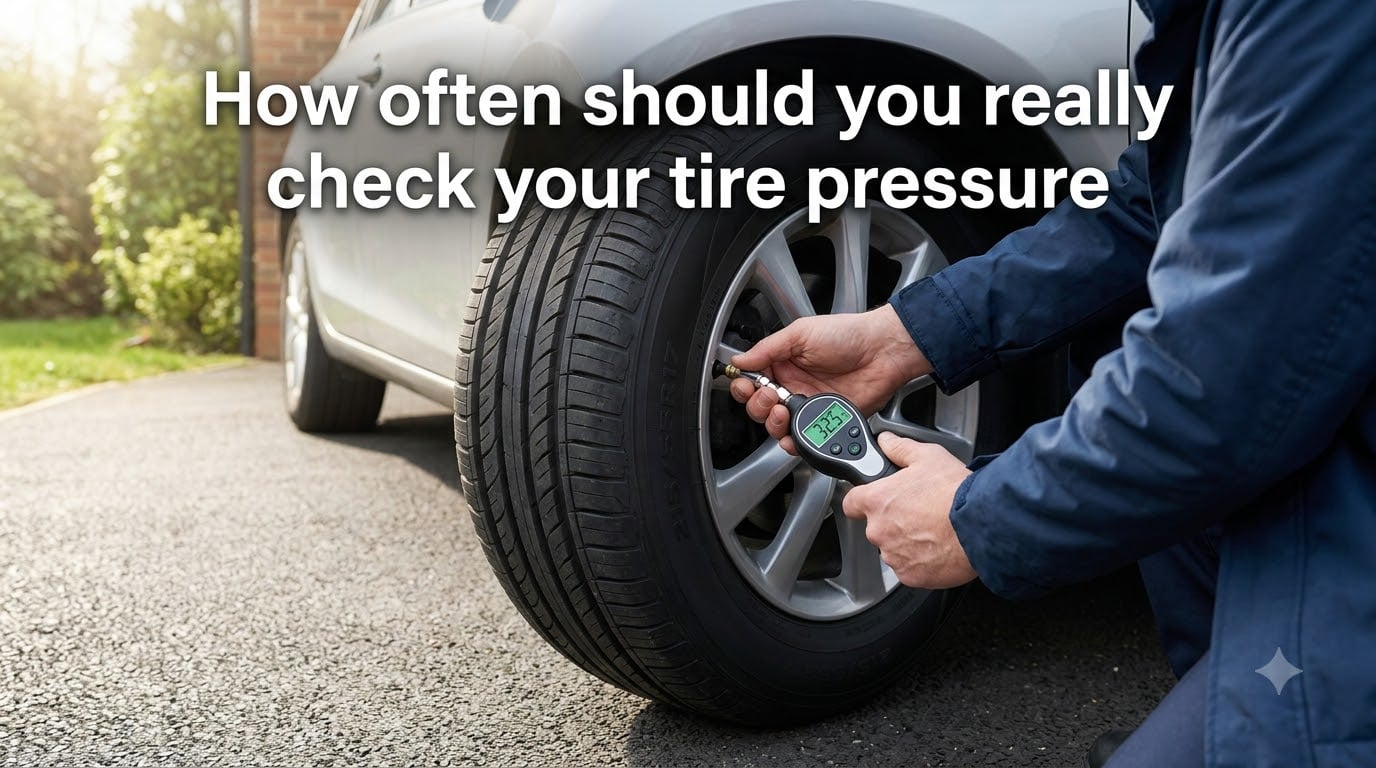
You should check your tire pressure at least once a month. That is the baseline recommendation from tire manufacturers, AAA, and the NHTSA alike. If you are asking yourself “how often should you check tire pressure,” the answer depends on your driving habits, where you live, and the season — but monthly is the bare minimum every driver should follow.
Tire pressure affects nearly every aspect of your vehicle’s performance. It impacts fuel economy, tread life, braking distance, and your overall safety on the road. Skipping this simple check can cost you money at the pump and put you at risk of a blowout.
Table of Contents
Why Checking Your Tire Pressure Matters
Underinflated tires are one of the most overlooked safety hazards on the road. A tire running even a few PSI below recommendation changes how your car handles, brakes, and grips the pavement.
Safety First
Low tire pressure increases stopping distances and reduces your ability to steer precisely in an emergency. According to the NHTSA, underinflated tires contribute to roughly 11,000 tire-related crashes every year. When your tires cannot grip the road properly, hydroplaning on wet surfaces becomes far more likely.
Fuel Economy Impact
The U.S. Department of Energy estimates that underinflated tires reduce fuel economy by approximately 3.3%. That may sound small, but over a year of driving it adds up to real money lost. Properly inflated tires reduce rolling resistance, meaning your engine works less to keep you moving.
Tire Longevity
When a tire runs low on air, the outer edges of the tread wear faster than the center. This uneven wear shortens the tire’s lifespan by thousands of miles. Overinflated tires cause the opposite problem — the center of the tread wears prematurely.
Catching Leaks Early
A slow leak can go undetected for weeks if you are not checking pressure regularly. Nail punctures, damaged valve stems, and rim corrosion all cause gradual air loss. By the time your TPMS light turns on, the tire may already be dangerously low.
Where to Find Your Recommended Tire Pressure
Before you can maintain correct tire pressure, you need to know the right number. Many drivers get this wrong because they look in the wrong place.
Door Jamb Sticker
Open the driver’s door and look for a sticker on the door jamb or the pillar. This label shows the manufacturer’s recommended PSI for your front and rear tires. Most passenger cars fall in the 28 to 36 PSI range, though your specific vehicle may differ.
Owner’s Manual
If the sticker is missing or hard to read, check your owner’s manual. It will list the recommended tire pressure for normal driving conditions and may also include separate numbers for heavy loads or highway driving.
The Sidewall MAX Pressure Trap
This is where many people go wrong. The number printed on your tire’s sidewall — often 44, 50, or 51 PSI — is the tire’s maximum inflation pressure. It is NOT the pressure you should run in everyday driving. Inflating to that number will overinflate your tires and cause center tread wear. Always use the door jamb or manual figure instead.
How Often Should You Check Tire Pressure?
The Monthly Baseline
At a minimum, check your tires once a month. Tires naturally lose about 1 PSI per month through the rubber itself — that is just how air permeates through the tire compound. Temperature swings can accelerate this loss significantly. A monthly check catches this gradual decline before it becomes a problem.
The Every-Two-Weeks Habit
A smarter approach is to tie your tire pressure check to your fuel fill-up schedule. Most people refuel every one to two weeks. Checking tire pressure while the gas pump runs takes about two minutes and costs nothing. Many Reddit users in r/Cartalk follow this exact routine and report catching low pressure problems well before their TPMS light ever comes on.
How to Check Tire Pressure the Right Way
Checking tire pressure is simple, but doing it accurately requires following a few rules.
Step-by-Step Process
Step 1: Check when tires are cold. “Cold” means the car has been parked for at least three hours or has been driven less than one mile. Driving heats the air inside the tire, giving you a reading that is 2 to 6 PSI higher than your actual cold pressure.
Step 2: Remove the valve cap and press the gauge firmly onto the valve stem. You should hear a brief hiss of air as you seat the gauge — that stops once the seal is firm. Read the measurement and compare it to your door jamb sticker.
Step 3: Add air if needed. Use a home compressor or a gas station air machine. Fill to the recommended PSI, not higher. Check again with your gauge to confirm.
Step 4: Replace the valve cap. The cap keeps dirt and moisture out of the valve stem. It is not just cosmetic — a missing cap can cause a slow leak over time.
Choosing a Gauge
Digital tire pressure gauges tend to be the most accurate and easiest to read. Dial gauges work well but can be harder to read in low light. Pencil gauges are the cheapest option but are less precise. Whichever type you choose, keep one in your glove box so you always have it handy.
When to Check More Often Than Once a Month
There are specific situations where monthly checks are not enough. In these cases, you should check tire pressure weekly or even before every trip.
Before Long Road Trips
Any time you are driving more than a few hundred miles, check your tire pressure the morning you leave. Extended highway driving at higher speeds generates more heat, and an underinflated tire on a hot highway is a recipe for a blowout.
Seasonal Temperature Changes
Tire pressure drops approximately 1 PSI for every 10-degree Fahrenheit decrease in ambient temperature. If you live somewhere with significant temperature swings between seasons — or even between morning and afternoon — you need to check more frequently. A sudden cold snap can drop your tires 5 to 10 PSI overnight.
Heavy Loads and Towing
If you are carrying passengers, hauling cargo, or towing a trailer, check your pressure beforehand. Your owner’s manual may list a higher recommended PSI for heavy loads. Running underinflated under load is one of the fastest ways to overheat and destroy a tire.
After Hitting a Pothole or Curb
A hard impact can knock a tire off the bead or cause internal damage that leads to a slow leak. If you hit a deep pothole or clip a curb, check your tire pressure as soon as possible.
With New Tires
New tires often come from the shop at pressures that do not match your vehicle’s recommendation. Dealerships sometimes overinflate or underinflate during installation. Check your pressure a day or two after getting new tires mounted.
Winter vs. Summer: Adjusting Your Tire Pressure Routine
Cold Weather Impact
Winter is the season when tire pressure problems are most common. Air contracts as it cools, and the result is a pressure drop that catches many drivers off guard. If you set your tire pressure perfectly in September and do not check again, you could be running 5 to 10 PSI low by December without knowing it.
Temperature Rule of Thumb
The 1 PSI per 10-degree-Fahrenheit rule gives you a useful planning framework. If the temperature drops 30 degrees from when you last checked, expect to lose roughly 3 PSI. This is why many tire experts recommend checking every two weeks during winter months rather than once a month.
In summer, the opposite happens. Hot pavement and higher ambient temperatures can push tire pressure 2 to 4 PSI above your cold reading. Overinflation in summer reduces traction and causes uneven tread wear. If your morning check shows pressure already at or above the recommended PSI, you may need to let a little air out on particularly hot days.
Common Tire Pressure Mistakes to Avoid
Using the Sidewall Number as Your Target
As mentioned earlier, the sidewall number is a maximum rating from the tire manufacturer — not a recommendation for your vehicle. Inflating to this number will overinflate your tires, causing center tread wear and a harsher ride. Always use the door jamb or owner’s manual number.
Ignoring the TPMS Warning Light
Your TPMS (Tire Pressure Monitoring System) is a helpful backup, but it is not a replacement for manual checks. Most TPMS sensors only trigger when pressure drops to about 25% below the recommended level. That means you could be driving on dangerously underinflated tires for weeks before the light comes on. If the TPMS light does come on, check your tires immediately. Driving on a significantly underinflated tire can cause the tire to overheat, leading to tread separation or a blowout.
Checking Hot Tires
If you have been driving for more than a mile, your tires are hot. Checking pressure at this point gives a reading that is 2 to 6 PSI higher than reality. Do not add air based on a hot reading — you will end up overinflating. Wait at least three hours after driving, or check first thing in the morning before you start the car.
Frequently Asked Questions
How often should I add air to my tires?
Add air whenever your tire pressure drops below the recommended PSI listed on your door jamb sticker. For most drivers, this means once a month. If you drive frequently, live in an area with extreme temperature changes, or notice the TPMS light come on, check and inflate more often.
What is the 5 PSI rule?
The 5 PSI rule is a guideline for deciding when to add air. If your measured tire pressure is 5 PSI or more below the recommended level, inflate immediately. Driving on a tire that is 5 PSI low noticeably affects handling, braking distance, and fuel economy.
How long does air last in tires?
Tires naturally lose about 1 PSI per month through the rubber compound itself. Temperature changes, valve stem wear, and small punctures can speed up this loss. This is why monthly checks are recommended — to catch gradual pressure loss before it becomes a safety concern.
What is the 4 PSI rule on tires?
The 4 PSI rule helps you understand whether your tire pressure is set correctly when cold. If your cold pressure matches the door jamb recommendation but increases by more than 4 PSI after driving, your starting pressure may have been too low. An increase of about 4 PSI from cold to hot indicates you started at the right pressure.
Is it safe to drive with the TPMS light on?
You can drive slowly to the nearest gas station or safe location, but you should not continue driving normally. The TPMS light activates when one or more tires are roughly 25% below recommended pressure — that is already in the danger zone for handling, braking, and tire damage. Check your tires as soon as possible.
Should I check tire pressure when tires are cold or hot?
Always check when tires are cold. This means the car has been parked for at least three hours or driven less than one mile. Driving heats the air inside and gives a reading 2 to 6 PSI higher than your true cold pressure. Morning checks before you drive anywhere are the most accurate.
Conclusion
Checking tire pressure is one of the easiest and cheapest vehicle maintenance tasks you can do, yet most people skip it until something goes wrong. Make it a habit to check your tire pressure at least once a month, always when the tires are cold. Tie it to your fill-up routine, keep a gauge in your glove box, and you will avoid the costly and dangerous surprises that come from running on underinflated tires.