
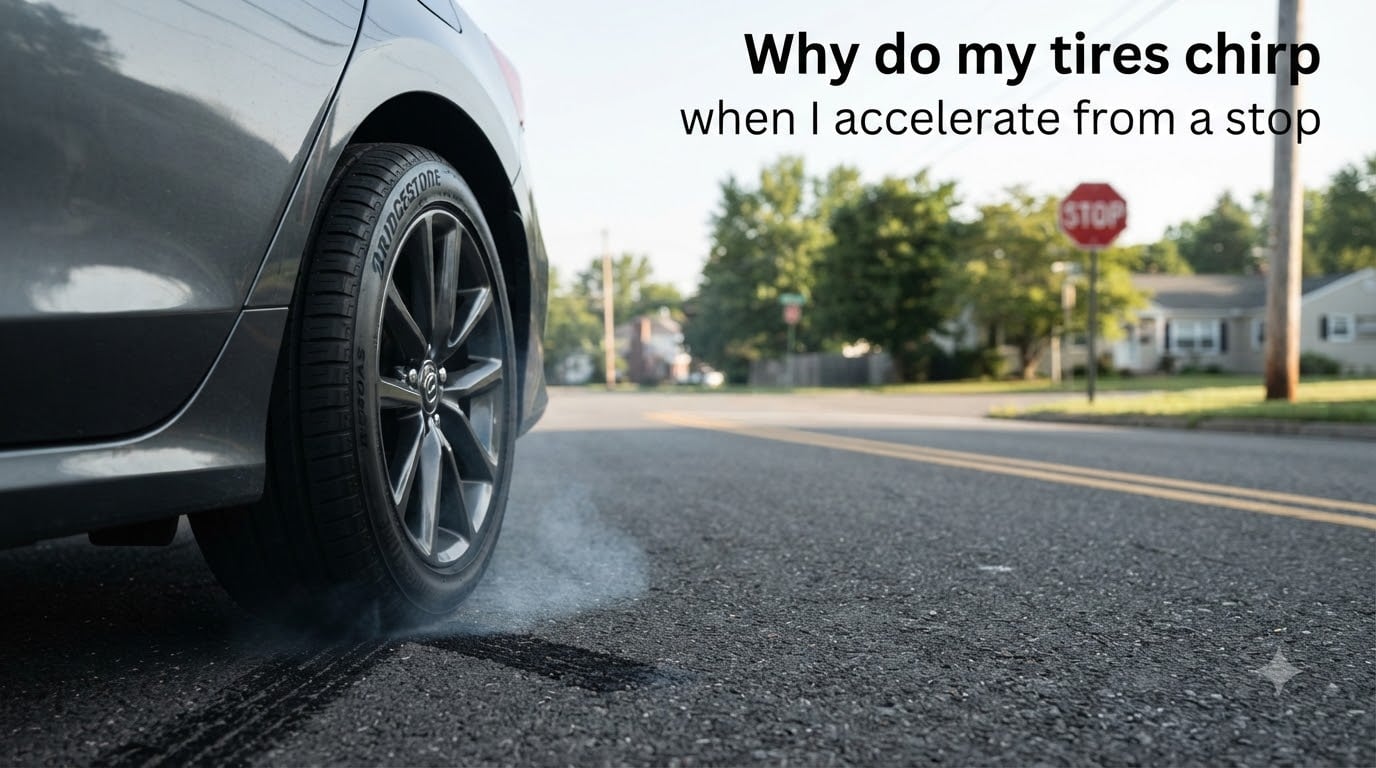
You’re at a stop sign, you press the gas pedal, and you hear it — a sharp chirp from your tires as they struggle to grip the road. Tires chirp when accelerating from a stop because the tread slips and drags against the road surface instead of gripping it cleanly. This is called wheel spin or traction loss, and it’s usually caused by excessive torque, low tire pressure, worn tread, or slippery road conditions.
That chirping sound can be embarrassing, especially in a quiet parking lot or drive-thru line. But is it normal, or does it mean something’s wrong with your car? The answer depends on how often it happens and under what conditions. In this guide, we’ll break down every reason your tires chirp when you accelerate — and what you can do about it.
Table of Contents
What Causes Tire Chirp When Accelerating from a Stop?
When you press the accelerator from a standstill, your engine (or electric motor) sends torque to the drive wheels. Under normal conditions, the tire tread grips the road surface and your car moves forward smoothly. But when the torque exceeds the tire’s available grip, the tread breaks traction and spins against the pavement.
That spinning creates friction between the rubber and the road, producing the high-pitched chirping or squealing sound you hear. Think of it like rubbing a wet balloon — the rubber drags, vibrates, and squeals. The same physics applies to your tires.
The chirp usually stops once the car is rolling because the tire has gained momentum and the contact patch stabilizes. This is why you hear it only at takeoff, not while cruising. It’s the moment of maximum stress on the tire’s grip.
7 Most Common Causes of Tire Chirp When Accelerating
Not all tire chirping is the same. Here are the seven most common reasons your tires squeal when you accelerate from a stop, ranked from most to least likely.
1. Low Tire Pressure
Underinflated tires have a larger, softer contact patch that deforms under load. When you accelerate, the rubber flexes and scrubs against the road instead of gripping it cleanly. This is the number one cause of tire chirp and the easiest fix — just check your tire pressure and inflate to the PSI listed on your driver’s door jamb sticker.
2. Worn Tire Tread
Tread depth directly affects traction. As tires wear down, there’s less rubber to grip the road, especially on wet or rough surfaces. Most tires chirp more as they approach the wear bars (2/32 inch depth). If your tread is low, it’s time to start shopping for replacement tires.
3. Excessive Throttle Input
Sometimes the problem isn’t the tires — it’s your right foot. Pressing the gas pedal too hard from a stop sends too much torque to the wheels at once. This is especially common in powerful vehicles with large engines. Easing onto the throttle gradually can eliminate chirping entirely.
4. Wheel Misalignment
When your wheels are out of alignment, the tires don’t sit squarely on the road. This uneven contact reduces grip and can cause chirping during acceleration. You might also notice your car pulling to one side or uneven tire wear across the tread surface.
5. Cold Tires
Rubber compounds stiffen in cold weather, reducing the tire’s ability to conform to the road surface. That’s why you might notice chirping on cold mornings that disappears once the tires warm up after a few minutes of driving. This is generally normal and not a cause for concern.
6. Worn Suspension Components
Worn shocks, struts, or bushings can allow the suspension to bounce or shift under acceleration. This changes the tire’s contact angle with the road, reducing grip and causing chirp. If you hear clunking or feel vibration alongside the chirp, your suspension might need inspection.
7. Brake Pad Drag
Sometimes what sounds like tire chirp is actually brake pads lightly dragging on the rotors. This can happen if the calipers are sticking or the pads are worn unevenly. The sound is similar but usually persists at low speeds rather than just during takeoff.
Tire Chirp in Electric and High-Torque Vehicles
Electric vehicles produce instant torque the moment you press the accelerator. There’s no engine revving up, no gradual power delivery — just immediate force to the wheels. This makes EVs particularly prone to tire chirp from a stop, even with gentle throttle application.
Drivers of vehicles like the Tesla Model 3, Hyundai Kona EV, and Ford Mustang Mach-E commonly report tires chirping in parking lots and at traffic lights. It’s not a defect — it’s physics. The instant torque can overwhelm the tire’s grip before traction control has time to intervene.
High-horsepower gas vehicles face a similar challenge. Cars with 300+ horsepower can easily exceed tire grip during hard acceleration, especially with rear-wheel drive. Performance tires with softer compounds help, but they also wear faster. It’s a trade-off between grip and longevity.
Traction Control and Tire Chirp: What You Need to Know
Most modern vehicles have traction control systems that detect wheel spin and reduce engine power or apply brakes to the spinning wheel. When working properly, traction control should prevent tire chirp during normal driving. If your tires chirp frequently, it might mean your traction control system is disabled or malfunctioning.
Some vehicles allow you to disable traction control for spirited driving or track use. With traction control off, wheel spin is expected and tire chirp is normal. Check your dashboard for a traction control light — if it’s illuminated, the system may be off or there’s a fault that needs diagnosis.
Launch control systems, found in some performance cars, are designed to manage wheel spin during hard acceleration. These systems carefully meter torque delivery to maximize traction. If your car has launch control, using it properly can eliminate chirp during aggressive takeoffs.
How Road Surface and Tire Type Affect Chirping
Not all roads are created equal when it comes to tire grip. Smooth concrete, painted road markings, metal manhole covers, and wet leaves all offer significantly less traction than rough asphalt. If you notice chirping only in certain locations, the road surface is likely the culprit.
Tire type also plays a major role. All-season tires prioritize longevity over grip, so they chirp more easily under hard acceleration. Performance and summer tires use softer rubber compounds that grip better but wear faster. Winter tires have special tread patterns for snow but can chirp on dry pavement due to their flexible compound.
Tire size matters too. Wider tires have a larger contact patch and generally grip better, but they’re also heavier and can increase rolling resistance. The right tire for your vehicle depends on your driving style, climate, and priorities.
How to Diagnose Which Tire Is Chirping
Identifying the specific tire that’s chirping helps narrow down the cause. Here’s a simple diagnostic approach you can try at home.
Find an empty parking lot and accelerate slowly from a stop while a friend walks alongside the car. Have them listen for which corner the sound comes from. If you’re alone, you can sometimes tell from inside the car — front tires chirp more audibly through the steering wheel, while rear tire sounds come from behind you.
Once you know which tire is chirping, inspect it closely. Check the pressure with a gauge, look for uneven wear patterns, and measure the tread depth with a penny or tread gauge. If the tread is worn unevenly, that’s a strong sign of alignment issues.
Also check the tire for any visible damage, bulges, or objects stuck in the tread. Sometimes a small stone or nail can cause unusual noise patterns. If you find damage, have the tire inspected by a professional before driving further.
When Should You Worry About Tire Chirp?
Occasional tire chirp during hard acceleration is completely normal, especially in powerful vehicles or on slippery surfaces. It’s the tire’s way of telling you it’s at the limit of its grip. But frequent chirping during gentle, everyday acceleration is a warning sign that deserves attention.
Here’s a simple rule of thumb: if you can make the chirp happen by pressing the gas pedal gently in normal driving conditions, something needs to be fixed. Check your tire pressure first, then inspect tread depth and wheel alignment. These are the most common and most affordable fixes.
If the chirping is accompanied by vibration, pulling to one side, or a burning smell, stop driving and have the vehicle inspected immediately. These symptoms can indicate serious problems like a seized brake caliper, failing wheel bearing, or drivetrain issue that could be dangerous.
Causes at a Glance: Quick Reference Table
| Cause | Symptom | Likely Fix |
|---|---|---|
| Low tire pressure | Chirp on gentle acceleration | Inflate to recommended PSI |
| Worn tread | Chirp increases over time | Replace tires |
| Excessive throttle | Chirp only on hard acceleration | Ease onto gas pedal |
| Wheel misalignment | Uneven wear, car pulls to one side | Get wheel alignment |
| Cold tires | Chirp on cold mornings only | Warm up tires (normal) |
| Worn suspension | Clunking, vibration with chirp | Inspect suspension components |
| Brake drag | Chirp persists at low speeds | Inspect brake calipers and pads |
Frequently Asked Questions
What could be causing a chirping noise when I accelerate and it stops?
The chirping noise that occurs only during acceleration from a stop is almost always wheel spin — the tire tread slipping against the road instead of gripping it. The sound stops once the car is rolling because the tire gains momentum and the contact patch stabilizes. Common causes include low tire pressure, worn tread, excessive throttle, or cold tires.
Why do my tires make noise when I accelerate?
Tires make noise when accelerating because the rubber tread is slipping and dragging against the road surface. This creates friction and vibration that produces chirping or squealing sounds. The noise indicates the tire has exceeded its grip limit, usually due to too much torque, low pressure, worn tread, or a slippery surface.
Why does my car feel like it’s spinning tires when I accelerate from a stop?
Your car feels like it’s spinning tires because it literally is — the drive wheels are breaking traction and spinning against the road instead of gripping it. This is called wheel spin or traction loss. It happens when engine torque exceeds the tire’s available grip, commonly in powerful vehicles, on slippery surfaces, or with worn or underinflated tires.
Why does my wheel sound like it’s chirping?
A chirping sound from your wheel during acceleration is usually tire chirp from wheel spin. However, it could also be a worn wheel bearing, dragging brake pad, or loose belt. If the chirping happens at all speeds (not just during acceleration), it’s more likely a bearing or brake issue than tire-related.
Can I drive my car with a chirping noise?
You can drive with occasional tire chirp, especially if it only happens during hard acceleration. However, if the chirping occurs during gentle, everyday driving, it signals low tire pressure, worn tires, or alignment issues that should be fixed soon. Persistent chirping with vibration or pulling requires immediate professional inspection.
Is tire chirping dangerous?
Occasional tire chirp is not dangerous — it’s the tire reaching its grip limit during acceleration. But frequent chirping during normal driving means your tires have reduced traction, which can affect braking distance and handling, especially in wet conditions. Address the underlying cause (pressure, tread, alignment) to restore full grip.
How do I stop my tires from chirping when I accelerate?
Start by checking and adjusting tire pressure to the recommended PSI on your driver’s door jamb sticker. Then inspect tread depth — if it’s worn to the wear bars, replace the tires. If pressure and tread are fine, have your wheel alignment checked. In the meantime, ease onto the throttle more gradually when accelerating from a stop.
Tire chirp when accelerating from a stop is a common issue with straightforward solutions. Start by checking your tire pressure — it’s free and takes two minutes. If pressure is fine, inspect your tread depth and consider whether your driving style or the road surface might be contributing. For persistent chirping that doesn’t improve with these checks, a wheel alignment or professional inspection is your next step. Knowing what causes tire chirp helps you fix the problem quickly and keep your tires gripping the road safely.