
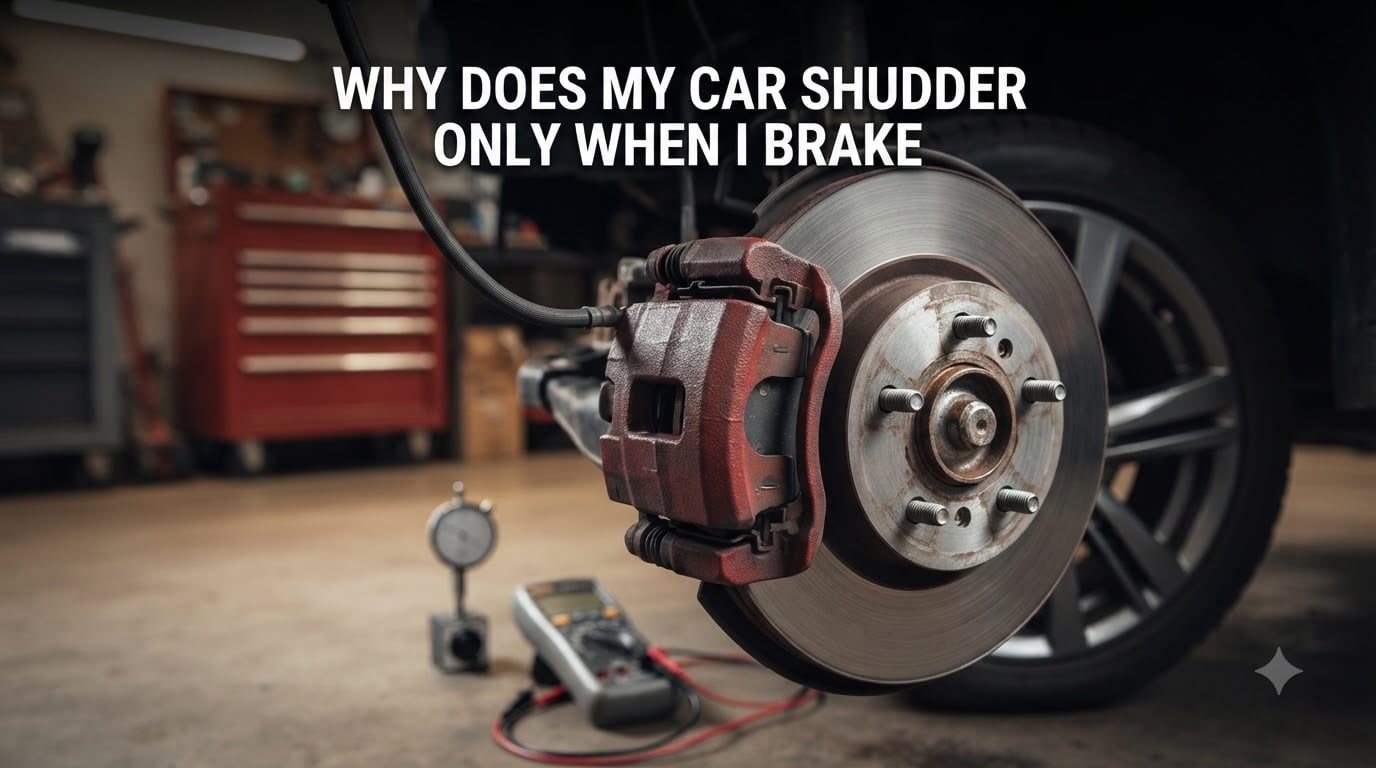
Car shudder when braking almost always points to a brake system issue, most commonly warped rotors or uneven brake pad wear. The vibration happens because something in your braking system is creating inconsistent friction as the wheel turns, and the only time you feel it is when you press the brake pedal.
I’ve worked with hundreds of drivers over the years on this exact problem, and the good news is that brake shudder is one of the most diagnosable issues your car can have. In this guide, I’ll walk you through what causes it, how to tell whether it’s your front or rear brakes, and what you can safely check yourself before heading to a shop.
Table of Contents
What Is Brake Shudder?
Brake shudder is a vibration, pulsing, or shaking sensation felt through the steering wheel, brake pedal, or entire vehicle when you apply the brakes. It happens because uneven braking force grabs the rotor in inconsistent spots rather than across the full pad surface, sending rhythmic pulses through your car.
The technical term most mechanics use is brake judder, and it comes in two main forms:
- Disc thickness variation (DTV): Tiny high and low spots develop on the rotor surface from heat cycles, pad deposits, or uneven wear. This is the most common cause, not true warping.
- True rotor warping: A visible bend or deformation in the rotor. Reddit mechanics and forum pros emphasize that truly warped rotors are actually rare. DTV causes the same symptoms but is far more common.
The three places you’ll feel it:
- Through the steering wheel (usually front brakes)
- Through the brake pedal (usually rear brakes)
- Through the seat or floor (could be either, or severe)
Is Brake Shudder Dangerous?
Brake shudder is not an immediate emergency, but it is a safety concern that gets worse over time. The vibration tells you your braking force is uneven, which increases stopping distance and reduces your margin of safety in sudden stops.
Here’s a quick safety triage from what forum users consistently report:
- Safe to drive to a shop soon: Light vibration at highway speed, no noises, no pulling.
- Drive carefully and schedule service this week: Vibration getting worse, slight grinding, or car pulls to one side.
- Tow or stop driving: Loud grinding, burning smell, brake pedal goes soft, or warning light is on.
One r/MechanicAdvice user summed it up: “It’s not going to fail tomorrow, but don’t ignore it for six months.” That tracks with what I see: drivers who catch brake shudder early pay less and avoid damage to calipers, pads, and hubs.
7 Common Causes of Brake Shudder
These are the seven issues our team sees most often when a car shakes only under braking. Each one produces a slightly different vibration pattern.
1. Disc Thickness Variation (DTV) on Brake Rotors
By far the most common cause. Your rotor develops uneven thickness, usually 0.001 inch or more variation between the thinnest and thickest spots. When the pad hits a thicker spot, braking force spikes; when it hits a thinner spot, force drops. The wheel and steering column transmit that cycling force to you.
Causes of DTV:
- Heat cycling from repeated hard stops
- Riding the brakes on long downhills
- Improper bedding-in of new pads
- Cheap rotors that wear unevenly out of the box
2. Worn or Glazed Brake Pads
Brake pads wear down over time, and once they’re below roughly 3 mm of friction material, they can’t apply consistent pressure. Glazed pads have a shiny, hardened surface from overheating, and they slip instead of grip cleanly.
You might also notice:
- Squealing noise when braking
- Longer stopping distance
- Visible pad material below 25 percent remaining
3. Sticking Brake Calipers or Seized Slide Pins
A caliper that doesn’t release properly keeps the pads dragging on the rotor. Slide pins (the bolts that let the caliper slide as pads wear) corrode and seize, especially in wet or winter-driven cars. This creates uneven wear on one side of the rotor.
Signs of a sticking caliper:
- Car pulls to one side under braking
- One wheel runs hotter than the others after driving
- Uneven pad wear across the same axle
4. Loose or Worn Suspension and Steering Components
Worn control arm bushings, tie rod ends, ball joints, and struts can amplify any minor brake pulsation into a noticeable shudder. Forum users often find that vibration returns after a brake job because the suspension was the real culprit.
5. Wheel Alignment Issues or a Bent Wheel
Misalignment causes uneven tire wear and can exaggerate brake vibration. A bent wheel from a pothole creates a similar effect, and many drivers notice the shake more during braking simply because that’s when forces peak.
6. Tire Problems (Flat Spots, Belt Separation, Out-of-Balance)
Tires with flat spots from sitting too long, internal belt separation, or simple imbalance cause vibration that becomes obvious under braking load. This is a common cause when the shudder is felt at specific speeds rather than at all braking events.
7. Worn Wheel Bearings or Hub Runout
A failing wheel bearing creates a rhythmic noise that can feel like vibration, especially under load. Hub runout (the hub face being out-of-flat) is another overlooked cause that Bendix highlights: a tiny lip of rust on the hub surface can push the new rotor off true and cause immediate vibration after a brake job.
Front vs Rear Brake Shudder: How to Tell Which
Where you feel the vibration is your fastest clue. This is the diagnostic shortcut our shop uses first.
- Steering wheel shakes when braking: Front brakes. The vibration travels through the steering rack and column.
- Brake pedal pulses under your foot: Rear brakes. The pedal is mechanically linked to the rear calipers or drums.
- Whole car vibrates, no specific point: Likely both ends, or a severe rotor issue plus worn suspension components amplifying it.
Quick test: lightly apply the brakes at 30 mph on a smooth road. If the steering wheel wiggles, start with the front rotors and pads. If you feel it more through the pedal, start with the rear.
Brake Shudder at Different Speeds: What It Tells You
Speed matters. The speed at which shudder appears can narrow down the cause before you ever lift a wheel off the ground.
Highway Speed Shudder (60–80 mph)
Almost always DTV or rotor imbalance. Rotors spin faster, so any thickness variation gets amplified. This is also the range where imbalance from a wheel weight or tire issue first shows up.
Low Speed Shudder (under 25 mph)
Often caliper or pad related. Sticking calipers and severely worn pads struggle to apply smooth force from a stop. If the car shakes as you pull away from a light, suspect the pads and calipers first.
Downhill Braking Shudder
Forum users mention this constantly. Extended downhill braking heats the rotors and pads, accelerating uneven wear. If shudder only shows up after a long descent, heat-related DTV is the prime suspect.
DIY Brake Shudder Diagnosis: Safe Checks You Can Do
Some checks are safe and free. Others should be left to a shop with a lift. Here’s what I tell drivers to do at home before booking an appointment.
Safe DIY Checks
- Visual pad inspection: Look through your wheel spokes. Pads should have at least 3 mm of material. Uneven wear (one side thicker than the other) points to a sticking caliper.
- Rotor surface check: With the wheel off the ground (and properly secured), spin it slowly and look for a visible ridge, deep grooves, or a blue heat-tinted ring.
- Tire inspection: Look for flat spots, bulges, or uneven tread wear. Compare left to right.
Leave It to a Shop
- Measuring rotor runout with a dial indicator (spec is usually under 0.002 inch)
- Caliper piston compression and slide pin service
- Wheel bearing diagnosis (hub removal required)
- Any work involving brake line disconnection
Most parts stores and tire shops will do a free visual brake inspection if you ask. A 10-minute look can confirm whether you’re dealing with pads, rotors, or something else entirely.
How to Fix Brake Shudder
The fix depends on the cause, and forum users consistently warn: replacing just one component often leads to vibration returning. Here’s the right pairing for each repair.
Rotor Resurfacing
If rotors are above minimum thickness and have light DTV, a machine resurface restores a flat, even surface. It’s cheaper than replacement but only works if enough material remains (check your vehicle’s spec, typically 0.5 mm above minimum).
Rotor Replacement
Replace rotors whenever they’re below minimum thickness, deeply scored, or have severe DTV. Always replace in axle pairs (both fronts or both rears) so braking stays balanced.
Brake Pad Replacement
New pads should be paired with new or freshly resurfaced rotors. Cheap pads on old rotors is the #1 reason vibration returns after a brake job, according to r/MechanicAdvice.
Caliper and Slide Pin Service
Clean and lubricate slide pins with high-temperature brake grease. If the caliper piston is seized, replace or rebuild the caliper. Always replace pads in this case since uneven pressure has worn them.
Repair Cost Ranges
| Repair | Typical Cost Range (parts and labor) |
|---|---|
| Rotor resurfacing (per axle) | Budget-friendly option at most shops |
| Rotor replacement (per axle) | Mid-range repair |
| Brake pad replacement (per axle) | Most affordable repair |
| Caliper replacement (each) | Higher-end repair |
| Wheel bearing replacement (each) | Higher-end repair |
| Suspension component repair | Varies by part and vehicle |
Costs vary by vehicle, region, and parts quality, so always get a written estimate before approving work. Ask the shop to show you the worn parts and explain the measurements behind the recommendation.
The Bedding-In Process
After new pads and rotors, proper bedding-in matters more than most people realize. The process transfers an even layer of pad material onto the fresh rotor surface. Skipping it causes uneven pad transfer and immediate DTV-like symptoms.
Standard bedding-in: 8 to 10 moderate stops from 40 mph to 10 mph, followed by a 10-minute cool-down. Avoid hard stops or riding the brakes during this period.
Prevent Brake Shudder: Maintenance Tips
A few habits dramatically reduce the odds of brake shudder coming back.
- Torque wheel nuts properly: Over-tightening distorts the rotor and causes DTV. Use a torque wrench to manufacturer specs, usually 80–100 lb-ft for most passenger cars.
- Clean the hub face before new rotor install: A wire brush removes rust scale that pushes the rotor off true.
- Follow the bedding-in procedure: Every time. It’s 15 minutes that saves a comeback visit.
- Avoid riding the brakes downhill: Use a lower gear to let engine braking do the work.
- Rotate tires every 5,000 to 7,500 miles: Even tire wear keeps the whole system balanced.
- Get a brake inspection annually: Visual checks catch uneven wear before it becomes shudder.
Frequently Asked Questions
Why are my brakes shuddering when braking?
Brake shudder is most commonly caused by disc thickness variation (DTV) on the rotors, which creates uneven braking force as the pads pass over high and low spots. Worn brake pads, sticking calipers, and warped rotors can also produce the same vibration.
Will bad rotors cause a car to shake when braking?
Yes. Rotors with uneven thickness, deep grooves, or true warping cause the brake pads to grab inconsistently as the wheel turns. This creates the rhythmic pulsing or shaking you feel through the steering wheel, brake pedal, or seat when you apply the brakes.
How much does it cost to fix a brake shudder?
Repair cost depends on the cause. Rotor resurfacing or replacement is the most common fix, with pad replacement often done at the same time. Caliper and wheel bearing repairs cost more. Always get a written estimate and ask the shop to show you the worn parts before approving work.
What causes a shudder vibration when braking?
The most common causes are disc thickness variation on rotors, worn or glazed brake pads, sticking calipers, loose suspension components, and tire or wheel issues. Heat from repeated hard braking or riding the brakes downhill accelerates most of these problems.
How do you fix a brake shudder?
The standard fix is replacing or resurfacing the rotors and replacing the brake pads together, plus servicing any sticking calipers or seized slide pins. Always replace rotors in axle pairs and follow the proper bedding-in procedure after installation.
Is brake shudder dangerous?
Brake shudder is not an immediate emergency, but it is a safety concern. The vibration means braking force is uneven, which can increase stopping distance and cause further damage to rotors, pads, and calipers. It typically worsens over time if ignored.
How can I tell if it’s the front or rear brakes causing the shudder?
If you feel the vibration in the steering wheel, it’s almost always the front brakes. If you feel pulsing through the brake pedal under your foot, it’s usually the rear brakes. Vibration through the whole car can mean either or both, plus possible suspension amplification.
When to Seek Professional Help
Car shudder when braking is your car telling you something specific: braking force isn’t consistent. Most cases come down to disc thickness variation, worn pads, or sticking calipers, and the fix is straightforward once the cause is identified.
From what drivers report on r/Cartalk and r/MechanicAdvice, the biggest mistake is ignoring early vibration until it becomes a much more expensive repair. Catching brake shudder early usually means pads and a rotor resurface. Waiting often means pads, rotors, calipers, and possibly hub service.
If you’ve felt vibration for more than a week, if it’s getting worse, or if you notice any grinding, pulling, or burning smell, book a professional brake inspection this week. A trusted shop will measure rotor runout, check pad wear on both sides of each caliper, and show you what’s actually worn before recommending any work. That’s the standard worth holding every shop to.