
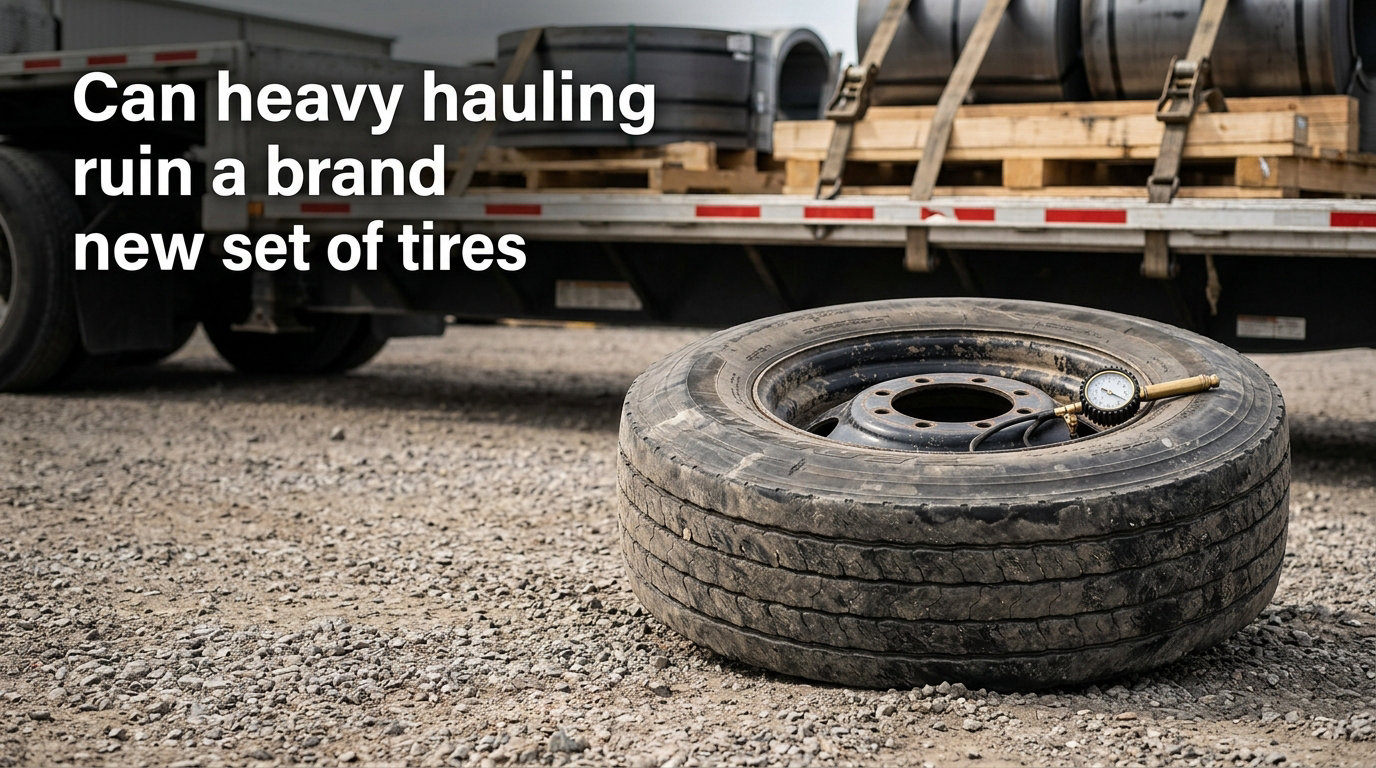
Yes, heavy hauling can absolutely ruin a brand new set of tires if they aren’t rated for the load, are underinflated, or haven’t gone through a proper break-in period. The combination of excessive weight, heat buildup, and sidewall flex can destroy tire internals long before the tread wears down. This guide explains exactly how it happens and what you can do to protect your investment.
Table of Contents
How Heavy Hauling Damages Brand New Tires
Most people assume new tires are invincible for the first few thousand miles. That assumption costs a lot of truck owners hundreds of dollars in premature replacements.
Heavy hauling attacks new tires through several mechanisms that compound on each other. Here are the five most common ways new tires fail under heavy loads:
1. Excessive Heat Buildup
Heat is the silent killer of tires. When you haul heavy loads, the tire’s internal temperature climbs significantly higher than normal driving conditions. New rubber compounds haven’t been heat-cycled yet, meaning they haven’t stabilized through repeated expansion and contraction.
A single heavy tow on a hot day can push new tire temperatures past their design limits. The National Highway Traffic Safety Administration identifies heat as a primary factor in tire blowouts, and new tires are especially vulnerable because their compounds haven’t “settled in” yet.
2. Excessive Sidewall Flex
Under heavy loads, the tire sidewall flexes more than it does during normal driving. This flex generates additional heat and puts stress on the internal belts and carcass. Forum discussions on Grassroots Motorsports reveal that sidewall flex is the number one handling issue when towing, separate from pure weight capacity.
New tires with P-metric ratings have softer sidewalls designed for ride comfort, not load resistance. When you put a heavy trailer behind a truck equipped with passenger-rated tires, that sidewall works overtime—and it shows in the form of sway, instability, and accelerated wear.
3. Belt Separation
The steel belts inside a tire are bonded to the rubber during manufacturing. Heavy hauling creates forces that can break those bonds prematurely, especially on new tires where the bonding hasn’t been reinforced through normal heat cycling.
Belt separation often starts invisibly inside the tire. You might notice a vibration at highway speeds or a bulge on the tread surface. By that point, the tire is already dangerous.
4. Uneven Tread Wear
Heavy loads change the shape of the contact patch, the area where rubber meets road. On a new tire, this distortion causes specific wear patterns that appear within the first few thousand miles of hauling.
Inside-edge wear is the most telling sign of overloading on trucks. The outer tread looks nearly new while the inner shoulder is worn down to the wear bars. Commercial fleet operators report seeing this pattern on vehicles that consistently haul near or above their rated capacity.
5. Catastrophic Blowouts
The worst-case scenario is a blowout at highway speed while towing. Underinflated tires under heavy load generate extreme heat. When the internal temperature exceeds the tire’s rated limit, the structural integrity fails suddenly and completely.
One Grassroots Motorsports forum user described blowing a tire on the interstate while towing near the top of the load range. That was the last set of passenger car tires they put on their truck.
Understanding Tire Load Ratings: LT vs P-Metric
The difference between Light Truck (LT) and P-metric passenger tires is the most important factor when hauling. Most half-ton pickups sold in the United States come equipped with P-metric tires from the factory, even though many owners use them for towing.
Here’s what separates the two:
P-Metric Tires are designed for passenger comfort and fuel efficiency. They have lighter internal construction, softer sidewalls, and lower load capacities. A typical P-metric tire on a half-ton truck might be rated for 2,000 to 2,500 pounds per tire.
LT (Light Truck) Tires are built for load-carrying duty. They feature heavier internal construction, stiffer sidewalls, and higher load ranges. An LT tire with a Load Range E rating can handle over 3,000 pounds per tire when properly inflated.
Load Range and Ply Rating Explained
Load Range tells you how much weight a tire can safely carry at its maximum inflation pressure. The system uses letters that correspond to ply ratings:
Load Range B equals 4-ply rating. Load Range C equals 6-ply. Load Range D equals 8-ply. Load Range E equals 10-ply. Load Range F equals 12-ply. The higher the load range, the more weight the tire can handle and the more air pressure it can hold.
A former tire professional on Grassroots Motorsports noted that LT tires at the same pressure as a P-metric tire actually have lower weight capacity until you exceed the P-tire’s maximum pressure. Many people who switch to LT tires don’t realize they need to run higher pressures to get the load-carrying benefit.
The Load Index Number
Every tire has a load index number on its sidewall, usually between 100 and 130 for truck tires. This number corresponds to a specific weight capacity in pounds. For example, a load index of 121 means each tire can carry 3,297 pounds at maximum inflation pressure.
The Tire Break-In Period: Why New Tires Are Most Vulnerable
New tires need approximately 500 miles of break-in driving before they’re ready for heavy-duty use. During this period, the tread compound releases manufacturing oils from the surface, and the internal components settle into their working positions under normal stress.
When you immediately load a brand-new tire to its maximum rated capacity, several things happen. The tread compound hasn’t developed its full grip characteristics yet, so the tire slips and slides more under load. The internal belts haven’t heat-cycled, so they’re more susceptible to separation. And the bonding between rubber layers hasn’t been tested, meaning heavy stress can create internal delamination.
No major tire manufacturer publishes specific break-in guidelines for loaded use, which creates confusion. The general recommendation from tire professionals is to drive normally for the first 500 miles, avoid maximum loads, and allow the tire to flex through its normal operating range before subjecting it to heavy hauling.
Proper Inflation Pressure When Hauling Heavy Loads
Tire pressure is the single most controllable factor in preventing damage during heavy hauling. Underinflation is the number one cause of tire failure on loaded vehicles.
Door Placard vs Tire Sidewall
The tire pressure listed on your door placard is the manufacturer’s recommendation for the original equipment tires under normal load conditions. The maximum pressure listed on the tire sidewall is the absolute limit the tire can handle.
When hauling heavy loads, you need to increase pressure above the door placard recommendation but never exceed the sidewall maximum. The correct approach is to weigh your vehicle fully loaded, then consult the tire manufacturer’s load and inflation table to find the right pressure for your actual axle weight.
TPMS and Pressure Monitoring
Most modern trucks have Tire Pressure Monitoring Systems that alert you when pressure drops below the factory setting. When you increase pressure for hauling, the TPMS may trigger warnings because the system is calibrated for normal driving pressures. This doesn’t mean your pressure is wrong—it means you need to recalibrate or simply acknowledge the warning.
Running tires at the correct loaded pressure prevents excessive heat buildup and keeps the contact patch uniform. A difference of just 10 PSI below the recommended pressure for your loaded weight can increase tire temperature by 20 degrees, significantly reducing tire life.
Wear Patterns That Signal Your New Tires Are Under Stress
Learning to read wear patterns on new tires gives you early warning before a failure occurs. Here are the patterns that indicate heavy hauling is taking a toll:
Inside-edge wear on both front tires typically indicates overloading. The extra weight causes the tire to tilt inward at the top, concentrating wear on the inner shoulder.
Cupping or scalloping, where the tread develops a series of high and low spots around the circumference, suggests the suspension is bottoming out under load, bouncing the tire on the road surface.
Center wear usually means overinflation, but on a loaded vehicle it can indicate the tire is deflecting under weight and the center is bearing more than its share of the load.
Rapid tread depth reduction across the entire surface indicates the tire is working harder than designed. Commercial operators report 10 to 15 percent faster wear on vehicles that consistently haul near capacity versus lighter-duty use.
How to Protect Brand New Tires During Heavy Hauling
If you just installed new tires and need to haul heavy loads, follow these steps to minimize damage:
Complete the Break-In First
Drive at least 500 miles at normal highway speeds without heavy loads before towing. This lets the tread compound cure and the internal structure stabilize. If you absolutely must tow before completing the break-in, reduce your speed by 10 to 15 miles per hour and stop every 50 miles to check tire temperature by touch.
Verify Your Load Rating Matches Your Payload
Before hitching up a trailer or loading the bed, check that your tires are rated for the combined weight of your vehicle, passengers, cargo, and tongue weight. If your truck came with P-metric tires and you regularly haul loads above 75 percent of the vehicle’s payload rating, upgrading to LT-rated tires is a smart investment.
Match All Tires
Mixing new tires with worn tires, especially in dual-wheel positions, causes the newer tires to wear out faster. The worn tires have a slightly smaller circumference, which forces the new tires to compensate and scrub on the road surface. Replace tires in pairs at minimum, and on four-wheel-drive vehicles, replace all four at once.
Understand Warranty Exclusions
Most tire warranties exclude damage caused by overloading, underinflation, or improper use. If you haul loads that exceed your tire’s rated capacity and experience a failure, the manufacturer will not cover the replacement. Keep records of your typical loads and ensure they fall within your tire’s rated capacity.
Increase Pressure Before Loading
Add pressure before you load the vehicle, not after. Check pressure when tires are cold, before driving, and adjust upward based on your loaded axle weight. Then recheck after driving 25 to 50 miles to ensure the pressure is stable under real-world conditions.
Frequently Asked Questions
What is the best tire for hauling heavy loads?
LT-rated tires with a Load Range E or F rating are the best choice for heavy hauling. These tires feature heavier internal construction, stiffer sidewalls, and higher load capacities than P-metric passenger tires. Look for tires with a load index of 121 or higher for half-ton trucks regularly towing near their maximum capacity.
What damages tires the most?
Heat buildup from underinflation and overloading is the single biggest tire killer. When a tire runs underinflated under heavy load, its internal temperature climbs rapidly, degrading the rubber compound and weakening the steel belts. Sustained excessive heat can cause belt separation and blowouts even on brand new tires.
Why is my truck shaking after installing new tires?
Vibration after new tire installation usually indicates improper balancing or a manufacturing defect in one of the tires. However, if the shaking only occurs under heavy load, it could mean the tires are flexing excessively due to insufficient load rating or underinflation. Have the balance checked first, then verify your tire load rating matches your hauling needs.
What is the 3 tire rule?
The 3 tire rule is a tire replacement guideline that recommends replacing tires when they reach 3/32 of an inch of remaining tread depth. At this depth, wet-weather traction drops significantly and the risk of hydroplaning increases. For vehicles that haul heavy loads, consider replacing at 4/32 to maintain adequate grip and heat resistance under load.
Conclusion
Heavy hauling can absolutely ruin a brand new set of tires if you skip the break-in period, run the wrong load rating, or neglect inflation pressure. The damage happens fast—sometimes within the first few thousand miles—and it’s usually not covered by warranty. By choosing LT-rated tires that match your payload, completing a proper break-in, and monitoring pressure and wear patterns, you can protect your investment and haul safely for the full life of the tires.