
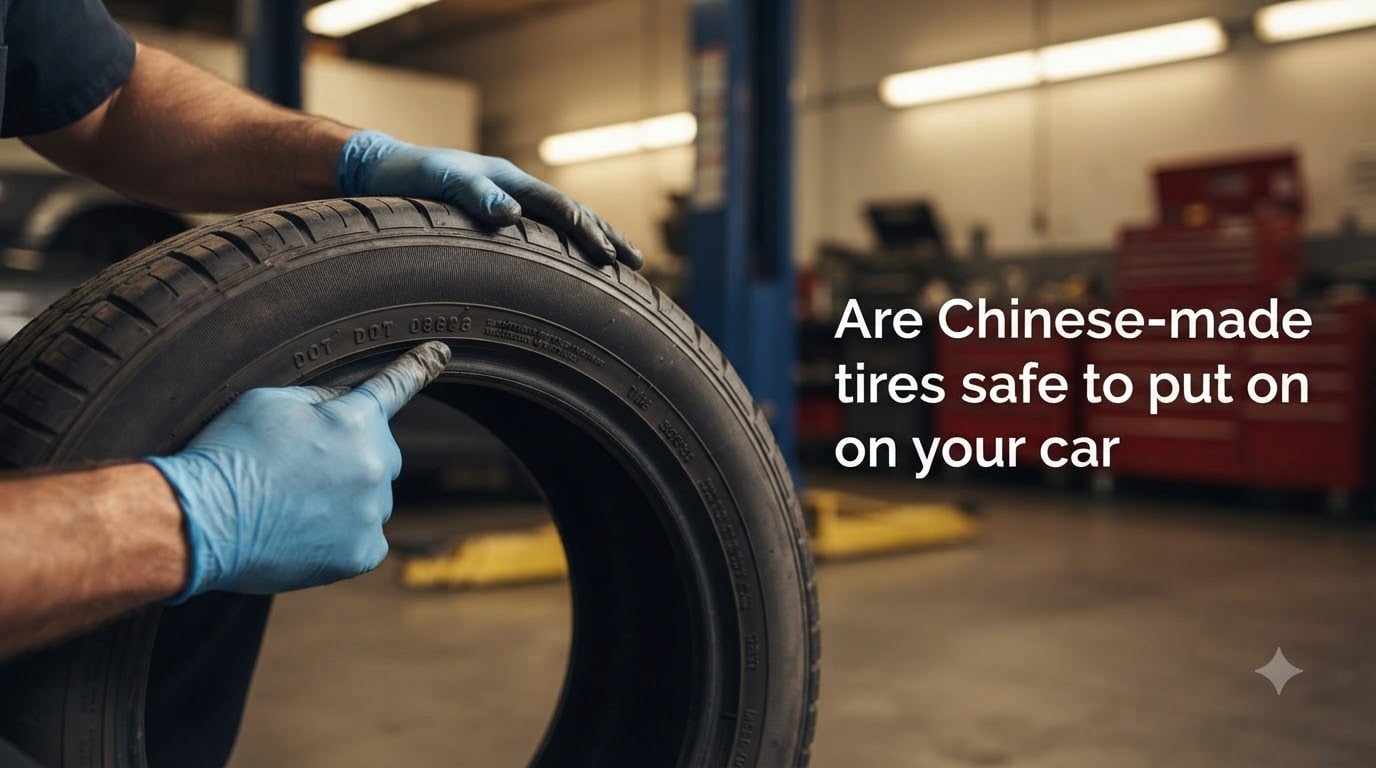
Are Chinese-made tires safe to put on your car? The short answer is: yes, if they carry valid DOT certification and you verify their FMVSS compliance. Chinese tire manufacturers like Linglong, Sailun, and Westlake produce millions of tires annually that meet US Department of Transportation standards. However, meeting the minimum safety bar and delivering the same performance as Michelin or Goodyear are two very different things.
I’ve spent the last several months researching Chinese tire quality, reading independent test data, and talking to tire professionals. What I found is more nuanced than the “cheap tires are dangerous” narrative you’ll see online. Let me walk you through what you actually need to know.
Table of Contents
What Makes Chinese Tires Different
Chinese tires cost 30–50% less than comparable tires from major brands. That price difference isn’t magic — it comes from specific factors that affect both cost and quality.
Manufacturing and labor costs. Chinese factories benefit from lower labor costs and government subsidies that reduce production expenses. Many operate at massive scale, with some plants producing over 60 million tires per year.
Rubber compound quality. This is where the biggest performance gap exists. Major brands invest heavily in proprietary rubber formulations that optimize grip, wear resistance, and temperature performance. Budget Chinese tires often use less advanced compounds that wear faster and harden sooner in cold weather.
Quality control standards. Reputable Chinese manufacturers maintain solid QC processes, but inconsistency between batches is a real concern. Some users report getting excellent tires from one batch and mediocre ones from the next — a problem you rarely see with Michelin or Continental.
R&D investment. Companies like Bridgestone and Pirelli spend billions annually on tire research. Chinese manufacturers are catching up, but many budget lines still rely on older tread designs and construction techniques.
Do Chinese Tires Meet US Safety Standards
Yes, all legally sold Chinese tires in the US must meet Federal Motor Vehicle Safety Standard (FMVSS) 109. This is the same standard every tire sold in America must pass. If a tire has a DOT number molded into its sidewall, it has been certified for road use in the United States.
Here’s what that certification covers:
DOT number — Confirms the tire was manufactured in a facility that meets DOT standards and has passed basic safety tests
FMVSS 109 — Covers bead retention, strength, endurance, and high-speed performance requirements
UTQG ratings — Treadwear, traction, and temperature grades that let you compare performance across brands
However, there’s an important distinction. DOT certification is a minimum standard — it means the tire won’t fail catastrophically under normal conditions. It doesn’t mean the tire performs as well as a premium alternative in wet braking, high-speed stability, or long-term durability.
The NHTSA maintains a recall database where you can check any tire’s safety history. I recommend searching a Chinese tire’s brand and model before buying. While major recalls are rare, some budget lines have had issues with tread separation or sidewall failures that triggered investigations.
Notable Chinese Tire Brands Worth Considering
Not all Chinese tires are created equal. These brands have earned the strongest reputations based on independent testing and user feedback.
Linglong — One of China’s largest tire manufacturers, producing over 80 million tires annually. Their Sport Master and Green-Max lines have received decent reviews for daily driving. Linglong has also invested in European testing facilities and supplies OEM tires for several automakers. Expect tread life around 35,000–45,000 miles on their touring lines.
Sailun — A mid-tier Chinese brand that consistently performs above its price point in independent tests. The Atrezzo line handles well in dry conditions and offers reasonable wet grip. Sailun has manufacturing partnerships that bring some quality control improvements. Users commonly report 30,000–40,000 miles of tread life.
Westlake — A budget-focused brand that covers passenger car, truck, and SUV applications. Westlake tires meet DOT standards reliably but show more performance variation than Linglong or Sailun. They’re best suited for light-duty city driving rather than aggressive highway use.
Triangle — A state-owned manufacturer with growing international presence. Their passenger tires are competent for daily commuting and tend to have solid sidewall construction. Triangle has improved significantly in the last five years and now holds multiple OEM contracts.
Chaoyang — Part of the Zhongce Rubber Group, one of the world’s largest tire companies. Chaoyang tires are common in the budget segment and deliver acceptable performance for drivers who don’t push their vehicles hard.
How Chinese Tires Compare to Major Brands
I’ve compiled performance data from independent testing sources to show you the real differences. The gaps vary by category, but the pattern is consistent.
Wet traction. This is where Chinese tires show the most significant shortfall. In braking tests conducted by European automotive publications, Chinese budget tires typically need 10–20% more distance to stop from highway speeds in wet conditions compared to premium brands. That translates to roughly 15–30 extra feet at 60 mph — enough to matter in an emergency.
Dry handling. The gap narrows considerably on dry roads. Chinese tires from reputable brands like Linglong and Sailun deliver roughly 85–90% of the dry grip levels you’d get from a Michelin or Continental. For normal commuting and highway driving, most drivers won’t notice the difference.
Noise and comfort. Budget Chinese tires tend to produce more road noise, especially as they wear. The tread patterns are often less refined, and the rubber compounds transmit more vibration. If cabin quietness matters to you, expect a noticeable difference compared to premium touring tires.
Tread life. Major brand tires commonly last 50,000–70,000 miles on their touring and all-season lines. Chinese tires from reputable manufacturers typically deliver 25,000–45,000 miles. That shorter lifespan partially offsets the price savings when you calculate cost per mile.
Winter performance. Chinese all-season tires harden more in cold temperatures due to less advanced rubber compounds. If you live in a climate with regular freezing temperatures, dedicated winter tires from any origin will outperform a Chinese all-season in snow and ice.
Chinese Tire Recall History and Safety Data
The NHTSA recall database tells an important story about Chinese tire safety over the years. While no tire brand is immune to recalls, the pattern with Chinese manufacturers has some distinct characteristics.
Several Chinese tire brands have faced recalls for tread separation issues — where the tread layer detaches from the tire body at highway speeds. These incidents led to NHTSA investigations and, in some cases, mandatory recalls affecting hundreds of thousands of tires. The root cause is typically traced to adhesion failures during manufacturing, often linked to quality control gaps.
That said, the recall frequency for major Chinese brands has decreased over the last decade as manufacturers improved their processes. Linglong and Sailun, for example, have significantly enhanced their quality control systems after learning from earlier industry-wide issues. Today’s production standards are notably better than those from five or ten years ago.
Before buying any Chinese tire, I strongly recommend checking the NHTSA website for open recalls on that specific model. It takes two minutes and gives you peace of mind. You can search by brand name, tire size, or DOT number to find any safety-related issues.
Pros and Cons of Chinese-Made Tires
Advantages:
Significantly lower purchase price — often 30–50% less than major brands
DOT certified and FMVSS compliant for US road use
Adequate performance for light-duty daily commuting
Improving quality year over year as manufacturers invest in R&D
Wide availability across online and brick-and-mortar retailers
Disadvantages:
Wet braking performance is measurably worse than premium alternatives
Shorter tread life means more frequent replacement cycles
Quality control inconsistency between production batches
Limited warranty coverage compared to major brands — many offer only 30,000–40,000 mile warranties versus 60,000–80,000 from premium manufacturers
Higher road noise and less refined ride quality
Limited dealer and service network for warranty claims
How to Evaluate Chinese Tire Safety Before Buying
If you’re considering Chinese tires, take these steps to minimize risk and find the best option for your driving needs.
Step 1: Verify the DOT number. Every tire sold legally in the US has a DOT code on the sidewall. The last four digits indicate the manufacture date (week and year). Avoid tires older than 3 years, regardless of brand.
Step 2: Check the NHTSA recall database. Visit the NHTSA website and search for the specific tire brand and model. Any open recalls mean the tire had documented safety issues.
Step 3: Read the UTQG ratings. Look for treadwear ratings of 400+ for reasonable longevity, traction ratings of A or AA, and temperature ratings of A or B. These grades give you standardized performance comparisons.
Step 4: Research user reviews. Look for reviews from verified purchasers with at least 5,000 miles of use. Initial impressions don’t tell you much — the real quality shows up after several months of driving.
Step 5: Consider your driving conditions. Chinese tires are a reasonable choice for city commuting in mild climates. If you regularly drive in heavy rain, snow, or extreme heat, the performance gaps become safety concerns.
Step 6: Calculate cost per mile. Divide the tire price by its expected tread life. A Chinese tire at half the price but with 60% of the tread life might not be the bargain it appears to be.
Who Should (and Shouldn’t) Buy Chinese Tires
Chinese tires make sense for specific driver profiles. If you’re a city commuter driving fewer than 10,000 miles per year in mild weather conditions, a reputable Chinese tire brand can serve you well. Budget-conscious drivers with older vehicles who don’t need maximum performance will find acceptable quality at a lower cost.
On the other hand, I’d steer clear of Chinese tires if you regularly drive in heavy rain or snow. The wet braking deficit is real and measurable. Highway commuters who cover 15,000+ miles annually are better served by mid-tier or premium options that offer longer tread life and stronger wet grip. Performance vehicle owners and anyone who prioritizes maximum safety margins should stick with established brands.
Drivers in states with harsh winters — think Minnesota, Michigan, or upstate New York — should also think twice. The harder rubber compounds in budget Chinese tires lose grip faster in cold temperatures, increasing stopping distances on icy roads.
Frequently Asked Questions
Are Chinese-made tires safe to use?
Yes, Chinese-made tires that carry valid DOT certification meet the same federal safety standards required of all tires sold in the US. They pass FMVSS 109 testing for bead retention, strength, endurance, and high-speed performance. However, meeting minimum standards does not mean they match the wet braking, durability, or ride quality of premium brands.
What are the best Chinese tire brands?
The strongest Chinese tire brands include Linglong, Sailun, Triangle, Westlake, and Chaoyang. Linglong and Sailun consistently receive the best independent test results and user reviews. They invest more in Ru0026amp;D and quality control than smaller Chinese manufacturers, producing more consistent products.
Why are Chinese tires cheaper than American or European tires?
Chinese tires cost less due to lower labor costs, government manufacturing subsidies, and reduced Ru0026amp;D spending. Some brands also use less advanced rubber compounds and construction techniques that reduce production costs but affect performance and longevity.
How long do Chinese tires last?
Chinese tires from reputable manufacturers typically last 25,000 to 45,000 miles. Major brand tires commonly last 50,000 to 70,000 miles on comparable touring and all-season lines. The shorter lifespan partially offsets the initial price savings.
Do Chinese tires perform well in rain?
Wet performance is the weakest area for most Chinese tires. Independent braking tests show Chinese budget tires typically need 10 to 20% more stopping distance in wet conditions compared to premium brands. If you drive frequently in heavy rain, this performance gap is worth considering carefully.
Can Chinese tires void my car warranty?
No, using DOT-certified Chinese tires will not void your vehicle warranty. The Magnuson-Moss Warranty Act protects your right to use aftermarket parts, including tires from any manufacturer, as long as they meet the vehicle’s size and load specifications. Using the wrong tire size could affect warranty claims related to suspension or drivetrain components.
Conclusion
So, are Chinese-made tires safe to put on your car? Yes — with conditions. If you choose a recognized brand like Linglong or Sailun, verify DOT certification, and understand the performance trade-offs, Chinese tires can be a reasonable choice for budget-conscious drivers doing normal commuting. Just don’t expect premium wet braking, whisper-quiet ride quality, or 60,000-mile tread life. For drivers in wet climates, with performance vehicles, or who simply want maximum safety margins, sticking with proven major brands remains the smarter investment.