
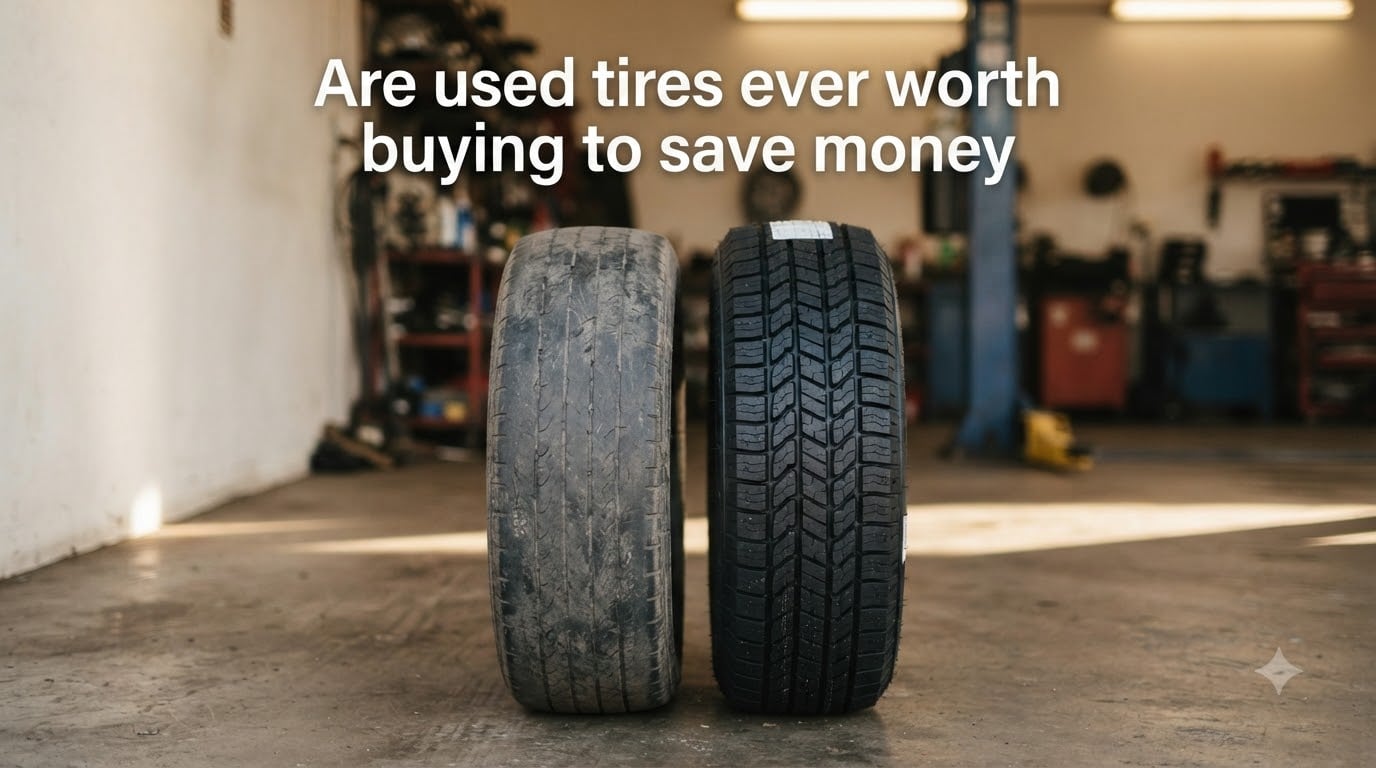
Every year, millions of drivers stare at their tire bills and wonder: can I get away with used tires? The short answer is yes — sometimes. But “sometimes” comes with a long list of conditions, and getting it wrong can cost you far more than you saved. I’ve spent weeks digging through tire technician forums, consumer safety data, and real buyer experiences to give you the straight story on whether buying second-hand tires is actually worth it for your wallet — and your safety.
Table of Contents
Are Used Tires Ever Worth Buying?
Used tires can be worth buying, but only under very specific conditions. If the tire is less than 6 years old, has at least 4/32″ of tread remaining, shows no sidewall damage, and comes from a verifiable source — yes, it can save you real money. For most everyday drivers covering 12,000 or more miles per year on a daily commuter, though, new tires are almost always the smarter long-term investment.
Used tires ARE worth buying when:
- You need a short-term fix for a vehicle you’re selling within 6-12 months
- You find verified dealership take-offs with near-full tread at a steep discount
- You’re buying seasonal snow tires that will only see 3-4 months of use per year
- You’re on a tight budget and can verify the tire’s age, tread, and condition yourself
Used tires are NOT worth buying when:
- You plan to keep the vehicle for more than a year and drive 10,000+ miles annually
- You can’t verify the DOT date code or inspect the tire in person
- The tire has any sidewall cracks, bulges, or uneven wear patterns
- You’re mixing one or two used tires with newer tires on the same axle
Why People Buy Used Tires
Cost is the number one reason. A full set of four new tires for a typical sedan runs anywhere from $400 to $800 installed. The same set of used tires — if you know where to look — can cost $150 to $280 total. On Reddit’s r/Frugal and r/tires communities, buyers regularly report picking up a set of four used tires for $150 plus another $100 for installation. That’s a real savings of $150 to $550 depending on the brand.
For many budget-constrained drivers, that gap is not a luxury choice — it’s the difference between having safe tires and driving on bald ones. Delivery drivers, rideshare operators, and people with older vehicles approaching end of life all have rational reasons to consider pre-owned tires.
The problem is that the upfront savings can be misleading. What looks like a deal at the tire shop might end up costing more per mile than a budget set of new tires, and in the worst case, it can put you in a dangerous situation on the highway.
The Real Risks of Used Tires
When you buy a used tire, you’re buying an unknown history. The previous owner might have driven it underinflated for months, overloaded their vehicle, hit potholes at speed, or left it sitting in a hot garage for years. None of that shows up in a visual inspection.
Hidden internal damage is the biggest risk. A tire can look perfectly fine on the outside while its internal belts have separated from repeated impacts or chronic underinflation. Belt separation leads to blowouts — sudden, violent tire failures that are especially dangerous at highway speed. According to the National Highway Traffic Safety Administration (NHTSA), tire-related failures contribute to roughly 11,000 crashes per year in the United States.
Rubber deterioration is the second major concern. Rubber degrades over time regardless of use. Exposure to UV light, heat, and ozone causes oxidation that makes the compound brittle and prone to cracking. A tire that sat in a sunny driveway for five years might have plenty of tread but be genuinely unsafe to drive on.
No warranty coverage is the third downside. New tires come with manufacturer warranties — often 40,000 to 80,000 miles of tread life coverage and sometimes road hazard protection. Used tires come with nothing. If a used tire fails the day after you buy it, you have no recourse unless the seller offers a short-term guarantee, which is rare.
Wet and snow performance degrades faster than tread depth suggests. As rubber ages, it hardens and loses the flexibility needed to grip wet or cold surfaces. A used tire with 5/32″ of tread might test fine on dry pavement but hydroplane easily in rain because the rubber compound has stiffened with age.
How to Check Tire Age: Reading the DOT Date Code
Every tire sold in the United States has a DOT (Department of Transportation) code stamped on the sidewall. The last four digits of this code tell you exactly when the tire was manufactured.
How to read it:
- Look for “DOT” followed by a string of letters and numbers on the tire sidewall
- Find the last four digits — this is the date code
- The first two digits are the week of manufacture (01 = first week of January, 52 = last week of December)
- The last two digits are the year (24 = 2024, 19 = 2019)
For example, a DOT code ending in 2519 means the tire was manufactured in the 25th week of 2019 — roughly mid-June 2019. That tire is now over 7 years old and should be avoided regardless of how much tread it has left.
The six-year rule: Most tire manufacturers and safety organizations including NHTSA recommend replacing tires that are 6 years old or older, regardless of tread condition. Some European standards call for replacement at 5 years. If you can’t verify the DOT date code — or the code looks like it’s been tampered with — walk away immediately.
Tread Depth: How Much Is Enough?
Tread depth determines how well a tire channels water away from the contact patch. Less tread means more hydroplane risk and longer stopping distances, especially in wet conditions.
Key tread depth numbers to know:
- 2/32″ — Legal minimum in most U.S. states. At this depth, tires are legally bald and genuinely dangerous in any rain.
- 4/32″ — The recommended minimum for used tire purchases. At 4/32″, a tire still has meaningful wet traction and will last long enough to justify the purchase.
- 10/32″ to 11/32″ — Typical new tire tread depth. Most new tires start here.
The penny test: Insert a penny into the tread groove with Lincoln’s head pointing down. If you can see the top of Lincoln’s head, the tread is at or below 2/32″ — the tire is worn out. For used tire shopping, do the quarter test instead: if Washington’s head is visible at the top of the quarter, the tread is at approximately 4/32″ — the minimum you should accept.
Ask the seller to measure tread depth with a gauge in front of you. If they refuse or don’t have one, that’s a red flag about how seriously they take tire safety.
Used vs New Tires: The Real Cost Per Mile
The upfront price difference between used and new tires is obvious. What most buyers don’t calculate is the cost per mile — and that’s where the math gets interesting.
| Factor | Budget Used Tire | Premium Used Tire | New Budget Tire |
|---|---|---|---|
| Average price per tire | $25-$45 | $50-$80 | $80-$120 |
| Expected remaining life | 10,000-20,000 miles | 20,000-35,000 miles | 40,000-60,000 miles |
| Warranty coverage | None | None (rarely 30 days) | 40,000-80,000 miles |
| Cost per mile (tread) | $0.002-$0.004 | $0.002-$0.003 | $0.0015-$0.0025 |
| Road hazard protection | No | No | Often included |
| Wet performance risk | High (unknown age) | Moderate | Low |
As Raymond’s Tire Service points out, a cheap used tire might seem like a deal at first, but when you factor in the 10,000-20,000 miles of remaining life versus 40,000-60,000 miles from a new budget tire, the per-mile cost often favors new rubber. And that calculation doesn’t include the safety margin or warranty protection that new tires provide.
When Used Tires ARE Actually Worth It
Despite the risks, there are a few narrow scenarios where buying used tires genuinely makes financial sense:
1. You’re selling the vehicle within a year. If your car is going to a new owner in 6-12 months and you just need tires that are safe enough to get through that period, used tires with verified age and tread can save you hundreds. You won’t be around for the long-term wear-out anyway.
2. You found verified dealership take-offs. These are tires removed from new vehicles at dealerships — often because the customer wanted a different wheel/tire package. Take-offs typically have 90%+ tread remaining, a known age, and no history of abuse. They’re the closest thing to “used-new” you can find.
3. You need seasonal snow tires. Winter tires that only see 3-4 months of use per year can last many seasons. A set of used snow tires with 7/32″ of tread and a recent DOT date can serve you well for several winters at a fraction of the cost.
4. You have an older vehicle with limited remaining life. If your car is worth $2,000 and needs tires, spending $600 on new rubber doesn’t make financial sense. Used tires that are safe and road-legal can bridge the gap until you’re ready for a new vehicle.
Used Tire Inspection Checklist
If you decide to buy used, here’s exactly what to check before handing over any money. Print this out or save it on your phone for your next tire shopping trip:
- DOT Date Code — Read the last 4 digits. Reject any tire older than 6 years. If the code is unreadable or looks re-stamped, walk away.
- Tread Depth — Measure with a gauge at multiple points across the tread. Minimum 4/32″ for any tire worth buying. Check that wear is even across the full width.
- Sidewall Condition — Look for cracks, cuts, bulges, or blisters. Any sidewall damage means the tire’s internal structure is compromised. Reject immediately.
- Even Wear Pattern — Uneven wear (more worn on one edge, center, or shoulder) suggests alignment or suspension problems that the tire was subjected to. Walk away.
- Patches and Repairs — Check the tread surface and inner liner for plugs or patches. A single properly-plugged tread puncture may be acceptable. Multiple repairs or sidewall patches are not.
- Brand and Model — Stick with recognizable brands (Michelin, Goodyear, Continental, Bridgestone, Hankook, etc.). Unknown off-brand tires have no reliable safety data.
- Load Rating and Size — Verify the tire size matches your vehicle’s requirements exactly. Check that the load index meets or exceeds what your vehicle’s door placard specifies.
- Matching Sets — Ideally buy four identical tires. At minimum, never mix different brands, models, or significantly different tread depths on the same axle. Mismatched tires cause uneven handling and accelerated wear.
Used Tire Scams and How to Avoid Them
The used tire market has its share of dishonest sellers. Here are the most common scams and how to spot them:
DOT code re-stamping: Some sellers grind off the original DOT date code and stamp a newer date. Look for uneven surfaces, inconsistent font depth, or residue around the code area. If the DOT code looks suspiciously fresh compared to the tire’s overall condition, it’s likely been altered.
Mismatched tire sets sold as matching: Sellers will sometimes bundle four tires of the same size but different brands, models, or ages into one “matching set.” Always check that all four tires have the same brand, model, and similar DOT dates.
“Like new” claims on aged tires: A tire with deep tread but a 2018 DOT date is not “like new” — it’s 8 years old and the rubber has degraded. Don’t let high tread depth distract you from checking the manufacture date.
Cash-only, no-receipt deals: If a seller insists on cash only and won’t provide any documentation, they’re likely selling tires they don’t want traced. Reputable used tire shops will give you a receipt with the DOT codes and a return policy.
Affordable Alternatives to Used Tires
If you need to save money but are nervous about the risks of used tires, there are several middle-ground options worth considering:
Budget new tire brands: Brands like Ironman, Sentury, Atlas, and Lexani offer new tires with full warranties starting at lower price points. You get brand-new rubber, manufacturer backing, and zero unknown-history risk.
Tire financing: Many tire shops offer 6-12 month interest-free financing. Discount Tire, Tire Rack, and even some independent shops let you spread the cost over several months without paying extra. This turns a $500 purchase into manageable monthly payments.
Dealership take-off programs: Some dealerships sell the nearly-new tires they remove from vehicles for customers who upgrade wheels. These are often listed on local marketplaces or through the dealership’s parts department.
Online tire retailers: Sites like Tire Rack, SimpleTire, and Discount Tire Direct frequently run sales and rebates that bring the cost of new tires significantly below retail. Factor in the free or discounted installation many of them offer through partner shops.
Frequently Asked Questions
Is it safe to use a used tire?
A used tire can be safe if it meets specific conditions: less than 6 years old per the DOT date code, at least 4/32 inch of tread remaining, no sidewall damage or cracks, and no signs of uneven wear or internal belt separation. Without verifying these factors, you are taking a real safety risk.
Is it safe to buy 2nd hand tires?
Buying second-hand tires is safe when you inspect them thoroughly before purchase. Check the DOT manufacture date, measure tread depth at multiple points, examine sidewalls for cracks or bulges, and buy from a reputable seller who offers at least a short-term return policy. Avoid buying tires sight-unseen from online marketplaces.
What is the 3% rule for tires?
The 3% rule for tires refers to the maximum recommended difference in overall tire diameter when mixing tires on an axle. If one tire is more than 3% different in diameter from the other, it can cause drivetrain stress, uneven handling, and accelerated wear. This is why tire experts recommend always buying matching sets.
How much should I pay for used tires?
Used tires typically cost between $25 and $80 per tire depending on brand, size, remaining tread, and condition. Budget used tires in common sizes run 25 to 45 dollars each, while premium brands with significant tread remaining can cost 50 to 80 dollars. Factor in 15 to 30 dollars per tire for mounting and balancing.
Is $60 too much for a used tire?
Whether $60 is too much depends on the tire’s brand, age, tread depth, and condition. For a premium brand like Michelin or Continental that is under 3 years old with 7/32 inch or more tread remaining, $60 is a fair price. For an off-brand tire that is 4 plus years old with only 5/32 inch of tread, $60 is too much.
How long do used tires last?
Used tires typically last 10,000 to 35,000 miles depending on how much tread remains and the tire’s age. A used tire with 6/32 inch of tread might deliver 15,000 to 20,000 miles. One with 8/32 inch could reach 30,000 miles. Rubber degradation from age shortens this further, even if tread depth looks adequate.
What are the disadvantages of buying used tires?
The main disadvantages include unknown tire history and potential hidden internal damage, no manufacturer warranty, shorter remaining tread life compared to new tires, degraded rubber from age and weather exposure, and higher risk of blowouts or hydroplaning in wet conditions. You also cannot verify if the tire was ever involved in a recall.
How to tell if a used tire is safe?
To tell if a used tire is safe, check five things: read the DOT date code to confirm it is less than 6 years old, measure tread depth to verify at least 4/32 inch remains, inspect sidewalls for cracks or bulges, look for uneven wear patterns that indicate alignment problems, and check for patches or repairs that may compromise structural integrity.
Final Verdict
So, are used tires ever worth buying to save money? Yes — but only in specific situations where you can verify the tire’s age, tread depth, and condition, and where your driving needs are short-term or low-mileage. For most daily drivers covering normal annual mileage, the math favors new budget tires when you factor in tread life, safety margins, and warranty protection. The inspection checklist above gives you a solid framework for making that call. If you can check every box, a good set of used tires can genuinely save you money. If you can’t verify even one item on the list, your wallet — and your safety — are better served by new rubber.