
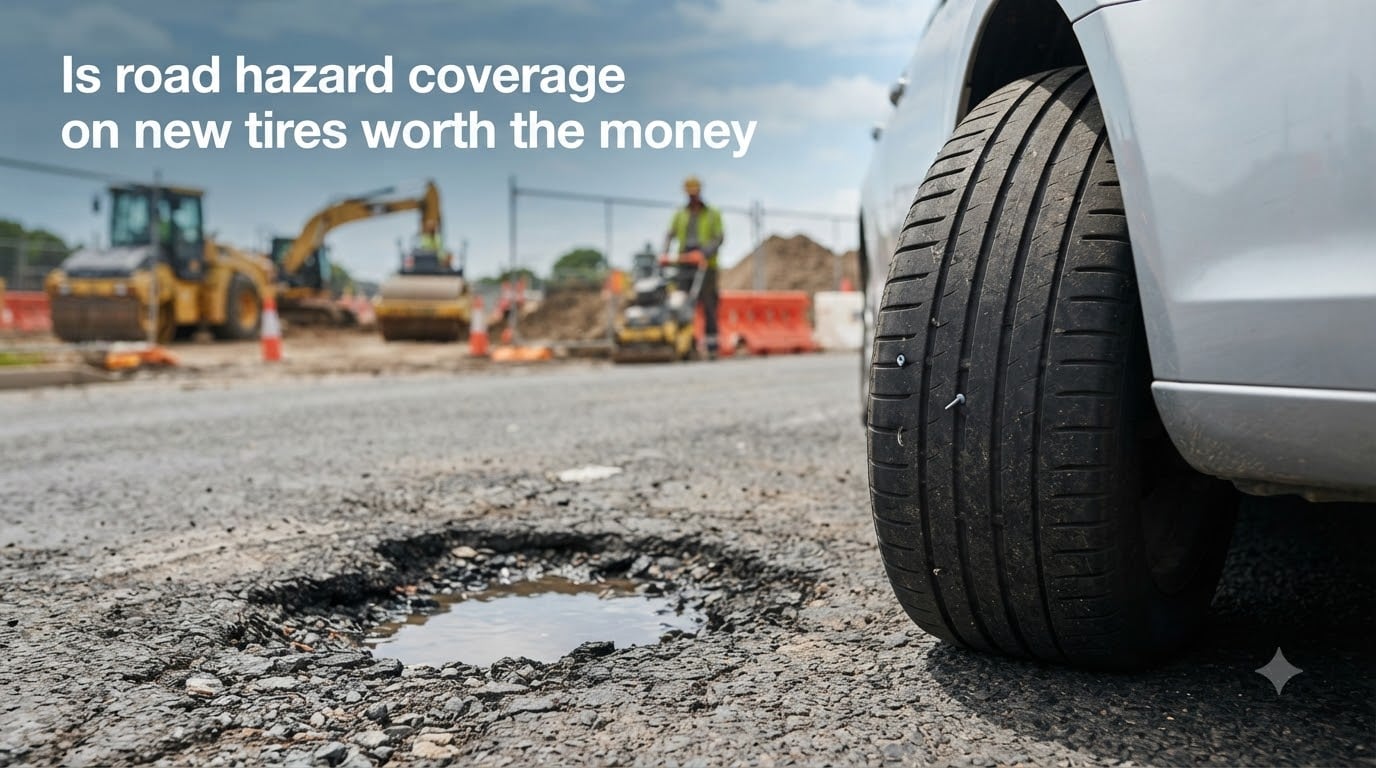
Is road hazard coverage worth it on new tires? For most drivers, yes — but only if you’re buying mid-range to premium tires and you don’t already have a healthy emergency repair fund. Road hazard coverage typically costs 10–15% of your tire price and protects against potholes, nails, glass, and road debris. According to Consumer Reports, roughly 24% of buyers actually use their coverage. A single tire replacement can cost several hundred dollars, so that small upfront investment can pay for itself the first time you hit a pothole.
But it’s not a clear-cut decision for everyone. The value depends heavily on where you drive, what tires you buy, and whether your retailer already includes free road hazard coverage. In this guide, I’ll break down exactly what road hazard coverage includes, what it doesn’t, how much it costs, and give you a decision checklist to help you figure out if it’s the right call for your situation.
Table of Contents
What Is Road Hazard Coverage?
Road hazard coverage is a limited warranty you can purchase when buying new tires that pays to repair or replace tires damaged by everyday road hazards during normal driving. This includes things like potholes, nails, screws, broken glass, and other debris you encounter on public roads.
Here’s an important distinction many people miss: road hazard coverage is a warranty, not insurance. It’s regulated differently, has specific exclusions, and doesn’t cover collision damage, vandalism, or neglect. Understanding this difference helps you set the right expectations before you buy.
Road hazard coverage is also separate from your tire’s manufacturer warranty. The manufacturer warranty covers defects in materials and workmanship, and sometimes includes a mileage guarantee. Road hazard coverage fills the gap — it protects against external damage the manufacturer never promised to cover.
What Does Road Hazard Coverage Include?
A typical road hazard warranty covers tire damage caused by potholes, nails, screws, broken glass, metal debris, and other objects found on public roads. If your tire can’t be safely repaired, the warranty replaces it. If it can be repaired, the repair is typically done for free.
Most plans use a prorated replacement model based on remaining tread depth. For example, if your tire had 10/32 inch of tread when new and now has 5/32 inch remaining, you’ve used 50% of the tread life — so you’d pay roughly 50% of the replacement tire cost. The warranty covers the rest.
Most plans also include mounting and balancing for the replacement tire, which saves you the cost of those services on top of the replacement.
What Road Hazard Coverage Doesn’t Cover
Knowing the exclusions is just as important as knowing what’s included. Road hazard warranties typically do not cover:
- Normal wear and tear or tread life exhaustion
- Damage from collisions, accidents, or hitting curbs
- Vandalism, theft, or fire damage
- Off-road use or driving on unpaved surfaces
- Tires used in competitive events
- Damage from improper inflation, overloading, or misalignment
- Tires with less than 2/32 inch of tread remaining
That last point is critical. The 2/32 inch tread depth threshold is the industry standard — once your tires wear past that point, the warranty no longer applies regardless of what causes the damage. This is also the legal minimum tread depth in most states.
Does Road Hazard Cover Sidewall Damage?
Yes, most road hazard warranties cover sidewall damage caused by potholes or road debris, as long as the tire still has more than 2/32 inch of tread remaining and the damage occurred during normal driving on public roads. Sidewall damage from curbs, off-road driving, or impact with fixed objects is typically excluded.
How Much Does Road Hazard Coverage Cost?
The cost of road hazard coverage depends on tire size, type, and retailer. Here’s what you can generally expect:
That works out to roughly 10–15% of the tire price. On a set of standard all-season tires, you might pay a modest amount per tire for road hazard coverage. On a set of premium performance tires, the coverage cost scales proportionally — still a small fraction of what a single replacement would cost.
The coverage period is usually either a set number of months (36–60 months) or until the tread wears down to 2/32 inch — whichever comes first. Some retailers offer lifetime coverage for the usable tread life of the tire.
Retailers That Include Free Road Hazard Coverage
Before you pay extra for coverage, check whether your retailer already includes it for free:
- Costco — includes road hazard coverage with every tire purchase
- Tire Rack — offers free road hazard warranty on most tires
- Discount Tire — includes free road hazard certificates with tire purchase
- Les Schwab — provides complimentary road hazard protection
If you’re buying from one of these retailers, the “should I buy road hazard coverage” question is already answered for you. Just make sure you understand the specific terms, since free plans may have shorter coverage periods or different prorating formulas than paid upgrades.
Pros and Cons of Road Hazard Coverage
The Pros
- One pothole can pay for the coverage multiple times over. A single tire replacement for a premium tire can cost hundreds of dollars. If you paid a small fee for coverage, that’s a significant return.
- Peace of mind for expensive tires. If you’re running premium tires, the coverage protects a significant investment for a small fee.
- Free repairs are included. Many plans cover flat tire repairs from nails and screws at no extra cost, saving you the typical repair shop fee.
- Mounting and balancing included. Replacement tires are typically mounted and balanced for free under the warranty.
- Real-world usage is common. Consumer Reports found that about 24% of road hazard warranty holders used their coverage — that’s roughly 1 in 4 buyers.
The Cons
- Most people never use it. Flip that Consumer Reports stat — 76% of buyers pay for coverage they never use. If you drive on well-maintained roads, your odds of needing it are lower.
- Simple repairs are cheap anyway. A tire plug or patch is an inexpensive fix at most tire shops. If your damage is minor, the warranty might save you less than you paid for it.
- The 2/32 inch cutoff is strict. If your tires are already partially worn, you have less runway for the coverage to apply. Some forum users report frustration when claims are denied because tread depth was just barely at or below the threshold.
- It’s highly profitable for retailers. That alone should tell you the math favors the seller in most cases. The retailer is betting most buyers won’t file claims.
- Coverage isn’t transferable at most retailers. If you sell your car, the road hazard warranty usually doesn’t transfer to the new owner, which limits the resale value of your tires.
When Road Hazard Coverage Is Worth the Money
Road hazard coverage delivers the most value in specific scenarios. If any of these describe your situation, it’s a smart buy:
You’re buying expensive tires. If you’re spending a premium per tire on performance, low-profile, or specialty tires, the cost of coverage is small relative to the replacement cost. A single pothole can destroy a low-profile tire in an instant.
You regularly drive through construction zones or poorly maintained roads. Urban areas with frequent potholes, construction corridors, and heavy truck traffic generate more road debris. If your daily commute involves any of these, your risk is significantly higher.
You drive an AWD or 4WD vehicle. With all-wheel-drive systems, you often need to replace all four tires when one is destroyed to avoid drivetrain damage. That turns a single-tire problem into a four-tire expense.
You lease your vehicle. Lease return inspections will flag tire condition. If you need to replace tires before turning in the lease, road hazard coverage can save you serious money.
You don’t have an emergency tire fund. If replacing a tire would strain your budget, the coverage acts as a low-cost safety net. Paying a small amount now to avoid a much larger surprise later is good financial planning.
You drive an electric vehicle. EV tires tend to be more expensive due to heavier vehicle weight, instant torque wear, and specialized compounds designed for range optimization.
When to Skip Road Hazard Coverage
Sometimes the coverage isn’t worth the cost. Here’s when you can confidently pass:
You buy from retailers that include it free. Costco, Tire Rack, Discount Tire, and Les Schwab all include road hazard protection at no extra charge. If you’re already shopping there, don’t pay for duplicate coverage elsewhere.
You drive on well-maintained roads. If your daily commute is mostly highways and suburban streets in good condition, your risk of pothole and debris damage is lower. Many drivers go years without a single road hazard incident.
You’re buying budget tires. If a replacement tire is inexpensive relative to the coverage cost, the math starts to favor self-insurance — setting aside the coverage cost yourself and using it only if needed.
You have a healthy emergency fund. Self-insuring means you set aside the money you would have spent on coverage and use it if needed. If you can absorb an unexpected tire replacement without stress, you might prefer to keep that money in your own pocket.
Your tires are already partially worn. Since coverage only applies down to 2/32 inch tread depth, buying coverage on tires that are already half-worn gives you less effective protection.
Road Hazard Warranty vs Manufacturer Tire Warranty
These two warranties cover different things, and understanding the distinction prevents surprises:
A manufacturer warranty covers defects in materials and workmanship. If the tire fails due to a manufacturing flaw, the manufacturer replaces it. Some manufacturer warranties also include a mileage guarantee — if the tire wears out before the rated mileage, you get a prorated replacement.
A road hazard warranty covers damage from external road conditions — potholes, nails, glass, debris. This type of damage is explicitly excluded from manufacturer warranties. The two types of coverage complement each other but don’t overlap.
Some tire brands offer their own free road hazard programs that layer on top of the manufacturer warranty. Bridgestone and Continental, for example, have offered complimentary road hazard coverage on select tire lines. Always check with the tire manufacturer before assuming you need to buy separate coverage.
How to File a Road Hazard Claim
If you do need to use your coverage, here’s how the process typically works:
Step 1: Document the damage. Take photos of the damaged tire, the hazard that caused it (if identifiable), and your tread depth. Many retailers use a tread depth gauge during the inspection, but having your own photos speeds things up.
Step 2: Return to the retailer where you bought the tires. Most road hazard warranties require you to bring the vehicle back to the original retailer. Some allow claims at any location within their chain, but third-party warranties may require specific service centers.
Step 3: Get the inspection. A technician inspects the tire to confirm the damage is from a covered road hazard and that tread depth is above the 2/32 inch minimum. Claims can be denied if the damage is from wear, improper maintenance, or non-covered causes.
Step 4: Repair or replace. If the tire can be safely repaired (typically a puncture in the tread area), the repair is done at no charge. If the tire is beyond repair, you receive a prorated replacement based on remaining tread life.
The entire process usually takes 30 minutes to a few hours, depending on whether they have a replacement tire in stock. Keep your original purchase receipt and warranty paperwork — most retailers require proof of purchase to process a claim.
Road Hazard Programs by Retailer
Not all road hazard programs are created equal. Here’s how major tire retailers compare:
Costco includes free road hazard coverage on every set of tires purchased through their tire center. Coverage lasts for the usable life of the tire down to 2/32 inch tread depth. Costco’s program is well-regarded for straightforward claims and no-hassle service.
Tire Rack offers a free road hazard warranty on most tires sold through their website and partners. The coverage period varies by tire but typically runs 2–3 years. Tire Rack consistently earns praise in online forums for honoring claims without friction.
Discount Tire includes complimentary road hazard certificates with tire purchases. Their program covers free flat repairs and prorated replacements. Discount Tire is one of the most frequently recommended retailers by forum users for claim experience.
Les Schwab provides free road hazard protection alongside their tire purchases. They’re known for a generous approach to free flat repairs and tire inspections, even for tires not purchased at Les Schwab.
Firestone offers a paid road hazard protection plan that includes coverage for potholes, nails, glass, and road debris. Firestone’s plan is prorated and non-transferable. Mounting, balancing, and valve stems are included with replacements.
One forum user shared their experience: “I had 3 of 4 tires replaced on my wife’s SUV within a short time period. That experience turned me into a road hazard warranty believer for life.” Stories like these show the coverage’s real value when you actually need it.
Should You Buy Road Hazard Coverage? A Quick Checklist
Answer these questions honestly to see if road hazard coverage makes sense for you:
- Are you buying mid-range to premium tires? If yes, the coverage is almost always worthwhile.
- Does your retailer include free coverage? If yes, you’re already covered — no need to buy elsewhere.
- Do you regularly drive on roads with potholes, construction, or debris? If yes, your risk is higher and coverage is more valuable.
- Do you drive an AWD or 4WD vehicle? If yes, a single tire failure could cost you four replacements.
- Could you comfortably pay for an unexpected tire replacement out of pocket? If no, the coverage is cheap financial protection.
- Are you leasing your vehicle? If yes, coverage protects you at lease return.
If you answered “yes” to three or more of these, road hazard coverage is likely a smart investment for you. If you answered “no” to most of them, self-insuring is probably the better bet.
Frequently Asked Questions
Is road hazard coverage worth it on new tires?
Road hazard coverage is worth it for most drivers buying mid-range to premium tires, especially those driving in areas with potholes or construction. At 10-15% of the tire price, it protects against damage that could cost hundreds of dollars to fix. About 24% of buyers actually use their coverage according to Consumer Reports.
What does road hazard coverage on tires cover?
Road hazard coverage typically covers tire damage from potholes, nails, screws, broken glass, metal debris, and other objects found on public roads. It includes free flat repairs for minor punctures and prorated replacements for tires that can’t be safely repaired. Mounting and balancing are usually included with replacements.
How much does road hazard tire coverage cost?
Road hazard coverage typically costs 10-15% of the tire price. For standard passenger car tires, the cost is modest per tire. SUV and truck tires run slightly more, while performance and low-profile tires cost a higher percentage of their premium price. A full set of four can range widely depending on tire category and retailer.
Does road hazard warranty cover sidewall damage?
Most road hazard warranties cover sidewall damage caused by potholes or road debris during normal driving on public roads, as long as the tire has more than 2/32 inch of tread remaining. Sidewall damage from curbs, off-road use, or hitting fixed objects is typically excluded.
Is road hazard the same as the manufacturer tire warranty?
No, these are different coverages. A manufacturer warranty covers defects in materials and workmanship, and sometimes includes a mileage guarantee. Road hazard coverage protects against external damage from potholes, nails, glass, and road debris — damage the manufacturer warranty explicitly excludes.
How does road hazard warranty work?
When you damage a tire, return to the original retailer with your purchase receipt. A technician inspects the tire to confirm the damage is from a covered road hazard and that tread depth is above 2/32 inch. If repairable, it is fixed for free. If not, you receive a prorated replacement based on remaining tread life.
What is not covered by road hazard warranty?
Road hazard warranties do not cover normal wear and tear, collision or curb damage, vandalism, fire, off-road use, competitive events, improper inflation or overloading, or tires with less than 2/32 inch of tread remaining. Damage from non-road hazards like garage incidents or car washes is also excluded.
Does Discount Tire offer free road hazard coverage?
Yes, Discount Tire includes complimentary road hazard certificates with every tire purchase. Their program covers free flat repairs for minor punctures and prorated replacements for tires that can’t be safely repaired. Coverage lasts for the usable tread life of the tire down to 2/32 inch.
Can I buy road hazard coverage after I buy my tires?
Most retailers require you to purchase road hazard coverage at the time of tire purchase. Some retailers may allow you to add coverage within a short window (usually 30 days) after the original purchase, but this varies. Check with your specific retailer about their policy on adding coverage post-purchase.
Is road hazard protection a waste of money?
For 76% of buyers who never use it, the coverage is technically money spent without return. But for the 24% who do use it, it can save hundreds of dollars on a single claim. Whether it’s a waste depends on your tires, driving conditions, and financial situation. If you drive expensive tires on hazard-prone roads, it’s a smart investment. If you drive budget tires on smooth highways, self-insuring may be the better choice.
The Bottom Line
So, is road hazard coverage on new tires worth the money? For most drivers buying mid-range to premium tires, the answer is yes. As a small percentage of the tire price, it’s one of the cheapest protections you can buy for your vehicle. The 24% usage rate from Consumer Reports means it’s not a gimmick — real people use this coverage regularly.
The key is knowing your situation. If you’re buying from Costco, Tire Rack, Discount Tire, or Les Schwab, you already have free coverage included. If you’re buying expensive performance tires, driving through construction zones, or running an AWD vehicle that needs all four tires replaced at once, paid road hazard coverage is a no-brainer. If you’re on a tight budget with standard tires and smooth roads, self-insuring with an emergency fund is a perfectly reasonable alternative.