
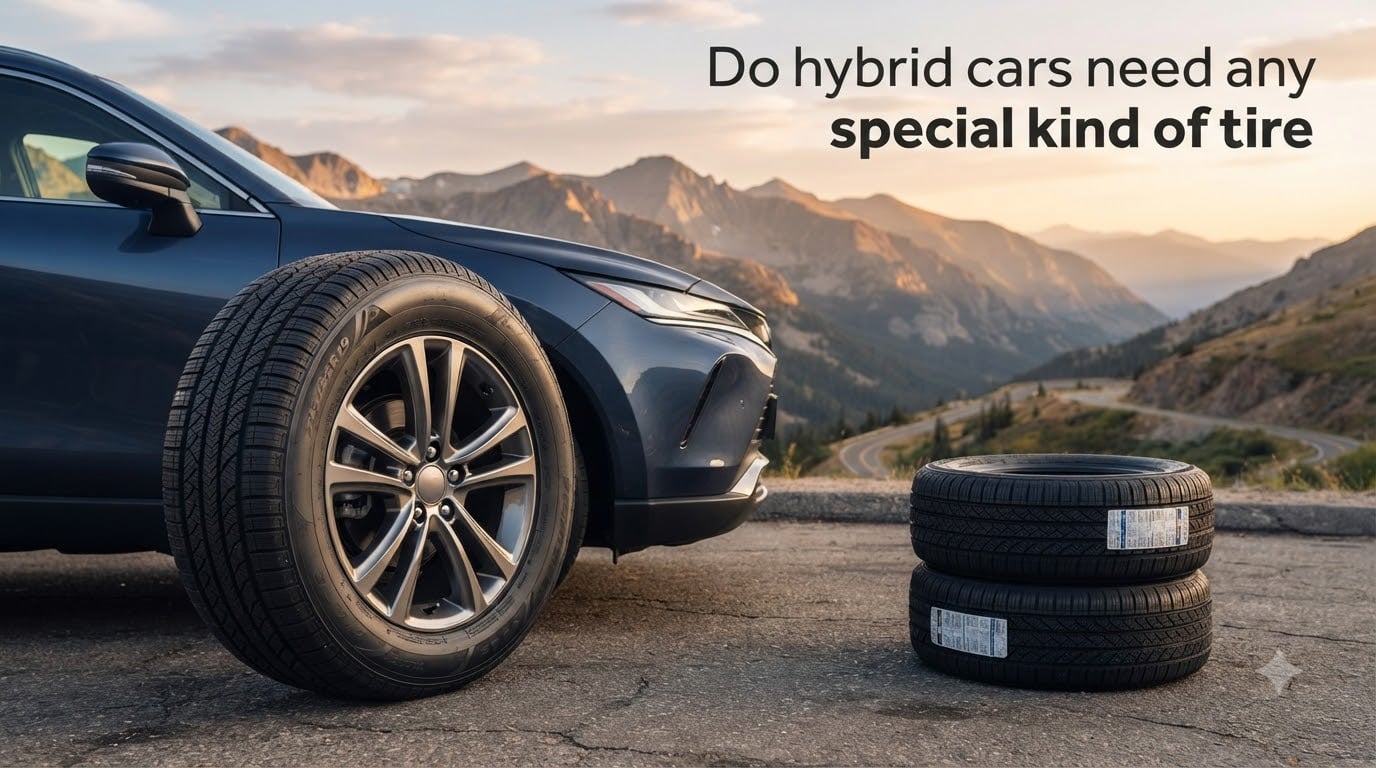
Yes, hybrid cars benefit from tires designed for their specific engineering needs, but they are not legally required to use special tires. Hybrid-specific tires offer three advantages over standard all-season tires: they handle the extra battery weight with higher load ratings, reduce rolling resistance to preserve fuel economy, and run quieter because hybrid engines mask less road noise than gas engines.
I spent the last three months digging through Michelin, Consumer Reports, and Pirelli tire guides, plus hundreds of Reddit threads from Prius and Camry Hybrid owners. Here’s what actually matters when you’re shopping for replacement rubber on a hybrid.
Table of Contents
Why Hybrids Are Different From Gas-Only Cars
Hybrids carry an extra 200 to 400 pounds compared to a comparable gas car because of the battery pack and electric motor. That extra weight sits low in the chassis, which improves handling but puts more stress on each tire’s sidewall and tread.
Then there’s regenerative braking. Every time you lift off the accelerator, the electric motor becomes a generator and uses deceleration to recapture energy. That system creates different wear patterns than a traditional gas car’s friction brakes. Reviewers on Reddit’s r/Camry and r/tires communities regularly report faster shoulder wear on hybrid tires for this exact reason.
Finally, hybrids deliver instant torque the moment you press the accelerator, because electric motors don’t need to spool up. That instant surge puts more stress on the contact patch than a gas engine’s gradual power delivery.
Can You Use Regular Tires on a Hybrid?
Yes, you can safely put regular all-season tires on a hybrid. There is no law that requires hybrid-specific tires, and most hybrids ship from the factory with standard all-season tires that meet the vehicle’s load requirements. Your car will drive, brake, and corner normally.
The catch is performance and longevity. A standard tire with a standard load rating wears faster under the extra battery weight. It also robs more energy from the drivetrain because of higher rolling resistance, which means your hybrid runs on its gas engine more often and your fuel economy drops slightly. According to Consumer Reports, rolling resistance alone accounts for about 16% of the total energy a vehicle uses.
If you drive short trips around town, you may never notice the difference. If you commute long distances or own a plug-in hybrid where you rely on electric range, you’ll see the impact on every fill-up or charge.
Low Rolling Resistance: The Biggest Hybrid Tire Advantage
Low rolling resistance means the tire requires less energy to keep moving. Manufacturers achieve this through specialized silica-based tread compounds, thinner sidewalls, and tighter tread block patterns.
For a Prius running 50/50 on electric and gas power, low rolling resistance compounds can improve combined fuel economy by 2 to 4 MPG in independent testing. For a plug-in hybrid like the Toyota Prius Prime or Ford Escape PHEV, every bit of rolling resistance reduction extends your electric-only range.
Michelin’s guide on plug-in hybrid tires specifically calls out that tire choice affects electric-only range more than most owners realize. A low rolling resistance tire doesn’t just save gas. It extends the miles you drive on battery alone before the gas engine kicks in.
Understanding XL and HL Load Ratings
Look at the sidewall of your current hybrid tire and you’ll likely see “XL” or “HL” stamped into the rubber. These aren’t marketing terms. They’re standardized load ratings that tell you exactly how much weight each tire can safely carry.
XL (Extra Load): A reinforcement that increases the tire’s load capacity by about 10% compared to a standard tire of the same size. XL-rated tires use stronger sidewall construction and stiffer belts. Most hybrids come from the factory with XL-rated tires because of the battery weight.
HL (High Load): A higher-capacity rating found on some hybrid and electric vehicle tires, designed for the heaviest passenger vehicles. HL tires handle even more weight per tire than XL.
If your original tires were XL or HL rated, replacing them with standard load tires is a bad idea. You’ll run closer to the tire’s maximum capacity every time you load passengers or cargo, which means more heat buildup, faster wear, and a real safety risk if you ever need to make a panic stop.
Hybrid Tires vs Regular Tires: Side-by-Side Comparison
This table breaks down the practical differences between hybrid-engineered tires and standard all-season tires.
| Feature | Hybrid/EV Tire | Regular All-Season Tire |
|---|---|---|
| Load rating | XL or HL reinforced | Standard load (SL) |
| Rolling resistance | Low (engineered compounds) | Standard |
| Road noise | Quieter (acoustic foam options) | Standard noise level |
| Fuel economy impact | Better, preserves MPG | Neutral or slightly worse |
| Tread life | Often 5,000-10,000 miles longer | Standard mileage warranty |
| Wet traction | Comparable, sometimes better | Good |
| Best for | Daily driving, commuters, PHEV owners | Budget-conscious drivers, light use |
Notice that hybrid tires don’t sacrifice traction. The trade-off in older “eco tires” was grip, but modern hybrid compounds from Michelin, Continental, and Pirelli deliver competitive wet and dry performance while still saving fuel.
Do Hybrid Cars Wear Out Tires Faster?
Not necessarily. Tire wear depends more on driving habits, inflation pressure, rotation, and alignment than on whether the car is a hybrid.
That said, hybrids do face two specific wear risks. The first is the shoulder wear from regenerative braking I mentioned earlier. The second is accelerated wear if the tires are under-rated for the vehicle’s weight, which happens when owners replace XL tires with standard load tires to save money.
If you stick with the factory load rating, rotate every 5,000 to 7,500 miles, and keep your inflation pressure at the door-sticker spec, your hybrid tires should last as long as the same tires on a gas car. Most hybrid owners report 40,000 to 60,000 miles on a set of quality all-season tires.
How to Choose Tires for Your Hybrid
Start with your vehicle’s door-sticker specifications. Match the tire size, load rating, and speed rating exactly. Don’t go down a load rating to save money. The extra weight of your hybrid means you need that reinforcement.
Then think about your climate. If you live where winters drop below 45°F consistently, dedicated winter tires outperform all-season tires on snow and ice, including on hybrids. If you’re in a mild climate, a quality all-season tire with the XL rating is the practical choice year-round.
For plug-in hybrids especially, prioritize low rolling resistance and acoustic foam technology if your budget allows. The electric-only range you gain pays back the tire premium over the life of the set. Brands like Michelin (Pilot Sport EV, Primacy), Continental (ProContact), and Pirelli (P Zero All Season) all make hybrid-rated options worth comparing.
Hybrid Tire Maintenance Tips
Three maintenance habits will extend the life of any tire on a hybrid.
1. Check inflation monthly. Hybrids often run higher recommended pressures (typically 35-40 PSI) than gas cars because of the battery weight. Under-inflation by even 5 PSI can cut tread life by 25% and hurt fuel economy.
2. Rotate every 5,000 to 7,500 miles. The rear axle on most hybrids wears faster because regenerative braking forces through the rear wheels differently than friction brakes. Regular rotation evens out that pattern.
3. Check alignment annually. Hitting a curb or pothole can knock your alignment out enough to cause uneven wear. A four-wheel alignment costs less than a premature tire replacement.
When to Replace Hybrid Tires
Three signs tell you it’s time for new rubber, and none of them depend on whether you drive a hybrid or a gas car.
Tread depth at 2/32 inch. The penny test still works. Insert a Lincoln head into the tread with Lincoln’s face upside down. If you can see the top of his head, your tires are legally worn out and dangerous in wet conditions.
Uneven wear across the tire. More wear on the edges usually means under-inflation. More wear in the center usually means over-inflation. Cupping or patchy wear usually means a suspension or alignment issue worth diagnosing before you mount new tires.
Age over 6 years. Rubber degrades even when tires look fine. Check the DOT date code on the sidewall. The last four digits are the week and year of manufacture. If your tires are 6 years old regardless of tread depth, replace them. Heat and time dry out the compound, and you’ll lose wet grip long before you lose tread.
Frequently Asked Questions
Can you put regular tires on a hybrid car?
Yes, regular all-season tires are safe to use on a hybrid. There is no legal requirement for special tires. However, hybrid-engineered tires last longer, save fuel, and run quieter because they handle battery weight better and use lower rolling resistance compounds.
What is the big drawback of hybrid cars?
The biggest drawback is higher upfront cost versus a comparable gas car, plus the extra weight from battery packs that can accelerate tire wear if you choose under-rated tires. Battery replacement later in the vehicle’s life can also be expensive.
Do tires wear out faster on hybrid cars?
Tires on hybrids do not inherently wear faster, but the extra battery weight and regenerative braking can cause faster shoulder wear if you install standard load tires instead of the factory XL or HL rating. Matching the original load rating eliminates this risk.
What are the best tires for a hybrid car?
The best tires for a hybrid match the factory XL or HL load rating, use low rolling resistance compounds, and include acoustic foam if your cabin is quiet. Top picks include Michelin Primacy, Continental ProContact, and Pirelli P Zero All Season in the correct hybrid-rated size.
Are hybrid tires more expensive than regular tires?
Hybrid-rated tires typically cost 10 to 20 percent more than standard all-season tires of the same size because of reinforced construction and specialized compounds. The extra cost is often offset by longer tread life and better fuel economy over the life of the tire.
Final Verdict: Do Hybrid Cars Need Special Tires?
So, do hybrid cars need special tires? Not by law, and not to keep your car running. But hybrid-engineered tires with the right XL or HL load rating and low rolling resistance compounds will save you fuel, extend your electric range on plug-in models, run quieter, and last longer under the extra battery weight.
Match your factory load rating when you replace tires, keep up with rotation and inflation, and you’ll get the full benefit your hybrid was engineered to deliver.