
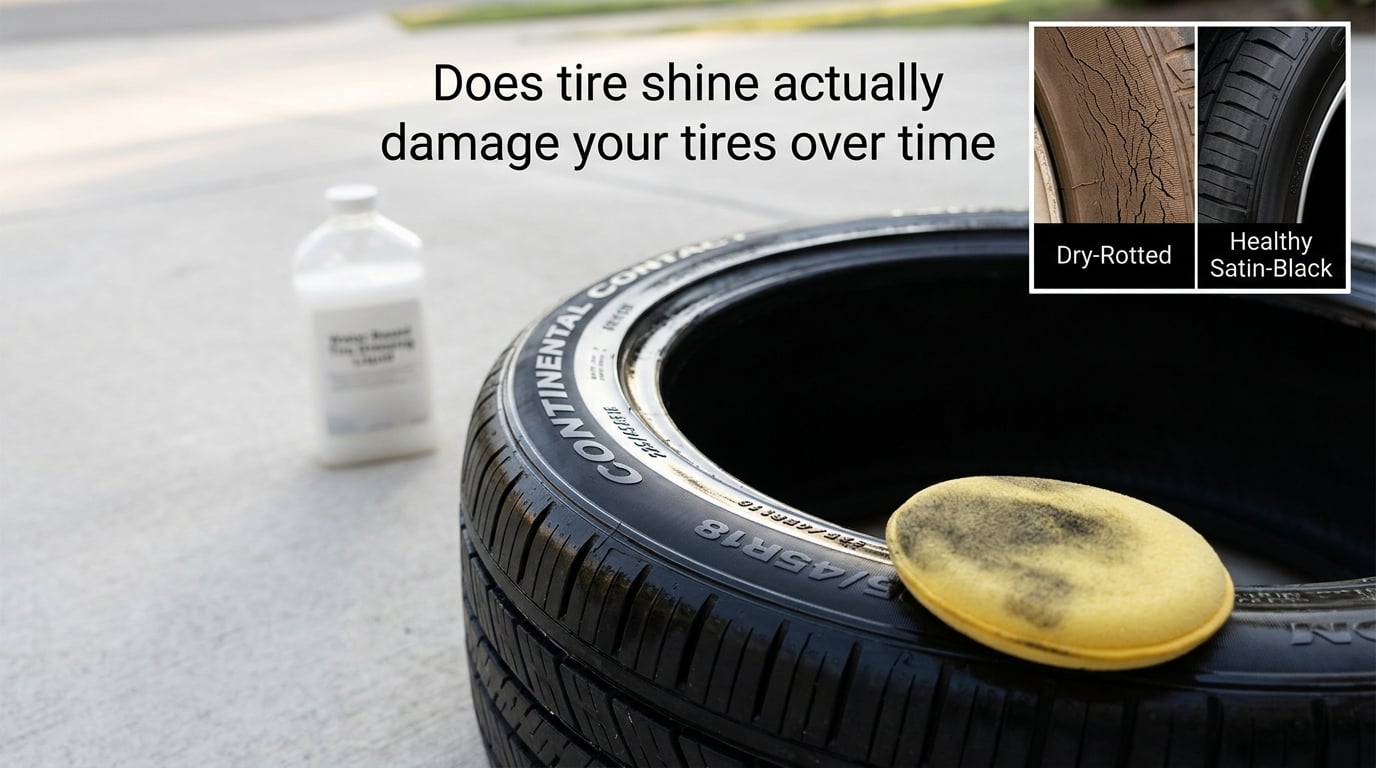
Drivers want glossy, deep-black sidewalls, but they also want their tires to last. The short answer to whether tire shine actually damages your tires over time is yes, but only for some formulas. Solvent-based tire shines strip antioxidants and antiozonants from the rubber compound, which leads to browning, sidewall cracking, and eventually premature tire dry rot. Water-based tire shines, on the other hand, are far gentler and most detailers consider them safe when applied correctly.
This guide breaks down the chemistry, shows you which products to avoid, lists the visible signs of tire shine damage, and walks through a step-by-step safe application process so you get the wet-look shine without shortening the life of a tire that costs hundreds of dollars to replace.
Quick Answer (TL;DR):
Solvent-based tire shine can damage your tires over time by dissolving the antiozonants and plasticizers that keep rubber flexible. Water-based tire shine is much safer and will not accelerate dry rot when applied correctly. The damage risk depends on the formula, how often you apply it, and whether you use it on tires that are already cracked, old, or motorcycle or racing rubber.
Table of Contents
What Tire Shine Is and Why People Use It
Tire shine (also called tire dressing) is a chemical product sprayed, wiped, or foamed onto tire sidewalls to make them look glossy and wet-black. Most formulas rely on silicone oils, polymers, or petroleum distillates to fill micro-cracks in the rubber and reflect light.
People use tire shine for three reasons:
- Appearance: Fresh tires look almost wet, which most owners prefer over faded gray sidewalls.
- Perceived protection: Many products claim UV protection, even though long-term testing shows that claim is often overstated.
- Cleanliness: A coated sidewall resists light dust and brake contamination for a few days.
The catch is that not every formula does the same job. The carrier system that carries the shine onto the rubber is what determines whether tire shine damages tires over time or stays safely on the surface.
How Tire Rubber Is Built: The Chemistry That Shine Attacks
To understand why some tire shines damage tires, you first need to know what’s inside the rubber. Modern tire sidewalls are engineered compounds, not plain rubber. They contain:
- Natural and synthetic rubber polymers: The flexible base of the tire.
- Plasticizers: Oils blended into the rubber compound to keep it pliable and prevent the sidewall from going stiff.
- Antioxidants: Chemicals that slow down oxygen-driven rubber deterioration.
- Antiozonants: Waxy compounds that migrate to the surface and form a protective barrier against ozone cracking.
- Carbon black and silica: Reinforcing fillers that add strength and UV resistance.
The antiozonants and plasticizers are what keep a tire soft and crack-free for years. They are slowly consumed by sunlight, ozone, and heat – this is why even an unused tire eventually dry-rots. The job of a tire shine should be to support that protection, not strip it away. That is exactly where solvent-based formulas go wrong.
Types of Tire Shine Products
Tire shine products generally fall into four categories based on their carrier system. The carrier is the liquid that carries the active ingredient onto the rubber, and it is the single biggest factor in whether tire shine damages tires over time.
- Water-based tire shine: Silicone emulsion in water. Sits on the surface, evaporates cleanly, leaves a mild satin to gloss finish.
- Solvent-based tire shine: Silicone or polymers dissolved in petroleum distillates like naphtha or hexane. Cuts through existing dressing, leaves a wet-look shine, but also penetrates and leaches plasticizers.
- Gel tire shine: Thicker water- or solvent-based formula applied with an applicator pad. Less sling-off, more controlled.
- Aerosol tire shine: Spray-on foam or mist, usually solvent-based for fast-drying shine, sometimes water-based for gentler use.
If you remember nothing else, remember this: water-based = safer long-term, solvent-based = higher shine but higher damage risk over repeated use.
Tire Shine Comparison: Water-Based vs Solvent-Based vs Gel vs Spray
Here is a side-by-side look at the four main tire shine formats. No competitor in our analysis published a table like this, so use it as a quick reference before you buy.
| Format | Carrier | Shine Level | Longevity | Damage Risk to Tires | Best For |
|---|---|---|---|---|---|
| Water-based liquid | Water emulsion | Satin to medium gloss | 1-2 weeks | Low | Daily drivers, tires in good condition |
| Solvent-based liquid | Petroleum distillates | Wet-look gloss | 2-4 weeks | High with frequent use | Show cars only, applied sparingly |
| Gel dressing | Water or solvent base | Medium to high gloss | 2-3 weeks | Depends on carrier | Control, no sling-off |
| Aerosol spray | Usually solvent | Variable | 1-3 weeks | Medium to high | Quick detail, fleet use |
Notice how longevity correlates directly with damage risk. The longer a tire shine lasts, the more aggressive its carrier usually is – and the more it can interact with the rubber over time.
How Solvent-Based Tire Shine Damages Rubber Over Time
Solvent-based tire shine damages tires through a slow chemical process. Every time you apply a solvent-based formula, the petroleum distillates (often naphtha, hexane, or mineral spirits) penetrate the outer layer of the rubber.
Once inside, those solvents do three things:
- Leach plasticizers out of the rubber. Plasticizers are what keep the sidewall flexible. Strip them out and the rubber goes brittle.
- Dissolve the protective antiozonant layer. The waxy bloom that naturally migrates to the surface is what blocks ozone attack. Solvents carry it away.
- Carry unreacted oils deep into micro-cracks. Those oils then evaporate, leaving voids that turn into surface cracks on the next UV cycle.
Repeat this cycle once a week for a year, and you start the rubber on a fast track to dry rot. This is exactly what forum detailers and mechanics have been reporting for years on r/AutoDetailing and r/Detailing: tires that look shiny but feel greasy, then go brown, then begin to spider-crack on the sidewall.
One detailer on Reddit put it bluntly: “the only thing about tire shine that’s bad for tires is when you over-apply and get it on the tread (or brakes), then immediately go hooning.” The damage risk goes up sharply with frequency and with hot tires.
Myth vs Fact
Myth: “Tire shine protects rubber from UV rays and prevents dry rot.”
Fact: Most detailing pros agree tire shine does very little UV protection. The antioxidants and antiozonants already in the tire do the real work – tire shine just sits on top.
Myth: “If the tire is already shiny, it must be healthy rubber.”
Fact: A glossy tire can be a tire whose plasticizers are being stripped. The shine comes from fresh solvent – not from the rubber underneath.
Visible Signs Your Tires Are Being Damaged
Most drivers don’t notice tire damage until it’s obvious. Watch for these signs, especially after months of frequent tire shine use:
- Tire browning (blooming): A brown or rusty film that wipes off onto a microfiber towel. This is antiozonant wax migrating to the surface – a sign the chemical balance is being disrupted.
- Sidewall micro-cracks: Hairline cracks that look like dry skin, usually starting near the lettering. These are the early stages of dry rot.
- Greasy or tacky surface: Tires should feel dry and slightly chalky after the carrier evaporates. Persistent tackiness points to solvent residue still leaching plasticizers.
- Loss of sidewall flexibility: Pinch the sidewall gently. A healthy tire flexes easily. A damaged one feels stiff.
- Premature tire dry rot: Deep, visible cracking across the sidewall. At this point the tire is unsafe and needs replacement – and shine did not cause it alone, but it accelerated it.
If you see tire browning within a few days of applying tire shine, stop using that formula and switch to a water-based product.
Does Tire Shine Crack or Dry Rot Tires? Real-World Cases
Search any detailing forum and you will find the same pattern. Detailers consistently report that cheap, high-solvent tire shines cause tires to brown quickly, then crack within a season or two of weekly use. Mechanics complain about the same tires sticking to their hands during a wheel swap – a tell-tale sign of plasticizer leaching.
One user on r/AutoDetailing summed it up: “tire shine ruins your tires. It causes dry rot on the sidewall and just cakes dirt into the tire and rim.” Others pushed back, pointing to water-based dressings they had used for years without issue.
The evidence matches the chemistry. Tire shine itself does not “crack” your tires in one application. But over months of solvent-based use, you can absolutely accelerate the cracking that would have eventually happened anyway. That is the long-term damage question most drivers are really asking about.
What Damages Tires the Most (Beyond Tire Shine)
Tire shine is rarely the leading cause of tire failure. The biggest tire killers are:
- UV radiation and heat: Constant sun exposure cooks the antiozonants out of the rubber.
- Ozone exposure: Especially in cities and industrial areas, ozone attacks the sidewall faster than anything else.
- Infrequent use: A car that sits for weeks develops flat spots and dry rot faster than one driven daily.
- Curb contact and potholes: Sidewall cuts and bulges shorten tire life regardless of any dressing.
- Age: Most tire manufacturers recommend replacement at 6-10 years regardless of tread depth.
Solvent-based tire shine belongs on this list when used aggressively, but it is rarely the number-one culprit. Used correctly and infrequently, it is closer to a minor accelerant.
How to Apply Tire Shine Safely (Step-by-Step)
If you still want the glossy look, this is the safest way to do it. We use water-based tire shine on our own test vehicles for routine maintenance, and reserve solvent-based formulas for show cars only.
- Wash the tires first. Clean sidewalls with a dedicated tire cleaner and a stiff brush. Any dirt or old dressing left behind will trap solvents against the rubber.
- Dry the tires completely. Water-based formulas need a dry surface to bond. Solvent-based formulas work better on dry rubber too, even though they cut through old dressing.
- Check the tires for damage. If you already see sidewall cracking or dry rot, do not apply tire shine. The dressing will hide the cracking, not heal it, and will likely make it worse.
- Choose a water-based tire shine. Look for labels like “water-based,” “waterborne,” or “silicone emulsion.” Avoid anything that lists naphtha, hexane, or mineral spirits as the first ingredient.
- Apply with an applicator pad, not a spray. A foam or microfiber applicator gives you control and prevents sling-off onto paint and brake components.
- Use a thin, even coat. One thin layer is enough. Thick coats take longer to cure and have more chance of slinging off or trapping solvents.
- Let it cure before driving. Allow 10-30 minutes for the carrier to flash off. Curing time depends on humidity and temperature. Driving on wet tire shine is what causes sling-off streaks on your fenders.
- Wipe off excess. After curing, a quick wipe with a clean microfiber removes any residue that did not soak in. This also reduces sling-off.
Stick to monthly or less frequent applications. More frequent tire shine use means more chemical exposure to the rubber, even with a water-based formula.
When to Avoid Tire Shine Entirely
Motorcycle tires: Traction depends on soft, untreated rubber.
Racing tires: Track tires are designed to resist solvent attack but should never be dressed.
Old or cracked tires: Shine hides damage and worsens it.
Tires with visible dry rot: Replace the tire instead.
Wet, freshly driven tires: Heat accelerates solvent penetration – let them cool first.
Tire Shine Alternatives: Water-Based and DIY Options
If the chemistry worries you – and for most daily drivers it does not need to – there are safer alternatives that still leave a noticeable black finish.
- Meguiar’s Endurance Tire Dressing: A water-based gel that detailers have trusted for years. It gives a medium gloss and lasts about a week. It does not penetrate the rubber like a solvent-based product does.
- 303 Tire Protectant: One of the most recommended products on r/AutoDetailing. Water-based, UV-resistant, no petroleum distillates. Satin finish rather than wet-look.
- Chemical Guys VRP: A water-based dressing that works on tires, vinyl, and plastic. Mild shine, no sling, used by professional detailers.
- DIY coconut oil or beeswax blends: Small amounts of coconut oil applied with a microfiber pad will darken the sidewall temporarily. Beeswax melts into a paste and adds mild UV resistance. Both are gentler than solvent-based dressings, but neither is a long-term protectant.
Mechanics and tire techs tend to skip tire shine entirely, by the way. Most agree that a clean, dry tire looks fine on its own and lasts longer without dressing.
Bottom Line
Water-based tire shine is safe for tires when applied in thin coats, no more than once a month, to clean tires in good condition. Solvent-based tire shine can damage tires over time, especially with frequent use on older tires. Choose your formula and frequency deliberately, not by default.
Frequently Asked Questions
Is tire shine actually bad for tires?
Tire shine is only bad for tires when it is solvent-based and applied frequently. Solvent-based formulas strip antiozonants and plasticizers from the rubber, leading to browning and cracking over time. Water-based tire shines are widely considered safe for tires when used correctly and in moderation.
How long does tire shine last on tires?
Water-based tire shine typically lasts 1-2 weeks depending on weather and driving. Solvent-based tire shine can last 2-4 weeks because the carrier bonds more aggressively to the rubber. Gel dressings average 2-3 weeks. The longer it lasts, the more aggressive the formula usually is, which is also why frequent solvent-based use increases damage risk.
Does tire shine crack your tires?
Tire shine itself does not crack tires in a single application. Solvent-based tire shine, used frequently over months, accelerates the loss of plasticizers and antiozonants, which leads to sidewall cracking and premature dry rot. Water-based formulas do not cause cracking under normal use.
Is Meguiar’s tire shine bad for tires?
Meguiar’s Endurance Tire Dressing is water-based and considered safe for tires by most detailers. Older Meguiar’s solvent-based formulas are harsher on rubber. Check the label – if water is listed first and the product is labeled water-based, it will not damage tires under normal use.
Can tire shine ruin your tires?
Yes – solvent-based tire shine used weekly on hot tires can ruin them over the course of a year or two by leaching plasticizers and accelerating dry rot. Water-based formulas applied monthly to clean tires will not ruin tires. The formula, frequency, and tire condition all matter.
What tire shine won’t damage tires?
Water-based tire shines will not damage tires under normal use. Trusted options include 303 Tire Protectant, Meguiar’s Endurance Tire Dressing, and Chemical Guys VRP. Look for labels that say water-based or waterborne, and avoid products that list naphtha, hexane, or mineral spirits as the first ingredient.
What damages tires the most?
The biggest causes of tire damage are UV radiation, heat, ozone exposure, age, infrequent use, and physical impact from potholes and curbs. Solvent-based tire shine belongs on this list when used aggressively or weekly, but it is rarely the single leading cause of tire failure. Age and sun exposure usually do more damage than any dressing.
Final Verdict on Whether Tire Shine Damages Tires Over Time
So does tire shine actually damage your tires over time? The honest answer is that it depends on which tire shine you buy and how often you use it.
Solvent-based tire shines will damage your tires over time by stripping the antiozonants and plasticizers that keep rubber flexible, especially with weekly use or application to hot tires. Water-based tire shines are widely considered safe when applied thinly, monthly or less, to clean tires in good condition.
The safest move for most drivers is a water-based tire shine applied with an applicator pad, allowed to cure for 10-30 minutes, and used no more than once a month. Skip tire shine entirely on motorcycles, racing tires, and any tire with visible sidewall cracking. If you want zero risk, wash the tires, dry them, and leave the sidewalls alone – clean, dry rubber already has the protection it needs from the chemistry baked into the tire at the factory.