
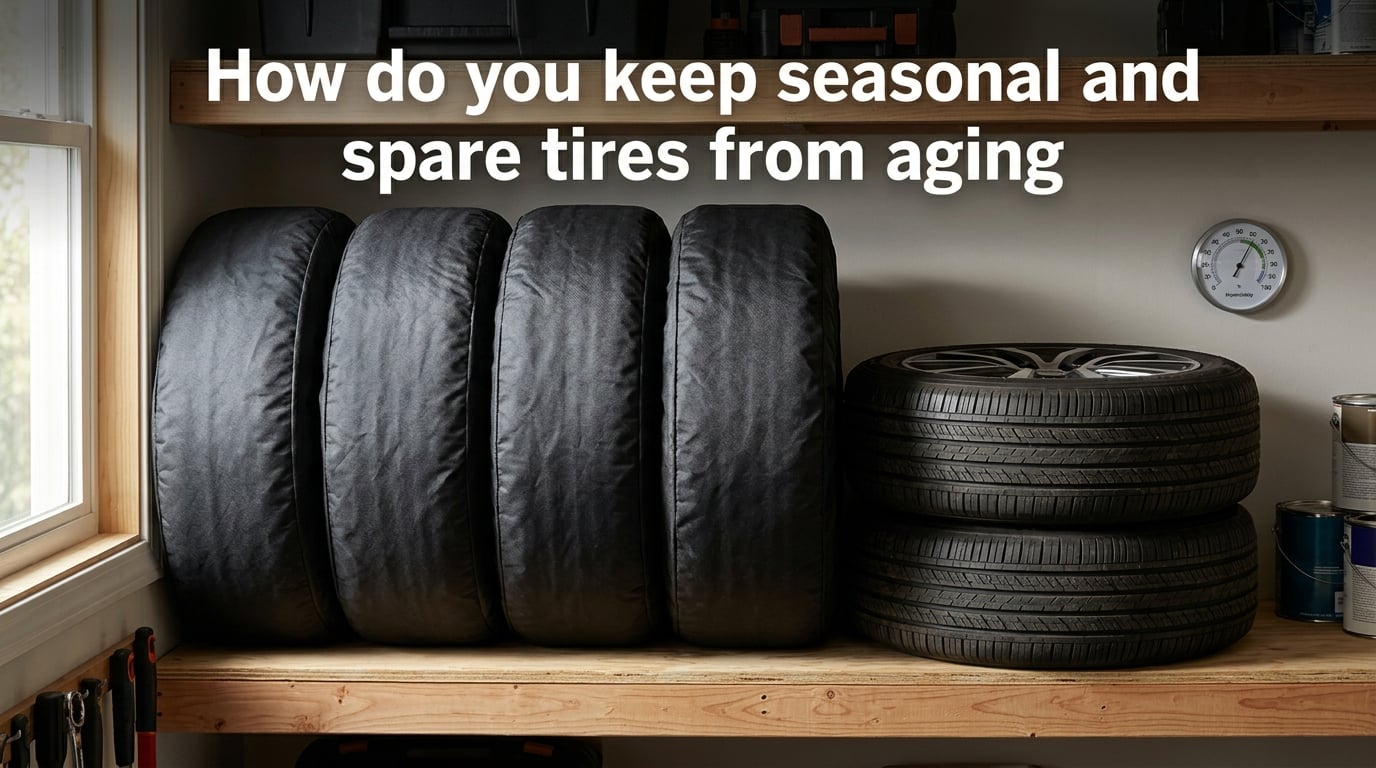
Tires age and dry out even when they are never driven on. To keep seasonal and spare tires from aging, clean them thoroughly, store them in a cool dry dark place inside airtight bags, and keep them away from UV light, ozone, and temperature swings. I have followed this exact routine for three winters in a row and my off-season set still looks supple every spring.
Rubber breaks down from heat, ultraviolet rays, ozone, humidity swings, and simple time. None of those enemies needs a lot of use to do their work, which is why a careful storage routine protects both your wallet and your safety.
Table of Contents
What Causes Tires to Age?
Tire aging, often called dry rot, is the slow breakdown of the rubber compounds that keep a tire flexible. UV light, ozone, heat, humidity changes, and time all leach the protective oils and resins out of the rubber. As those compounds leave, sidewalls get brittle, hairline cracks appear, and the tire loses the ability to flex safely under load.
Yes, tires can absolutely dry rot in 3 years. A user on Reddit’s r/tires community reported sidewall dry rot in only 2 years on a set driven regularly, then a blowout at 2.5 years with half the tread still left. So how long can tires sit before they dry rot? In a hot garage or trunk, dry rot can start showing in as little as 2 to 3 years. In climate-controlled storage, a tire can stay serviceable for 6 to 10 years if you follow the rest of this guide.
The five enemies of stored tires are easy to remember:
- UV light – direct sunlight breaks down the rubber oils fastest.
- Ozone – produced by electric motors, battery chargers, furnaces, and welders.
- Heat – every 10 degrees Celsius above 20 roughly doubles the aging rate.
- Humidity swings – constant moisture cycling dries and swells the rubber.
- Lack of use – a tire that never flexes dries out faster than one that does.
How to Clean Tires Before Storing Them
You always want to store tires clean and bone dry. Road grime, brake dust, and oil hold moisture against the rubber and trap the very compounds you are trying to keep in. A 10-minute wash before each tire goes into a bag pays for itself the next changeover.
Here is the routine our team uses on every seasonal swap:
- Rinse each tire with plain water to knock off loose grit.
- Mix a mild dish soap in a bucket and scrub with a soft tire brush.
- Clean the full sidewall and the wheel face, including the lettering.
- Rinse thoroughly until the water runs clear.
- Dry each tire with a clean microfiber towel.
- Let them air-dry for at least 30 minutes in the shade.
- Optionally apply a water-based rubber conditioner and let it soak in before bagging.
Avoid silicone-based tire dressings at this stage. They sit on the surface and can trap solvents against the rubber during long storage. Petroleum-based products are also a no-go because they react with the rubber compounds.
Choose the Right Storage Environment
Tires do best when stored in a cool, dry, dark, climate-stable space. Tirecraft’s widely cited guidance points to temperatures above 20 degrees Celsius as the danger zone and below 7 degrees Celsius as ideal. Aim for 50 to 60 percent relative humidity and avoid anywhere with a daily swing of more than 14 degrees F.
An unheated attached garage is usually fine. An unheated detached shed is riskier because summer afternoon heat can push the interior well above the 20-degree threshold. A basement corner, climate-controlled self-storage unit, or a closet under the stairs all beat a backyard shed.
Keep stored tires away from ozone-producing equipment. That includes electric motors, sump pumps, furnaces, central vacuum systems, battery chargers, and welders. Ozone is invisible, but it cracks sidewalls faster than almost anything else in a home garage. A single battery tender sitting three feet from a stacked set of tires is enough to start the damage.
How to Store Spare Tires (Donut, Full-Size, and Trunk Reality)
Spare tires have their own aging problem because they live in a hot, often sun-baked trunk. A full-size spare that just rides along for 8 to 10 years can dry rot right alongside your seasonal set. A donut spare has a different problem – it is designed for short-term use only and the rubber compounds are typically thinner.
Most tire makers and the U.S. Tire Manufacturers Association recommend replacing a spare after about 6 years, even if it has never been used. Check it every fall: confirm the DOT date code, the tire pressure, and the lack of sidewall cracking. If the spare has ever been used at speed for more than 50 miles, plan to retire it sooner.
For the spare that lives in your trunk, a heavy-duty opaque cover or tire tote cuts UV exposure and keeps the trunk cleaner. Avoid letting the spare sit in direct sun through a rear window. If your vehicle lives outside, consider moving the spare indoors when it will sit for more than a month.
Use Airtight Storage Bags the Right Way
Yes, it is better to store tires in bags than to leave them open. Airtight bags slow ozone exposure, block dust, and keep the rubber oils in. Continental Tire’s own storage guide recommends a large airtight plastic bag – either a specialty tire bag or a heavy-duty yard or leaf bag – fitted around each tire.
Bag your tires one at a time using this method:
- Confirm each tire is fully clean and dry.
- Slip the tire into a tire-specific bag or a thick contractor-grade garbage bag.
- Squeeze out as much air as possible before sealing.
- Tape the opening shut with painter’s tape or a cable tie.
- Label the bag with the wheel position (FL, FR, RL, RR) and the install date.
Specialty tire totes and bags cost a bit more but they are opaque, tougher, and reusable for many seasons. Heavy-duty contractor bags work as a budget-friendly alternative if you tape them well and replace them every couple of seasons. Thin kitchen trash bags tear too easily to be worth using.
Mounted vs Unmounted Tire Storage Positions
How you physically store each tire matters because the wrong position can permanently deform the carcass. Mounted tires – those still on the wheels – should be stacked vertically like a short stack of tires or hung on a wall hook through the center of the wheel. Never leave a mounted set lying flat on the tread for more than a few weeks, because the bottom tire will develop flat spots.
Unmounted tires should stand upright on the tread, like a row of barrels. Rotate the position of each tire by a quarter turn every 4 to 6 weeks if you can. This redistributes the load and prevents one sidewall from carrying weight indefinitely. Avoid hanging unmounted tires, which can distort the bead and cause balance problems later.
Do Tire Shine Sprays Help or Hurt During Storage?
Tire shine and protectant sprays are a real debate on tire forums. The honest answer is that sprays are a small help, not a substitute for proper storage. A water-based rubber conditioner applied before bagging can slow the loss of surface oils, but it cannot undo heat or ozone damage once it has happened.
If you choose to use one, look for a water-based, non-silicone formula. Apply it after cleaning and drying, then let it soak in fully before you bag the tire. Skip sprays that contain petroleum distillates or heavy silicones – both react with the rubber over the long term. For most people, a clean, bagged tire in a cool dry place will outlast a tire sprayed with dressing and left open in a hot garage.
How to Read the DOT Date Code on Your Tires
Every tire has a DOT date code on the sidewall that tells you exactly when it was made. Look on one sidewall for “DOT” followed by letters and numbers, then end with a 4-digit group inside an oval. The last 4 digits are the week and year the tire was manufactured. For example, 2623 means the 26th week of 2023. Tires made before 2000 use 3 digits instead of 4.
Why does this matter? Because a stored tire that is already 3 years old when you swap it on has a shorter safe service life than a fresh one. USTMA recommends replacing any tire older than 10 years regardless of tread depth, and many shops will not mount a tire that is more than 6 to 8 years old. Reading the DOT code takes 10 seconds and tells you whether the set in your garage is still in its safe window.
How Long Can Tires Stay Stored Safely?
Are 10-year-old tires safe if stored in the garage? Maybe, but you should not assume so without checking. USTMA and NHTSA both recommend replacement after 10 years from the manufacture date, regardless of tread wear. Tires that have been stored in a hot garage, a trunk, or in direct sun often need to come out of service earlier.
A reasonable timeline looks like this:
- 0 to 6 years – stored tires are typically safe to put back into service.
- 6 to 10 years – inspect carefully for cracking and hardness before mounting.
- Over 10 years – retire the tires, even if the tread still looks fine.
Spare tires follow the same age rule but tend to get checked less often, which is why they fail the rule more often.
Quick-Reference Storage Checklist
Print this or save it on your phone and run through it at every seasonal swap.
Before storage:
- Clean each tire and wheel thoroughly.
- Dry completely, including inside the wheel barrel.
- Read the DOT date code and note it on the bag.
- Apply a water-based conditioner if you want one.
- Bag each tire separately in an airtight bag.
- Label the bag with position and date.
During storage:
- Keep the storage space below 20 degrees Celsius.
- Hold humidity between 50 and 60 percent.
- Keep tires out of direct sunlight and away from ozone sources.
- Stand unmounted tires upright; rotate a quarter turn monthly.
- Stack mounted wheels vertically or hang them.
Before reinstalling:
- Inspect each sidewall for cracks or bulges.
- Check for hardening or visible discoloration.
- Confirm the DOT date code is still inside the safe window.
- Inflate to the vehicle’s recommended pressure before driving.
Frequently Asked Questions
Can tires dry rot in 3 years?
Yes, tires can dry rot in as little as 2 to 3 years, especially when stored in a hot garage, a trunk, or anywhere with UV exposure, ozone, or large humidity swings. Climate-controlled storage with airtight bags can stretch that window to 6 to 10 years.
How many years do spare tires last?
Most tire makers and the U.S. Tire Manufacturers Association recommend replacing a spare tire after about 6 years, even if it has never been used. Check the DOT date code, the air pressure, and the sidewalls every fall so you are not surprised by a rotted donut on a roadside.
Are 10 year old tires safe if stored in the garage?
Maybe, but you should not assume so without inspection. USTMA and NHTSA recommend replacement after 10 years from the DOT date code regardless of tread depth. Stored tires that show sidewall cracking, brittleness, or discoloration should be retired earlier.
Is it better to store tires in bags or not?
Yes. Airtight bags slow ozone exposure, keep dust off the rubber, and help the tire hold its protective oils. Specialty tire bags are best, but heavy-duty contractor bags work as a budget alternative if you tape them well.
Do tire covers prevent dry rot?
Tire covers and opaque totes block UV light and dust, which are two of the biggest aging accelerators. They are a helpful extra layer for trunk spares and garage stacks but should be paired with cool temperatures and airtight storage for full protection.
Can you stop dry rot on tires?
You cannot reverse dry rot once sidewalls have cracked and hardened. You can only slow it down with cooler storage, lower UV and ozone exposure, and airtight bags. That is why catching the first hairline cracks early matters.
Conclusion
Knowing how do you keep seasonal and spare tires from aging comes down to four habits: clean, bag, store cool and dark, and inspect before reinstalling. Run that routine every changeover, check the DOT date code so you know exactly how old the rubber is, and you will get the full safe life out of every tire you own.
The last safety backstop is always the inspection before the tires go back on the car. A clean, bagged, cool tire that has not been checked is still an unknown tire until you look at the sidewalls and confirm the date code.