
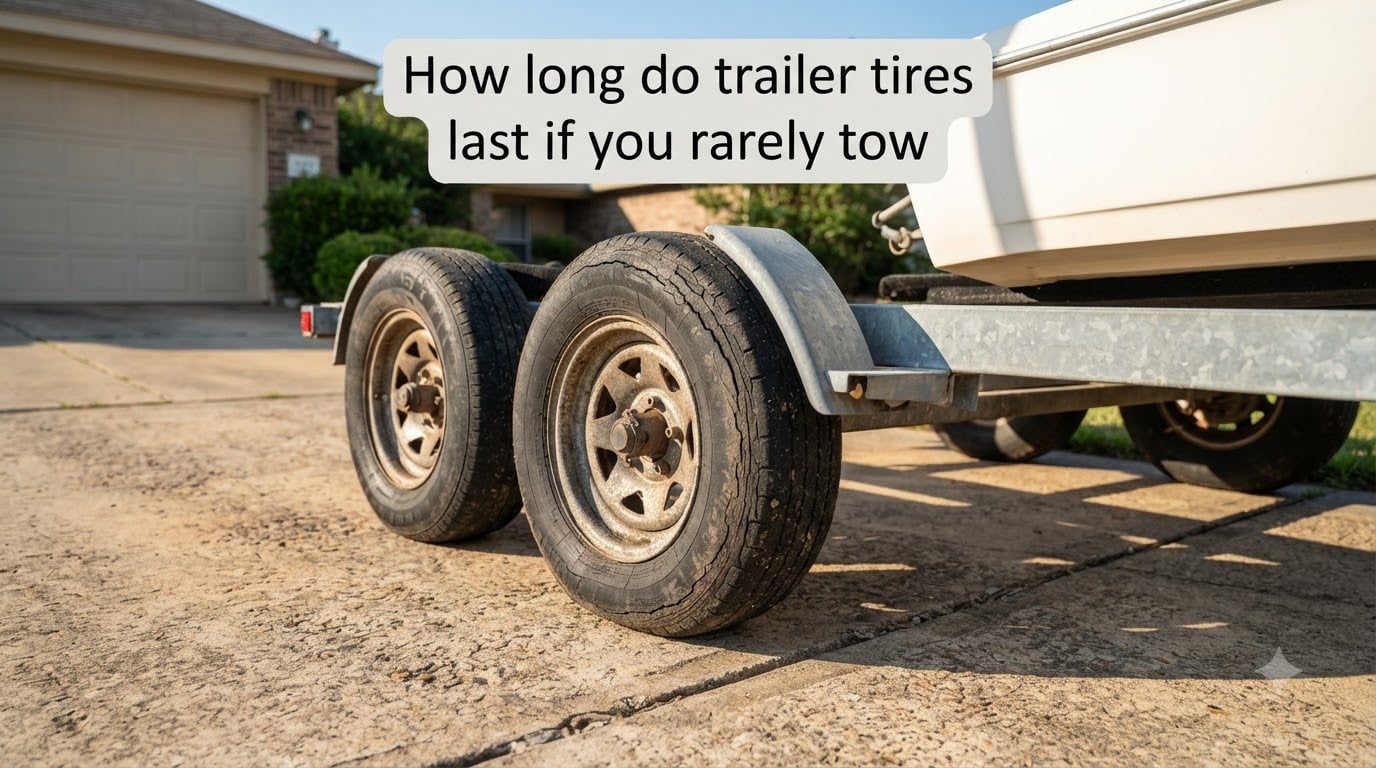
Trailer tires last 3 to 6 years from the date they were manufactured, regardless of tread wear or how often you tow. If you rarely tow your trailer, the tire age clock keeps running even when the trailer sits motionless in your driveway. Industry consensus across Goodyear, Carlisle, and Maxxis treats 6 years as the absolute ceiling, and most experienced owners replace at 5 years to avoid the highway-speed blowouts that come with age-related rubber failure.
That sounds simple, but there’s a catch most owners never see coming: an infrequently used trailer is actually at HIGHER risk than one that gets towed weekly. I’ll explain why in a moment, along with exactly how to read the DOT date code stamped on every tire, the six warning signs to inspect for, and the storage and inspection habits that separate a 10-year safe trailer from one that sheds a tire at 65 mph.
Table of Contents
Why Rarely-Towed Trailer Tires Are at HIGHER Risk
This is the part nobody wants to hear: infrequent use does not protect your trailer tires. Sitting hurts them more than towing does. A trailer that gets towed 5,000 miles a year ages far less aggressively than one that sits uncovered in the same driveway for the same 12 months.
The rubber compounds in ST (Special Trailer) tires degrade from four enemies that do not care whether the tire is rolling down the highway or pressed against a wheel chock:
- Oxidation: Oxygen in the air slowly breaks down the polymer chains in the rubber. A parked tire gets the same oxygen exposure as a moving one, but it never gets the heat cycles that would otherwise mask the slow damage.
- UV radiation: Sunlight breaks the cross-links in rubber and bleaches out the protective oils. Boat trailer owners in Florida and Arizona regularly report visible dry rot on tires only 2 to 3 years old because of intense sun exposure.
- Ozone: Produced by electric motors, welding equipment, and even lightning, ozone cracks rubber from the inside out. Storing a trailer near a workshop or garage with a running motor accelerates this.
- Flat spots: A tire that sits in one position for months develops a flattened contact patch. After long storage, the first highway miles can produce violent shake, hop, or immediate belt failure.
Real-world evidence backs this up. Multiple RV owners on r/GoRVing and r/RVLiving report losing two tires within 40 miles of their first tow after winter storage. The tires looked fine before the trip. They weren’t fine. Internal dry rot had weakened the belts, and the heat from the first highway drive finished them off.
So when people ask how long trailer tires last if you rarely tow, the honest answer is: about the same as tires that tow daily, but the failure mode looks different. Daily-driven tires usually wear out from tread loss. Rarely-towed tires die from age-based rubber decay – often with very little warning.
The 3-6 Year Lifespan Rule for Trailer Tires
Industry guidance from tire manufacturers, the Tire Industry Association, and experienced trailer owners converges on a 3 to 6 year replacement window, measured from the manufacture date stamped on the sidewall, not the date of installation.
Goodyear’s published guidance for Endurance trailer tires recommends replacement at 6 years. Carlisle suggests inspection-based decisions but accepts 5 to 6 years as a normal service life. Maxxis and Loadstar publish similar figures. The NHTSA does not mandate a specific retirement age, but tire makers, dealers, and insurers all treat 6 years as the practical upper limit.
Why such a short window compared to passenger tires? Three reasons:
- ST tires have stiffer sidewalls and higher inflation pressures (typically 50 to 80 PSI) that concentrate stress on aging rubber.
- Trailer tires carry constant vertical load, even when stationary. Sidewalls flex under that load and crack faster.
- The rubber compounds prioritize heat tolerance and load capacity over ozone resistance.
The forum consensus on sites like RV Forum and TNTTT is clear: “RV tires should never be in use longer than 6 years. They will almost never mileage out, but almost always expire from age.” Many experienced owners adopt the conservative 5-year rule regardless of visual condition.
How to Read Your Trailer Tire’s DOT Date Code
Every trailer tire sold in the U.S. carries a DOT (Department of Transportation) identification number on one sidewall. The last four digits of that string tell you the week and year the tire was manufactured.
Here’s how to decode it:
- Find the DOT stamp on the sidewall. It starts with “DOT” followed by a plant code and tire size.
- Look for the four digits at the end of the string.
- The first two digits are the week of the year (01 to 52). The last two digits are the year.
Worked examples:
- 3622 = manufactured in week 36 of 2022, roughly early September 2022.
- 0820 = manufactured in week 8 of 2020, around late February 2020.
- 0119 = manufactured in week 1 of 2019, the first week of January 2019.
If you see only three digits (for example, “319”), the tire was manufactured before 2000 and is far past safe service life regardless of appearance. Replace it immediately.
Also check for the “DOT” stamp’s depth and clarity. Light-grade tires from some overseas plants use shallow stamps that wear off after a few years, making age verification impossible. If you cannot read the date, treat the tire as unknown age and lean toward replacement.
6 Visual Warning Signs Your Trailer Tires Need Replacement
Age alone is enough reason to replace tires at 5 to 6 years, but visual inspection tells you when to move faster. Walk around your trailer before every tow and look for these six warning signs:
- Sidewall cracking (dry rot): Spider-web cracks, especially on the outer sidewall that faces the sun, mean the rubber has lost its protective oils. Surface cracks under 1/32 inch deep are a warning. Cracks deep enough to catch a fingernail mean replace now.
- Bulges or blisters: A bubble on the sidewall or tread means the inner liner has failed and the tire is at imminent risk of blowout. Do not drive on a bulged tire, even for a short trip.
- Flat spots from prolonged sitting: If the trailer has sat for 3+ months, expect temporary flat spots. They usually round out within the first mile. If a vibration or hop does not go away after 5 miles of driving, the internal belts may be damaged.
- Tread separation or delamination: Look for sections of tread that appear to be lifting from the tire body. You may also see rhythmic thumping at low speeds. This is a stop-driving condition.
- Discoloration and oxidation: Tires that have aged out turn grayish-brown rather than black. This is a visual cue that the rubber has lost its protective oils, even if no cracks are visible yet.
- Exposed cords or fabric: If you can see the internal polyester or steel belts through the tread or sidewall, the tire is structurally failed. Replace immediately and inspect the rim for damage.
If you spot any of these on a tire that has been sitting unused, do not assume the tire is safe just because it has good tread depth. Tread depth matters less for trailer tires than age and sidewall integrity.
How Climate and Storage Affect Trailer Tire Lifespan
Where you live and where you store your trailer changes the math on tire life. A trailer parked outdoors in Phoenix and a trailer parked in a heated garage in Minnesota follow very different aging curves.
The table below summarizes how storage conditions affect expected service life:
| Storage Condition | Expected Lifespan | Primary Aging Factor |
|---|---|---|
| Indoor garage / barn (climate-controlled) | 5 to 6 years | Slow oxidation only |
| Covered outdoor (carport, RV cover) | 4 to 6 years | Reduced UV, some moisture cycling |
| Outdoor, full sun, hot/dry climate | 2 to 4 years | UV, ozone, heat |
| Outdoor, coastal / salt air | 3 to 5 years | UV plus salt corrosion on steel belts |
| Outdoor, cold winter climate | 4 to 6 years | Temperature swings, road salt splash |
If you live in the sun belt and store outdoors, plan on replacing tires closer to the 3-year mark. If you store indoors in a temperate climate, you can stretch to the full 6 years as long as inspection stays consistent.
The single most damaging combination is heat plus UV plus sitting. Tire covers, shade, or garage storage each knock years off that damage curve.
Storage Best Practices for Rarely-Used Trailers
If you tow only a handful of times per year, your storage habits determine whether your tires last 3 years or 6. The seven practices below are what experienced trailer owners and tire dealers recommend:
- Use tire covers. UV-resistant covers block the sunlight that cracks sidewalls. They cost far less than a set of replacement tires and pay for themselves many times over.
- Jack the trailer off the ground. Place jack stands under the frame so the tires carry no load. This prevents flat spots and reduces sidewall stress during long storage.
- Inflate to the maximum pressure listed on the sidewall. Higher pressure during storage reduces the contact patch and slows ozone cracking. Bleed pressure back to operating PSI before driving.
- Store away from ozone sources. Keep the trailer away from electric motors, welders, and gasoline engines that run while stored. Ozone destroys rubber.
- Clean tires before storage. Wash off brake dust, road salt, and grime. Contaminants hold moisture against the rubber and accelerate oxidation.
- Avoid tire shine products with petroleum distillates. Water-based tire dressings are fine; petroleum-based products strip the protective oils from the rubber.
- Rotate position if storing 6+ months. Move the trailer a few feet every few months so the same section of tire does not sit loaded in one spot.
One forum user kept tires on heavy 8×2 boards for 6 months with periodic 80 PSI checks and reported positive long-term outcome. Lifting weight off the tire is one of the highest-impact habits.
Pre-Tow Inspection Checklist After Long Storage
Before you tow a trailer that has been sitting for 3+ months, run through this 6-step checklist. Skipping it is how owners end up losing two tires within 40 miles of their first trip, as multiple Reddit threads have documented.
- Check DOT date codes. If any tire is 5+ years old, seriously consider replacement before towing, especially for highway speeds.
- Inflate to operating PSI. Tires lose 1 to 3 PSI per month from natural permeation. Check pressure cold and inflate to the value on the sidewall, not a generic number.
- Inspect sidewalls for cracks, bulges, and discoloration. Use a flashlight and look at the full circumference, especially the upper sidewall facing the sky.
- Check the tread for embedded debris and uneven wear. Look for nails, screws, or stones. Uneven wear after storage suggests axle or bearing issues.
- Test-tow at low speed. Drive 5 to 10 mph around the block. Listen for thumping, hopping, or vibration. Anything abnormal means stop and inspect.
- Verify bearings and hubs. Long storage lets grease settle. Repack bearings if you are not sure of the last service date, and check hub temperature after 10 miles of driving.
If you are towing more than 50 miles for the first time after storage, especially at highway speeds, consider running 10 to 15 PSI below maximum until the tires warm up. This reduces shock loading on cold, stiff rubber.
Inflation Pressure and Why Cold Storage Affects PSI
Tire pressure is not constant. It changes with temperature at roughly 1 PSI per 10 degrees Fahrenheit. A tire inflated to 65 PSI in a heated shop at 70 degrees will drop to about 55 PSI if the trailer sits outside overnight at 20 degrees.
For ST tires that operate at 50 to 80 PSI, that swing matters. Under-inflation lets the sidewall flex more than designed, generating heat and accelerating belt failure. Over-inflation makes the ride harsh and concentrates wear in the center of the tread.
Always check pressure cold, before moving the trailer more than a few feet. Drive 1 mile or less to a gas station air compressor if you do not have a portable gauge. The pressure on the sidewall is the cold inflation target, not a generic value.
Replacement Tires: Load Range and Brand Notes
If your tires have hit 5 to 6 years or are showing warning signs, replacement is straightforward. Match the new tire to your trailer’s existing specifications: same size, same load range (C, D, or E), same ST designation, and same or higher speed rating.
Brand reputation matters more than owners expect. The most consistently recommended trailer tire brands are:
- Goodyear Endurance: The most cited premium option. Better heat dissipation and longer service life than budget ST tires.
- Carlisle: A workhorse brand with broad size coverage and consistent quality across the lineup.
- Maxxis: Premium construction and a strong reputation among boat trailer owners.
- Loadstar and Kenda: Budget-friendly options that work fine for low-load, low-speed utility trailers but offer shorter service life.
Once installed, give new trailer tires a break-in period of the first 100 miles at moderate speeds. This lets the belts seat properly and reduces the risk of vibration. Avoid high speeds, heavy braking, and sharp turns during this window.
If budget matters, balance price against service life. Premium trailer tires often cost more upfront but can outlast two sets of budget tires, especially in climates that punish rubber.
Frequently Asked Questions
Are 20 year old trailer tires safe?
No. Twenty-year-old trailer tires are not safe regardless of tread depth or visual appearance. The DOT date code will confirm the age, and any tire manufactured before 2006 has long passed its safe service life. Replace immediately and inspect rims for corrosion damage from prolonged storage.
Are 10-year-old trailer tires still good?
No. Ten-year-old trailer tires should be replaced even if the tread looks deep and the sidewalls appear crack-free. Internal belt degradation and rubber oxidation are not visible from the outside, and a blowout at highway speed is the most common outcome. Forum consensus across RV and trailer communities is clear: 5 to 6 years is the maximum, not 10.
What is the average lifespan of a trailer tire?
The average lifespan of a trailer tire is 3 to 6 years from the manufacture date stamped on the sidewall DOT code, regardless of how often the trailer is towed. Trailer tires age out from oxidation, UV, and ozone rather than wearing out from mileage, so even unused tires follow this same timeline.
Why do trailer tires fail so often?
Trailer tires fail often because they age out faster than they wear out. ST (Special Trailer) tires use stiffer sidewalls and higher inflation pressures (50 to 80 PSI) optimized for load capacity rather than longevity. They sit under constant vertical load, expose their rubber to UV and ozone whether moving or parked, and rarely accumulate enough mileage to wear through the tread before the rubber degrades.
Can 2 year old tires dry rot?
Yes, 2-year-old trailer tires can develop dry rot, especially in hot, sunny climates like Florida, Arizona, and the desert Southwest. Intense UV exposure accelerates the breakdown of protective oils in the rubber compounds, producing visible sidewall cracking within 18 to 24 months in extreme conditions.
How common is dry rot on tires?
Dry rot is common on any tire that sits unused for extended periods, especially outdoors. Industry estimates suggest that most trailer tires over 5 years old show some form of dry rot or sidewall cracking. The condition progresses faster in warm, sunny climates and slower in cold or indoor-stored trailers.
How can I prevent dry rot from my trailer tires?
Prevent dry rot by storing the trailer out of direct sunlight, using UV-resistant tire covers, keeping tires clean of road grime and brake dust, inflating to maximum sidewall pressure during storage, jack-standing the trailer so tires carry no load, and parking away from electric motors or welders that produce ozone. Inspect monthly for early cracking.
How long is an unused tire good for?
An unused trailer tire is good for roughly 3 to 6 years from its manufacture date, the same as a tire that gets regular use. Sitting does not preserve a tire. Oxidation, UV, and ozone continue to degrade the rubber whether the trailer is parked or rolling. If you store your trailer more than you tow it, the age clock is still ticking.
How long do Carlisle trailer tires last?
Carlisle trailer tires typically last 4 to 6 years in normal conditions, matching the industry average for ST tires. Service life varies with climate, storage, load, and inflation habits. Carlisle’s bias-ply and radial lines both perform well, though the radials generally run cooler and last longer under heavy loads.
Do trailer tires need to be balanced?
Trailer tires do not strictly require balancing for short, low-speed use, but balancing is recommended if you tow at highway speeds. Unbalanced trailer tires cause vibration that can damage wheel bearings, the axle, and the tow vehicle. Balance new trailer tires at installation if your tire shop offers the service.
Conclusion
If you rarely tow your trailer, treat your tires as a 3 to 6 year consumable, not a long-term investment. The 5-year rule is the safest target for most owners. Read the DOT date code, inspect the sidewalls before every tow, store the trailer out of the sun when possible, and replace tires the moment they hit 6 years from manufacture – regardless of how good they look.
For 2026 and beyond, the owners who avoid blowouts are the ones who respect the age clock. A 30-second inspection before every trip, plus a cover and jack stands during storage, will add years to your tires and peace of mind to every mile.