
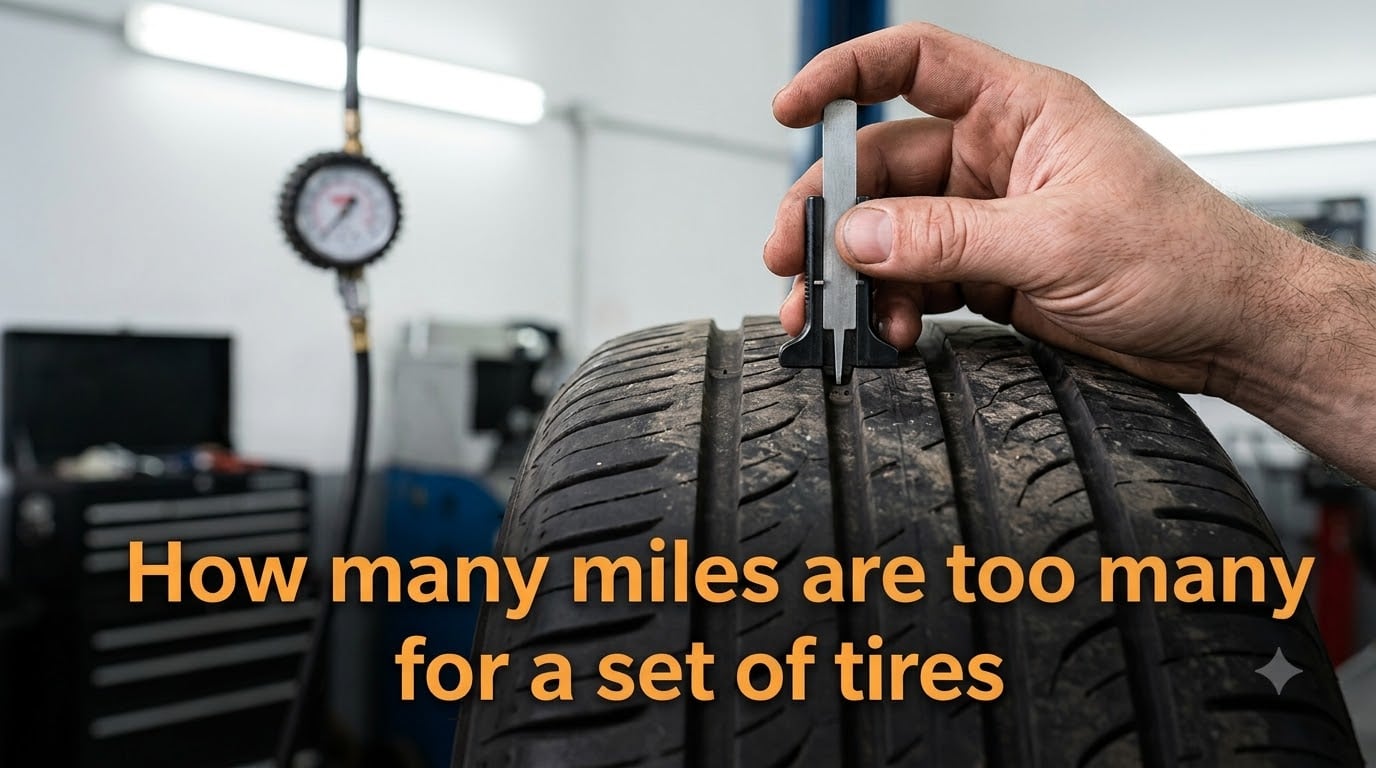
If you are asking how many miles is too many for a set of tires, the short answer is that average passenger tires last between 50,000 and 70,000 miles, but the real ceiling depends on tire type, driving habits, and one factor most drivers forget: age. I have replaced tires at 30,000 miles on sports cars and seen commuter sets roll past 75,000 miles without complaint. The mileage number alone does not tell the whole story.
In this guide, I will break down the mileage ranges you can expect from each major tire type, the factors that quietly shorten or extend tire life, how to read the DOT date code stamped on your sidewall, and the warning signs that mean your tires need to come off now. By the end, you will have a clear rule for when to replace rather than guess.
Table of Contents
What Is the Average Mileage Lifespan of Different Tires
Most all-season tires on a typical sedan or crossover deliver 50,000 to 70,000 miles before the tread wears down to the legal minimum. Touring tires with longer treadwear warranties can stretch to 80,000 miles. Winter tires, summer tires, and high-performance tires wear faster because their rubber compounds are softer and stickier for grip.
Here is the breakdown I trust based on manufacturer data and what drivers report on forums:
- All-season tires: 50,000 to 70,000 miles (most common on daily drivers)
- Touring tires: 60,000 to 80,000 miles (longer-wear compounds)
- Winter tires: 30,000 to 50,000 miles (soft rubber, seasonal use)
- Summer tires: 25,000 to 35,000 miles (sticky tread for warm-weather grip)
- High-performance tires: 15,000 to 25,000 miles (track-capable compounds wear fast)
- Light truck / all-terrain tires: 40,000 to 60,000 miles (depends heavily on pavement vs off-road use)
If your tires fall outside these ranges in either direction, something is working for you or against you. Drivers on r/tires regularly report burning through a set of summer tires in 12,000 miles on a tracked car, while a calm commuter on a touring tire can quietly hit 80,000 miles.
What Factors Affect How Fast Your Tires Wear Down
Mileage is the headline number, but it is not the cause of tire wear. The actual wear comes from a handful of habits and conditions that either grind your tread away or leave it sitting on the garage floor. Knowing these factors is how you stop being surprised at the 25,000-mile tire replacement.
Driving habits matter most. Hard braking, fast acceleration, and cornering at speed push the tire surface harder against the road. Drivers in stop-and-go city traffic wear tires faster than highway commuters even at the same annual mileage.
Road conditions play a close second. Potholes, curbs, and rough pavement chew through sidewalls and cause uneven wear. Off-road driving on rocks or sand can cut tire life in half.
Climate and temperature change the rubber. Extreme heat accelerates tread wear and dry rot. Extreme cold makes rubber brittle, which shortens winter tire life and can crack all-season sidewalls.
Vehicle alignment and suspension are quiet killers. A misaligned car scrubs the inside or outside shoulder of the tire and you can blow through a set in 15,000 miles without realizing it. Worn shocks and struts do the same thing.
Tire pressure is the easiest one to fix. Under-inflated tires wear the shoulders. Over-inflated tires wear the center. Either extreme shortens life and hurts fuel economy.
Why Tire Age Matters as Much as Mileage
Here is the part most drivers miss. Tires wear out from miles, but they also age out from time. The rubber compound breaks down from heat, sunlight, and oxygen exposure even when the car sits in the driveway. A 6-year-old tire with 20,000 miles on it is not the same tire it was when new.
Most tire manufacturers and the NHTSA recommend replacing tires at 6 to 10 years of age regardless of tread depth. Dry rot, sidewall cracking, and hardening of the rubber compound all compromise safety long before the tread is gone.
Forum users on r/askcarguys and r/S2000 routinely report replacing 8 to 10-year-old tires that looked fine because they knew the rubber had gone stale. Spare tires are the classic example: they can sit unused for years and still crack from age alone.
How to Decode Your Tire DOT Date Code
Every tire sold in the United States has a DOT number stamped on the sidewall. The last four digits tell you when the tire was made, and reading it takes about ten seconds once you know where to look.
Step 1: Find the DOT stamp on the sidewall. It starts with the letters DOT followed by a plant code and tire size. The date code sits at the end of that string.
Step 2: Look at the last four digits. The first two are the week of the year (01 to 52). The last two are the year of manufacture.
Step 3: Read it. A code of 3024 means the tire was made in week 30 of 2024, which is late July. A code of 0819 means week 8 of 2019, which is late February.
For tires made before 2000, the format is slightly different with three digits instead of four, but most drivers will only see the four-digit format on modern tires. If you spot a tire with no DOT code at all, it is not legal for road use in the U.S.
Signs It Is Time to Replace Your Tires
Tread depth and physical damage are the two things to check every month. None of these tests require special tools beyond a quarter and a penny, both of which you already have.
Tread depth at or below 2/32 inch. The legal minimum in most states is 2/32 inch of remaining tread. The penny test is the quickest check. Stick a Lincoln-head penny into the tread with Lincoln’s head upside down. If you can see the top of his head, your tread is below 2/32 inch and the tire needs replacement.
Quarter test for wet weather safety. Tires lose wet grip well before the legal minimum. Use a quarter instead of a penny. If Washington’s head disappears into the tread, you have at least 4/32 inch, which is safer in rain. For winter driving, 5/32 inch is the practical minimum for snow traction.
Tread wear indicators. Most tires have small rubber bars molded into the tread grooves. When the tread wears down flush with these bars, the tire is at 2/32 inch. The bars look like little bridges across the grooves as the tread thins.
Uneven wear patterns. If the inside or outside shoulder wears faster than the rest, you likely have an alignment problem. Cupped or scalloped wear points to a worn suspension component. Both shorten tire life dramatically and should be fixed before the new tires go on.
Sidewall damage. Cracks, bulges, cuts, or bubbles in the sidewall mean the tire is unsafe regardless of tread depth. Bulges usually mean a broken belt inside the tire. Sidewall damage is a replace-now condition.
Vibration while driving. A tire that vibrates at speed may be out of balance, out of round, or have a separated belt. If balancing does not fix it, the tire is done.
How to Make Your Tires Last Longer
I have seen the same tire model last 35,000 miles on one car and 65,000 miles on another. The difference is almost always maintenance. A few simple habits can easily add 15,000 miles to your tire life and save you from an early replacement bill.
Rotate every 5,000 to 7,500 miles. Front tires wear faster on front-wheel-drive cars and on most modern suspensions because of camber and toe settings. Rotating front-to-rear and side-to-side evens out the wear and lets the full set age together. Many tire shops will rotate for free if you bought the tires from them.
Keep the air pressure correct. Check PSI once a month and before long trips. The number you want is on the driver’s door jamb sticker, not the tire sidewall. The sidewall number is the maximum safe pressure, not the recommended one.
Get an alignment check once a year. Hitting a curb or a deep pothole can knock your alignment out in a single event. A bad alignment can wear a tire to the cords in 5,000 miles. An annual alignment check costs less than one new tire.
Balance when you rotate. Tires and wheels go out of balance over time. Balancing at every rotation prevents vibration and uneven tread wear.
Store seasonal tires properly. If you swap to winter tires each year, store the off-season set in a cool, dry, dark place. Keep them out of direct sunlight, away from ozone-producing equipment (electric motors, welding gear), and ideally in airtight bags. Stored correctly, a set of tires can sit for years without aging out.
Frequently Asked Questions
Is 30000 miles on a set of tires good?
30,000 miles on a set of tires is normal for summer or high-performance tires but on the low side for all-season touring tires. If your all-season tires are already at 30,000 miles, check the tread depth and look for uneven wear. The tires may be wearing faster than expected, which usually points to alignment, inflation, or driving habits.
Is 50000 miles on a set of tires good?
Yes, 50,000 miles is right in the middle of the expected life for most all-season tires. A quality all-season set should still have 4/32 to 6/32 inch of tread left at this mileage, which is plenty for daily driving. Keep rotating and checking pressure and you can expect another 15,000 to 25,000 miles before replacement.
Is 10,000 miles a lot on tires?
10,000 miles is not a lot of wear for most passenger tires, but it is significant mileage on high-performance or track tires where the rubber is much softer. If your performance tires have 10,000 miles on them after a year of spirited driving, they may already be approaching the replacement window. For all-season tires, 10,000 miles is just getting started.
Is 40,000 miles a lot on tires?
40,000 miles is reasonable for all-season tires but signals it is time to start paying closer attention. At this point, check tread depth, look for uneven wear patterns, and inspect the sidewalls for cracking. Most all-season tires still have 5,000 to 15,000 miles of life left, but planning ahead beats an unexpected blowout on the highway.
Key Takeaways on Tire Mileage Limits
So how many miles is too many for a set of tires? The honest answer is that any tire past 70,000 miles is suspect, any tire past 6 years old is suspect regardless of mileage, and any tire showing cracks, bulges, or uneven wear needs to come off now. The mileage number on the odometer is one piece of the puzzle. Tire type, age, and maintenance are the other three.
Here is what I recommend doing this week. Check your DOT date codes and write down the oldest tire on the car. Measure tread depth with a quarter in three spots across each tire. Look at the sidewalls for cracks or bulges in good light. If anything looks off, get a professional inspection at a tire shop before your next long drive.
Tires are the only thing connecting your car to the road. The NHTSA reports that drivers are roughly three times more likely to crash due to poor tire condition than drivers with healthy tires. A 30-minute inspection once a year is a small price for that kind of margin.