
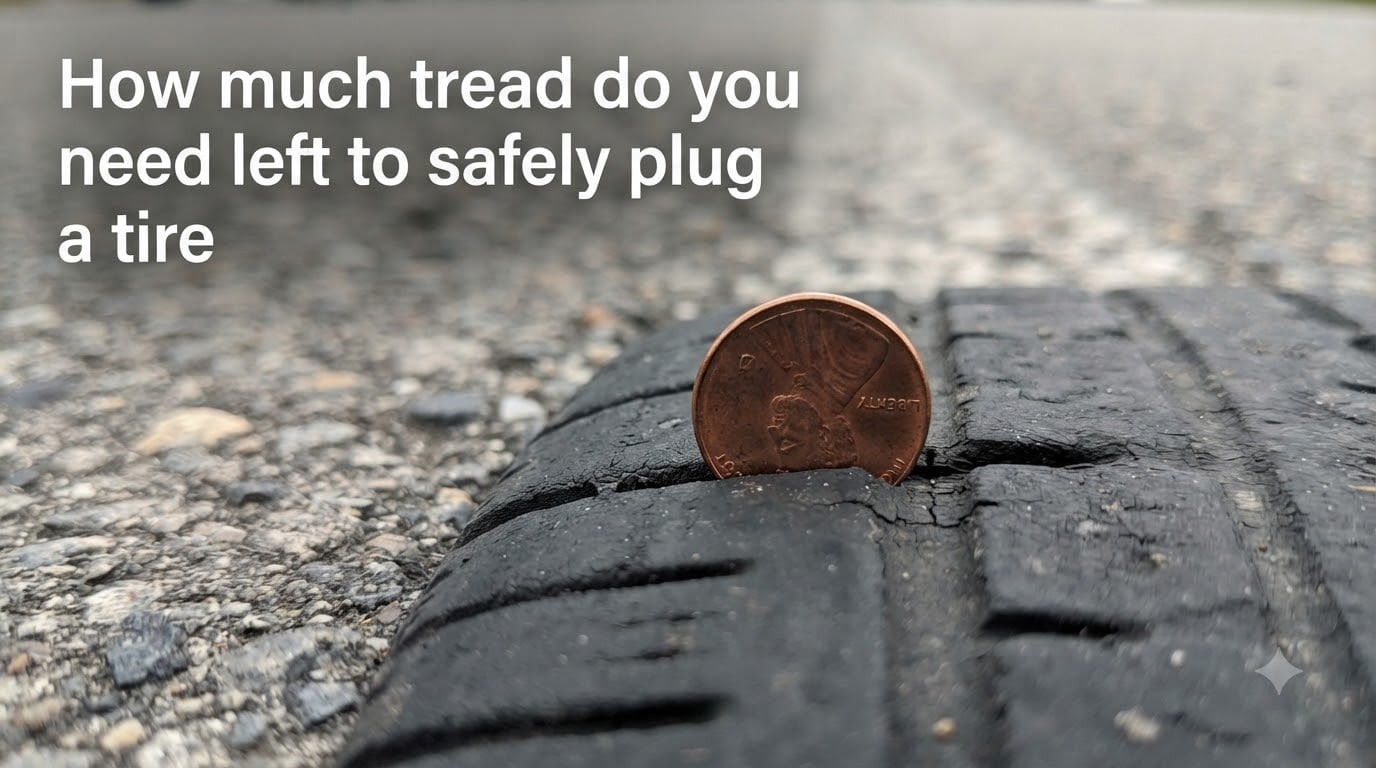
Picked up a nail and wondering if your tire can still be plugged? You need at least 2/32 inch (1.6 mm) of tread remaining for a repair to meet industry standards, but many tire professionals recommend replacing the tire once tread drops to 4/32 inch for better safety margins. Here’s everything you need to know about tread depth and tire plug safety in 2026.
A tire that’s too worn won’t hold a plug reliably. The rubber around the puncture becomes thinner and more flexible, which means the plug can work loose over time. Understanding the tread depth thresholds helps you make a smart call between repairing and replacing.
Table of Contents
Quick Answer: How Much Tread Do You Need to Plug a Tire?
The Rubber Manufacturers Association (RMA) and Tire Industry Association (TIA) set clear guidelines for tire repair eligibility based on tread depth:
- 2/32 inch (1.6 mm) minimum – The absolute lowest tread depth where a tire can technically be repaired. At this depth, the tire is legally worn out in most states.
- 4/32 inch (3.2 mm) recommended replacement – Many tire shops refuse to plug tires at or below this threshold because wet-traction performance drops sharply.
- 6/32 inch (4.8 mm) snow/winter threshold – Below this depth, winter traction becomes significantly compromised regardless of repair eligibility.
Most certified tire technicians follow the 2/32 inch rule as the cutoff for repair eligibility. If your tread is at or below that mark, the tire needs to be replaced, not plugged.
What Is a Tire Plug and How Does It Work?
A tire plug is a sticky, rubber-coated cord that gets inserted into a puncture hole from the outside of the tire. It’s a common emergency repair for small punctures in the tread area caused by nails, screws, or other road debris.
Here’s how the process works:
- The object causing the puncture is removed from the tire
- A rasp tool cleans and reams out the puncture channel
- Rubber cement is applied to the plug cord
- The plug is inserted using a plug insertion tool
- The excess plug material is trimmed flush with the tread
A properly installed plug seals the hole from the inside by expanding into the puncture channel. However, a plug-only repair is generally considered temporary by industry standards. The Tire Industry Association recommends a patch-plug combination as the only truly permanent repair.
How to Measure Your Tire’s Tread Depth
Before deciding whether to plug or replace, you need to know your actual tread depth. There are three reliable methods:
The Penny Test
Insert a penny into the tread groove with Lincoln’s head pointing down. If you can see the top of Lincoln’s head, your tread is at or below 2/32 inch and the tire needs replacement. This is a quick field check but not as precise as a gauge.
Tread Depth Gauge
A dedicated tread depth gauge gives you exact measurements in 1/32 inch increments. These gauges cost only a few dollars and provide the most accurate readings. Place the probe into the groove and read the measurement on the scale.
Tread Wear Indicator (TWI) Bars
Every tire has built-in Tread Wear Indicator bars running across the grooves. When your tread wears down to the level of these bars, you’ve reached 2/32 inch. The bars appear as smooth rubber bridges in the main grooves. If any TWI bar is flush with the surrounding tread, that tire is worn out.
Tread Depth Thresholds: A Complete Reference
Use this table to understand what each tread depth level means for tire repair and safety:
| Tread Depth | Repair Eligible? | What It Means |
|---|---|---|
| 8/32″ to 6/32″ | Yes – fully eligible | New or nearly new tire. Excellent traction in all conditions. Safe to plug if puncture is in tread area only. |
| 5/32″ to 4/32″ | Yes – but replacement advised soon | Wet traction is starting to decline. Many tire shops will still plug at this depth, but plan for replacement within the next few months. |
| 3/32″ | Marginal – shop discretion | Wet traction is significantly reduced. Some shops will refuse to plug. If repaired, drive conservatively and replace the tire soon. |
| 2/32″ | Minimum threshold | Legally worn out in most jurisdictions. Industry minimum for repair eligibility. Replacement is strongly recommended even if a plug is technically possible. |
| Below 2/32″ | No – replace immediately | Tire is unsafe for any use. Cannot be legally or safely repaired. Replace the tire before driving. |
Keep in mind that tread depth varies across the tire. Measure at multiple points around the circumference and across the tread width. The shallowest measurement is what matters for repair decisions.
Why Low Tread and Tire Plugs Don’t Mix Well
Understanding why tread depth matters for plug repairs helps you make safer decisions:
Heat Dissipation Problems
Tread rubber acts as a heat sink. Thinner tread means less material to absorb and dissipate the heat generated by driving. A plug in thin tread faces higher operating temperatures, which can soften the rubber compound and weaken the seal over time.
Increased Flex and Stress
Shallow tread makes the tire more flexible in the puncture area. Each rotation of the wheel puts stress on the plug as the contact patch deforms under load. With less rubber surrounding the repair, the plug channel can stretch and eventually leak.
Reduced Impact Absorption
Deeper tread absorbs more of the impact from potholes and road debris. A plugged tire with minimal tread is more vulnerable to damage from everyday driving hazards. A hard hit on a pothole could compromise a marginal repair.
Blowout Risk
The combination of heat, flex, and reduced impact absorption increases the risk of a blowout. This is especially dangerous at highway speeds where tire failure can cause a loss of vehicle control.
When to Replace Instead of Plugging
Some conditions automatically disqualify a tire from being plugged, regardless of tread depth:
Puncture Location
- Sidewall damage – Never plug a sidewall puncture. The sidewall flexes too much for a plug to maintain a seal. This is an absolute rule with no exceptions.
- Shoulder damage – The shoulder area where tread meets sidewall is also off-limits for plugs. This zone experiences significant flex during cornering.
- Outside the tread area – Only punctures in the center tread area (roughly the middle two-thirds of the tread width) are eligible for repair.
Puncture Size and Condition
- Punctures larger than 3/16 inch (4.8 mm) in diameter cannot be plugged
- Diagonal or angled punctures may not seal properly
- Multiple punctures close together weaken the tire structure
- Punctures from previous repairs that have failed
Tire Age and Condition
- Tires older than 6 years should be inspected by a professional before any repair
- Tires older than 10 years should be replaced regardless of tread depth
- Visible cracks, bulges, or dry rot make a tire unsafe to repair
- Tires with uneven wear patterns may have underlying suspension issues
Prior Repairs
Most tire manufacturers and the TIA recommend a maximum of two repairs per tire, and those repairs must be at least 16 inches apart. A tire that’s already been repaired twice should be replaced if it develops another puncture.
Plug vs Patch vs Patch-Plug Combination
Understanding the differences between repair types helps you choose the right fix:
Plug-Only Repair
A plug fills the puncture channel from the outside. It’s quick and inexpensive, making it popular for roadside emergencies. However, a plug-only repair is considered temporary by most industry standards because it doesn’t seal the inner liner where moisture can enter and corrode the tire’s steel belts.
Patch-Only Repair
A patch is applied from the inside of the tire after removing it from the wheel. It seals the inner liner and provides a more durable repair. However, a patch alone doesn’t fill the puncture channel, leaving a path for water to reach the belts.
Patch-Plug Combination
The patch-plug combo is the gold standard of tire repair. It fills the puncture channel with a plug stem while simultaneously sealing the inner liner with a patch. This is the only repair method endorsed by the Tire Industry Association as a permanent fix. It requires removing the tire from the wheel, so it’s typically done at a tire shop.
| Repair Type | Durability | Best For |
|---|---|---|
| Plug Only | Temporary – monitor closely | Roadside emergency, quick fix until you reach a shop |
| Patch Only | Moderate | Small punctures in good tread, professional installation |
| Patch-Plug Combo | Permanent (per TIA standards) | Any eligible puncture – the recommended repair method |
Special Cases: Run-Flat, Performance, and Low-Profile Tires
Not all tires are created equal when it comes to repair eligibility:
Run-Flat Tires
Most tire manufacturers advise against repairing run-flat tires. These tires are designed to be driven short distances with zero air pressure, which can cause internal damage that isn’t visible from the outside. Even if the tread depth looks fine, the internal structure may be compromised after driving while flat.
Performance and Low-Profile Tires
High-performance tires with lower speed ratings (V, W, Y, Z) are more sensitive to repairs. The thinner sidewalls and specialized rubber compounds used in these tires may not respond well to plug repairs. Consult the tire manufacturer’s guidelines before attempting any repair on performance tires.
Light Truck and SUV Tires
Larger tires used on trucks and SUVs often carry heavier loads and operate at higher pressures. These factors put more stress on a repair. Follow the same tread depth guidelines, but be extra cautious with tires that regularly carry heavy loads or tow trailers.
Driving on a Plugged Tire: What to Know
If you’ve had a tire plugged, keep these guidelines in mind:
- Speed limits – Avoid sustained high-speed driving on a plugged tire. Many tire shops recommend staying below 50 mph for the first few days after a plug repair.
- Regular inspections – Check the plugged area weekly for the first month. Look for signs of bubbling (apply soapy water and watch for air bubbles), loss of air pressure, or visible plug deterioration.
- Tire pressure monitoring – Keep a closer eye on your tire pressure after a plug repair. A slow leak may develop if the plug doesn’t hold perfectly.
- Long-term plans – Even a successful plug repair should be considered a temporary solution. Plan to replace the tire at your next regular service interval or when tread depth approaches 4/32 inch.
Frequently Asked Questions
Can you plug a tire with low tread?
You can technically plug a tire with as little as 2/32 inch of tread remaining, but it’s not recommended. At low tread depths, the tire lacks sufficient rubber to hold the plug securely. Most tire professionals advise replacing the tire rather than repairing it once tread drops below 4/32 inch.
What is the minimum tread depth to plug a tire?
The industry minimum tread depth for tire repair is 2/32 inch (1.6 mm), according to the Rubber Manufacturers Association and Tire Industry Association. Below this threshold, the tire is legally worn out and cannot be safely repaired. Replacement is the only option at or below 2/32 inch.
Is it safe to plug a tire with 4/32 tread?
Yes, 4/32 inch of tread is generally safe for a plug repair. At this depth, there’s still enough rubber to support the plug and maintain a seal. However, wet traction is starting to decline at 4/32 inch, so plan to replace the tire soon even after a successful repair.
Can you plug a tire that is bald?
No, you cannot plug a bald tire. A tire is considered bald when tread depth reaches 2/32 inch or below. At this point, there isn’t enough rubber to support a plug repair, and the tire needs to be replaced immediately for safety.
When should you not plug a tire?
Do not plug a tire if the puncture is in the sidewall or shoulder area, if the puncture is larger than 3/16 inch in diameter, if the tire has already been repaired twice, if the tire is over 6 years old without professional inspection, or if tread depth is at or below 2/32 inch.
Is it better to patch or plug a tire?
A patch-plug combination is the best repair method. A plug alone is considered temporary and doesn’t seal the inner liner. A patch alone doesn’t fill the puncture channel. The patch-plug combo does both and is the only repair endorsed by the Tire Industry Association as permanent.
How long does a plugged tire last?
A properly installed plug can last for the remaining life of the tire tread, but it depends on driving conditions and tread depth at the time of repair. Plugs in tires with 5/32 inch or more tread tend to last longer than those in tires with minimal remaining tread. Monitor the repair regularly for any signs of leakage.
Can you plug a tire on the sidewall?
No, never plug a sidewall puncture. The sidewall flexes too much during driving for a plug to maintain a seal. A sidewall puncture means the tire must be replaced. This is a safety rule with no exceptions, regardless of tread depth.
What is the legal tread depth for tires?
In most U.S. states, the legal minimum tread depth is 2/32 inch. Tires worn to this depth are considered legally bald. Many safety organizations and tire manufacturers recommend replacing tires at 4/32 inch for better wet-weather traction.
How many times can a tire be plugged?
The Tire Industry Association recommends a maximum of two repairs per tire. Any additional punctures mean the tire should be replaced. The two repairs must also be at least 16 inches apart to maintain the tire’s structural integrity.
Is plugging a tire a permanent fix?
A plug-only repair is generally considered temporary. Only a patch-plug combination repair is endorsed by the Tire Industry Association as a permanent fix. If you’ve used a plug kit on the roadside, have the tire properly repaired with a patch-plug combo at a tire shop as soon as possible.
Do tire plugs work at high speed?
Tire plugs can work at highway speeds, but performance depends on tread depth and repair quality. Many tire shops recommend staying below 50 mph for the first few days after a plug repair. For sustained high-speed driving, a patch-plug combination repair is more reliable than a plug-only fix.
Conclusion
So, how much tread do you need left to safely plug a tire? The absolute minimum is 2/32 inch, but the smarter play is to replace tires once they reach 4/32 inch. At that depth, wet traction is already declining, and the reduced rubber thickness makes a plug repair less reliable over time.
Remember these key rules: never plug a sidewall or shoulder puncture, always opt for a patch-plug combination when possible, and don’t exceed two repairs on any single tire. When in doubt, have a certified technician inspect the tire before committing to a repair. Safety always comes first, and sometimes the safest choice is a new tire.