
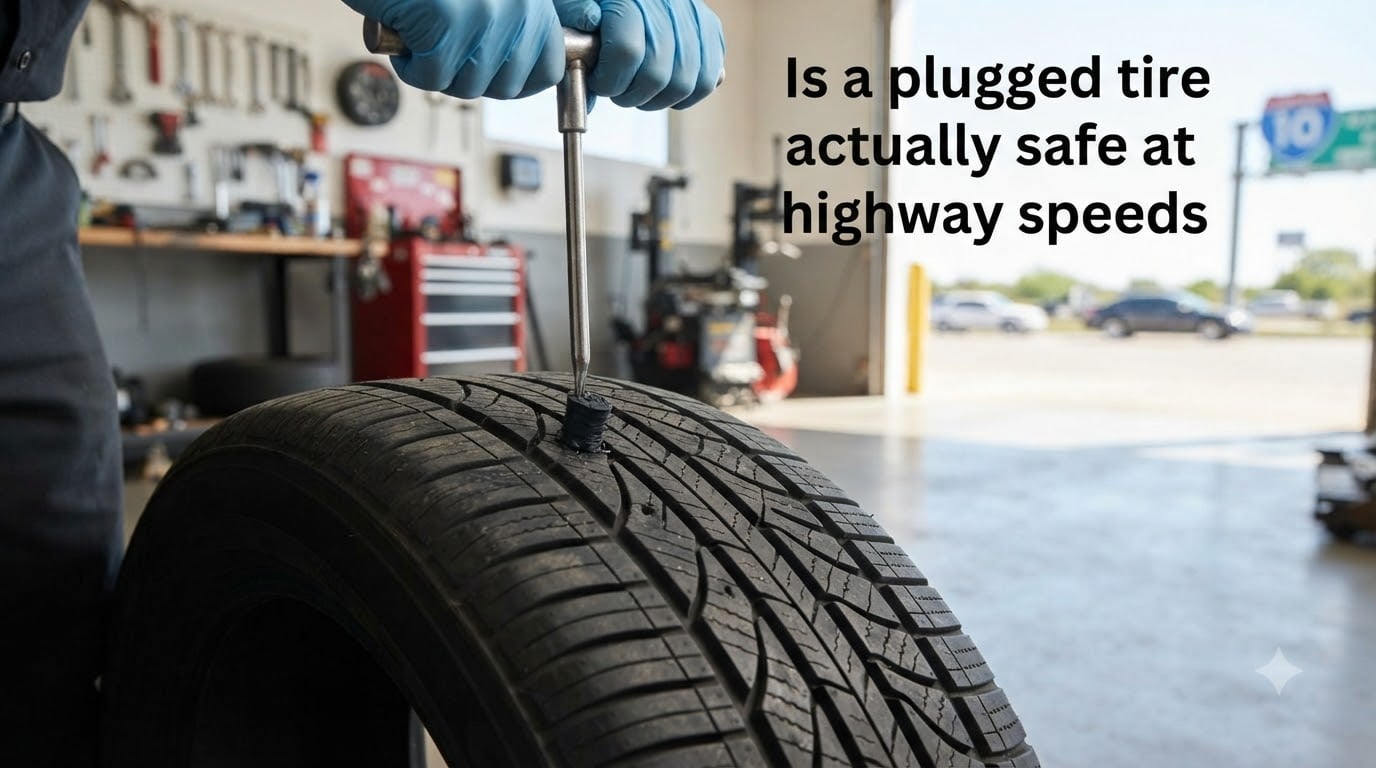
So you’ve got a nail in your tire and you’re wondering: is a plugged tire actually safe at highway speeds? The short answer is yes—but only under specific conditions. A properly installed tire plug in the tread area can handle highway driving, but there are critical limitations you need to understand before hitting the road.
I’ve spent weeks researching tire repair standards, talking to mechanics, and diving into forum discussions to give you a clear, honest answer. This guide covers everything from where you can safely plug a tire to speed limits, temperature effects, and when replacement is the only safe option.
Table of Contents
What Is a Tire Plug and How Does It Work?
A tire plug is a sticky, rubber-coated strip inserted into a puncture hole to seal it from the inside. It’s typically used as a quick repair for tread punctures caused by nails, screws, or other small road debris.
The plugging process works by inserting a rubber strip coated with vulcanizing cement into the puncture hole. The cement activates and bonds the plug to the tire’s rubber, creating an airtight seal. The whole process takes about 10-15 minutes and doesn’t require removing the tire from the rim.
Tire plugs have been around for decades and remain a popular roadside repair option. They’re inexpensive, easy to use, and effective for small punctures in the right location. However, they’re not all created equal—quality varies significantly between cheap kit plugs and professional-grade materials.
Where Can You Safely Plug a Tire?
The location of the puncture is the single most important factor in whether a tire plug will hold at highway speeds. Not all damage is repairable, and plugging the wrong area can be dangerous.
Safe Plugging Zone: The Tread Area
The center tread area is the safest zone for plugging. This is the thickest part of the tire with the most rubber and steel belt reinforcement. Punctures in this zone—from the center of the tread to about one inch from the sidewall edge—can typically be repaired with a plug.
The tread area is designed to handle the most stress and wear. It has multiple layers of rubber and steel belts that help contain the plug and prevent it from working loose under highway driving conditions.
Unsafe Plugging Zones: Sidewall and Shoulder
Never plug a tire’s sidewall. The sidewall flexes constantly as the tire rotates, and a plug in this area will work loose quickly, leading to a blowout. The shoulder area—where the tread meets the sidewall—is also unsafe for plugging because it experiences significant flex during cornering.
Sidewall damage is an automatic tire replacement. There’s no safe way to repair sidewall punctures, cuts, or bulges. If you have damage in this zone, don’t risk it—replace the tire immediately.
Tire Plug vs Tire Patch: Which Is Better for Highway Driving?
Many people confuse tire plugs and tire patches, but they’re different repairs with different safety profiles. Understanding the difference is crucial for highway driving.
| Repair Type | How It Works | Highway Safety | Longevity | Cost |
|---|---|---|---|---|
| Tire Plug | Inserted from outside without removing tire | Acceptable for small tread punctures | Temporary to semi-permanent | Low |
| Tire Patch | Applied from inside after removing tire from rim | Better for highway driving | More permanent | Moderate |
| Patch-Plug Combo | Combines both methods for maximum seal | Best option for highway safety | Most permanent | Moderate to High |
A tire patch is applied from the inside of the tire after it’s been removed from the rim. This creates a stronger, more reliable seal because the patch bonds to the inner liner and distributes stress across a wider area.
For highway driving, mechanics generally recommend patches over plugs. A patch provides better long-term reliability and is considered a more permanent repair by the Tire Industry Association (TIA). However, a properly installed plug can still be safe for highway use if the puncture is small and in the right location.
The best option is a patch-plug combination. This method uses both a plug to seal the puncture hole and a patch to reinforce the inner liner. It’s the gold standard for tire repair and is recommended by most tire manufacturers for highway driving.
Speed Limitations After Plugging a Tire
One of the most common questions is: how fast can you drive on a plugged tire? The answer depends on several factors, but there are general guidelines you should follow.
Most tire repair professionals recommend limiting your speed to 50-55 mph for the first 24-48 hours after plugging. This allows the vulcanizing cement to fully cure and bond the plug to the tire rubber. After this break-in period, you can typically drive at normal highway speeds—but there are exceptions.
Factors That Affect Safe Speed
Plug quality: Professional-grade plugs with vulcanizing cement are more reliable than cheap string plugs from emergency kits
Puncture size: Small punctures (less than 1/4 inch) are safer at highway speeds than larger ones
Tire condition: Worn tires with less tread provide less protection for the plug
Tire pressure: Under-inflated tires put more stress on the plug
Load weight: Heavy loads increase tire stress and plug failure risk
Some manufacturers and tire professionals advise against driving above 70 mph on a plugged tire, regardless of how long it’s been since the repair. The faster you drive, the more heat and stress the tire experiences, which can weaken the plug bond over time.
Temperature and Weather Effects on Plug Longevity
Temperature plays a significant role in how long a tire plug will last—and this is something most guides don’t cover. Extreme temperatures can affect both the plug material and the tire rubber.
Hot Weather Driving
Highway driving in hot weather is particularly demanding on plugged tires. As tire rubber heats up, it expands and becomes more flexible. This can put additional stress on the plug bond. In summer temperatures above 90°F (32°C), tire temperatures can exceed 150°F (65°C) during highway driving.
If you’re driving in hot climates, inspect your plugged tire more frequently. Look for any signs of air loss, bulging, or plug deterioration. Consider replacing the tire if you notice any issues.
Cold Weather Considerations
Cold weather can make tire rubber stiffer and less forgiving. While plugs generally hold up well in cold temperatures, the reduced flexibility means the plug has less ability to absorb impacts from potholes or road debris.
If you live in an area with harsh winters and frequent freeze-thaw cycles, keep a closer eye on your plugged tire. Road salt and chemicals can also degrade rubber over time, potentially affecting plug longevity.
Step-by-Step: How to Plug a Tire Properly
If you’re going to plug a tire yourself, doing it correctly is critical for highway safety. Here’s the proper process:
What You’ll Need
Tire plug kit with rubber plugs and vulcanizing cement
Plug insertion tool (T-handle)
Plug reaming tool
Needle-nose pliers
Tire pressure gauge
Portable air compressor
The Repair Process
Step 1: Locate the puncture. Mark the position and remove the nail or screw with pliers.
Step 2: Ream the puncture hole. Insert the reaming tool and work it in and out several times to clean and shape the hole. This prepares the hole for the plug.
Step 3: Prepare the plug. Thread a rubber plug through the insertion tool eye. Apply vulcanizing cement generously to the plug.
Step 4: Insert the plug. Push the insertion tool firmly into the puncture hole until only about half an inch of plug remains visible. Then pull the tool straight out quickly.
Step 5: Trim excess plug. Use a sharp knife or scissors to cut the excess plug flush with the tread surface.
Step 6: Reinflate the tire. Use a portable compressor to restore proper tire pressure. Check for leaks by applying soapy water to the repair area—bubbles indicate a poor seal.
Step 7: Drive cautiously. Limit speed to 50-55 mph for the first 24-48 hours to allow the plug to fully cure.
How to Monitor a Plugged Tire for Safety
A plugged tire requires ongoing monitoring to ensure it remains safe for highway driving. Here’s a post-plug monitoring checklist you should follow:
First 24 Hours
Check tire pressure every 4-6 hours
Inspect the plug area for any visible changes
Listen for unusual sounds while driving
Limit driving to essential trips only
First Week
Check tire pressure daily
Inspect the plug visually for any signs of deterioration
Test for leaks with soapy water
Note any vibration or handling changes
Monthly Monitoring
Check tire pressure at least once a week
Visually inspect the plug during tire rotation
Look for bulges, cracks, or separation around the repair
Monitor tread depth—plugged tires wear faster in some cases
If you notice any of these warning signs, replace the tire immediately: rapid air loss, bulging near the repair, visible plug deterioration, or unusual vibration at highway speeds.
When to Replace Instead of Repair
Not every tire can or should be repaired. Here are the situations where replacement is the only safe option:
Sidewall damage: Any puncture, cut, or bulge in the sidewall requires replacement
Large punctures: Holes larger than 1/4 inch (6mm) are generally too large for safe plugging
Multiple punctures: If you have more than one puncture in the same tire, consider replacement
Worn tread: Tires with less than 2/32 inch of tread depth should be replaced, not repaired
Previous repairs: If the tire has already been repaired once, replacement is safer
Old tires: Tires over 6 years old should be replaced regardless of repairability
When in doubt, consult a professional tire technician. They can assess whether the damage is repairable and recommend the safest course of action.
Manufacturer Warranty Implications
This is something most tire repair guides don’t cover, but it’s important: plugging a tire may void your manufacturer’s warranty. Many tire manufacturers consider plugs to be temporary repairs and don’t guarantee their performance.
Some manufacturers, like Michelin and Bridgestone, only endorse patch-plug combination repairs performed by certified technicians. A DIY plug repair, even if done correctly, may not be covered under warranty if the tire fails later.
Before repairing a tire yourself, check your tire warranty terms. If the tire is still under warranty and the damage is repairable, it may be worth having a professional perform the repair to maintain warranty coverage.
Professional vs. DIY Tire Plugging
There’s an ongoing debate about whether tire plugging should be done professionally or as a DIY repair. Both approaches have pros and cons for highway driving.
Professional Repair
Uses higher-quality materials and equipment
Technicians can properly assess damage and repairability
Repair follows TIA/RMA industry standards
May maintain tire warranty
Costs more but provides peace of mind
DIY Repair
Cheaper and faster for emergency situations
Can be done roadside without special tools
Quality varies based on kit and user skill
May void tire warranty
Acceptable for temporary repairs, but professional follow-up recommended
For highway driving, professional repairs are generally recommended. However, a well-executed DIY plug can be safe if the puncture is small, in the right location, and you follow proper installation procedures.
Tire Plug Failure Rates and Warning Signs
While tire plugs are generally reliable, they can fail. Understanding failure rates and warning signs can help you avoid dangerous situations on the highway.
Studies and forum reports suggest that properly installed plugs have a failure rate of less than 10% when used in the tread area with quality materials. However, cheap string plugs from emergency kits have higher failure rates, especially at highway speeds.
Signs Your Plug Is Failing
Slow air loss: If your tire loses 1-2 PSI per week, the plug may be deteriorating
Bulging: Any bulge near the repair indicates internal damage
Visible plug: If the plug is visible from outside or appears to be working loose
Vibration: Unusual vibration at highway speeds can indicate a failed plug
Noise: A thumping or humming sound that increases with speed
If you experience any of these signs, pull over safely and inspect the tire. Do not continue driving at highway speeds with a suspected plug failure.
Industry Standards for Tire Repair
The Tire Industry Association (TIA) and the Rubber Manufacturers Association (RMA) have established guidelines for tire repair that most professionals follow.
TIA/RMA Repair Standards
Only repair punctures in the tread area (center section)
Punctures should be no larger than 1/4 inch (6mm) in diameter
Repairs must be done from the inside of the tire (patch or patch-plug)
Plug-only repairs are considered temporary
Tire must be removed from rim for proper inspection
Tire must be inspected for internal damage before repair
These standards exist for safety reasons. While they may seem conservative, they’re based on extensive testing and real-world failure data. Following these guidelines gives you the best chance of a safe, long-lasting repair.
State Laws and Regulations
Tire repair laws vary by state, but there are some general guidelines to be aware of. While there are no federal laws specifically addressing tire plugs, some states have regulations about tire condition and safety.
Most states require tires to have a minimum tread depth of 2/32 inch. Some states have additional requirements for tire repairs, particularly for commercial vehicles. If you’re unsure about the regulations in your area, consult your state’s department of motor vehicles or a local tire professional.
For highway driving, the most important thing is ensuring your tires are safe and properly maintained. A plugged tire that’s in good condition and properly inflated is generally legal for highway use in most states.
Frequently Asked Questions
Is it safe to drive on a plugged tire at highway speeds?
Yes, a properly installed tire plug in the tread area can be safe for highway driving. However, you should limit your speed to 50-55 mph for the first 24-48 hours to allow the plug to cure. After that, you can typically drive at normal highway speeds, but avoid exceeding 70 mph if possible.
How long can you drive on a plugged tire?
A properly installed tire plug can last for the remaining life of the tire, though it’s considered a semi-permanent repair. Many drivers report driving 10,000+ miles on plugged tires without issues. However, you should monitor the plug regularly and replace the tire if you notice any signs of failure.
Is a tire plug a permanent fix?
Tire plugs are generally considered semi-permanent rather than permanent. While they can last for years, most tire professionals recommend patch-plug combinations for permanent repairs. A plug alone may not provide the same long-term reliability as a professional patch repair.
Can a tire plug blow out?
Yes, a tire plug can fail and cause a blowout, especially if it’s installed incorrectly, in the wrong location, or if the tire is damaged beyond repair. To minimize blowout risk, only plug tires in the tread area, use quality materials, and follow proper installation procedures.
Where is the safest place to plug a tire?
The safest place to plug a tire is the center tread area, from the middle of the tread to about one inch from the sidewall edge. Never plug the sidewall or shoulder area, as these zones flex too much and the plug will fail quickly.
Should I plug or patch my tire?
For highway driving, a patch or patch-plug combination is generally better than a plug alone. Patches provide a more permanent seal and are recommended by the Tire Industry Association. However, plugs can be acceptable for small tread punctures if installed correctly with quality materials.
Do tire plugs fail at high speed?
Tire plugs can fail at high speed if they’re installed incorrectly, in the wrong location, or if the tire is damaged. Quality plugs installed in the tread area with vulcanizing cement are generally reliable at highway speeds, but cheap string plugs have higher failure rates.
Is a tire plug legal for highway driving?
There are no federal laws specifically prohibiting tire plugs for highway driving. Most states allow plugged tires as long as they meet minimum tread depth requirements and are in safe condition. However, regulations vary by state, so check your local laws if you’re unsure.
Can you drive on a tire with a nail in it?
You can drive short distances on a tire with a nail in it, but you should get it repaired as soon as possible. Driving on a punctured tire can cause the damage to worsen and potentially lead to a blowout. If you must drive, keep your speed under 50 mph and avoid highway driving.
Does a tire plug affect warranty?
Yes, plugging a tire may void your manufacturer’s warranty. Many tire manufacturers only endorse patch-plug repairs performed by certified technicians. Before repairing a tire yourself, check your warranty terms to understand what’s covered and what isn’t.
Conclusion
So, is a plugged tire actually safe at highway speeds? The answer is yes—with the right conditions. A properly installed tire plug in the tread area, using quality materials and following correct procedures, can handle highway driving safely. Just remember to limit your speed for the first day or two, monitor the repair regularly, and replace the tire if you notice any warning signs. When in doubt, consult a professional tire technician for the safest repair option.