
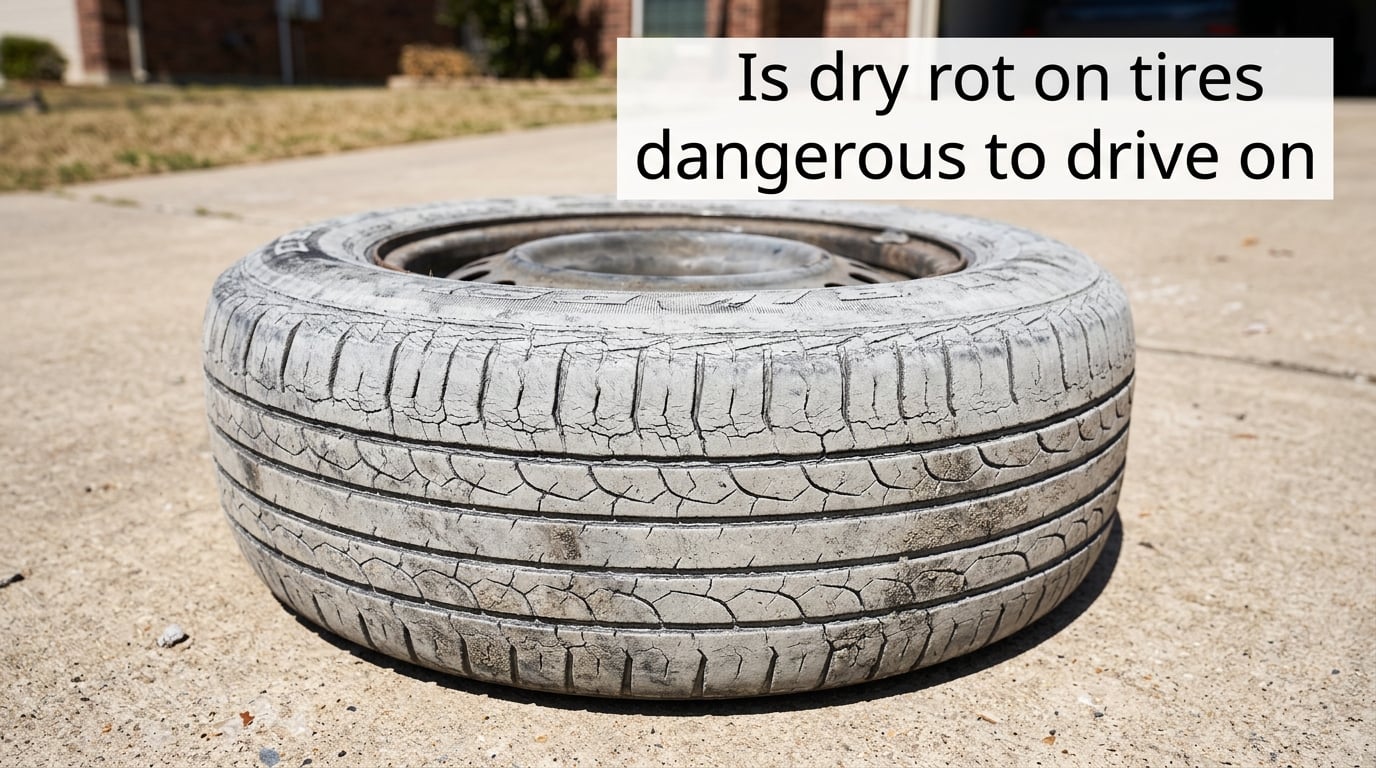
Yes, dry rot on tires is dangerous to drive on. Dry rotted tires are not safe because the cracks weaken the rubber’s structural integrity and can trigger a sudden blowout, especially at highway speeds. According to the NHTSA, faulty tires cause roughly 11,000 accidents every year in the United States, and sidewall cracking from dry rot is one of the leading culprits. Replace tires at the first visible sign of dry rot, regardless of how much tread is left.
If you searched “is dry rot on tires dangerous to drive on” after spotting cracks in your sidewalls, this guide will tell you exactly what you are dealing with. Our team pulled together NHTSA statistics, tire industry guidance, and what actual drivers report on Reddit and tire forums to give you a clear answer.
We will cover what dry rot actually is, the five most common causes, the visible signs to check for, and a sidewall cracking severity chart that tells you when to keep driving and when to stop immediately. You will also get practical advice for the most common Reddit scenario: noticing dry rot and wondering whether you can drive 15 miles to the shop.
Table of Contents
What Is Tire Dry Rot?
Tire dry rot is the deterioration of the rubber compound in a tire, causing visible cracking across the sidewall and sometimes the tread. You will also hear it called sidewall cracking, weather checking, or ozone cracking. All four names describe the same condition: rubber that has lost the flexibility it needs to safely flex under the weight of your vehicle.
Tires are not made of pure rubber. They are a compound of natural rubber, synthetic polymers, carbon black, oils, resins, and antioxidants. The oils and resins are what keep the rubber soft and pliable. Over time, and especially when exposed to heat, UV light, and inactivity, those oils evaporate out of the rubber. What is left behind is dry, brittle material that cracks under even minor stress.
The chemical name for the breakdown process is oxidation. When oxygen and ozone in the air react with the polymers in the tire, the long molecular chains that give rubber its stretchiness break apart. The cracks you see are where those broken chains have separated. Once a crack starts, it spreads every time the tire flexes during driving, accelerating the failure.
The scary part is that dry rot is not always visible from far away. Hairline cracks on the sidewall can be the first sign, and many drivers miss them until they get a flat or, worse, a blowout on the highway.
What Causes Tire Dry Rot?
Dry rot does not have a single cause. It is the result of several stressors acting on the rubber over time. Here are the five biggest contributors, in order of how aggressively they age a tire.
1. UV and Sunlight Exposure
Ultraviolet radiation is the number one accelerator of tire dry rot. UV photons break the chemical bonds in rubber polymers and oxidize the surface layer. Tires parked outside in direct sun will develop surface cracks years before garage-stored tires of the same age. The southwestern US (Arizona, Nevada, New Mexico, California desert regions) is the highest-risk climate because of intense, year-round UV exposure.
2. Heat and Temperature Extremes
Heat speeds up every chemical reaction, including the oxidation of rubber. Pavement temperatures in summer can exceed 140 degrees Fahrenheit, and tire surface temps climb even higher. Cold winters add thermal cycling stress, expanding and contracting the rubber until microcracks form. Constant temperature swings age a tire faster than steady heat alone.
3. Age, Even Without Use
Tires have a shelf life regardless of mileage. Most tire manufacturers and the Tire Industry Association recommend replacing tires at 6 to 10 years from the manufacture date, even if the tread looks fine. The antioxidants in the rubber deplete over time, and once they are gone, dry rot starts regardless of how many miles the tire has seen.
4. Lack of Use (Stored Tires)
This one surprises drivers. A parked car develops dry rot faster than a driven one. Tires need regular flexing to circulate the oils inside the rubber compound. When a vehicle sits for weeks or months, those oils pool at the bottom and the upper sidewall dries out. This is why RV tires, trailer tires, spare tires, and weekend-only classics are the most common dry rot casualties.
5. Harsh Chemicals and Improper Inflation
Petroleum-based tire shines, some cleaning solvents, and certain deicers strip the protective antioxidants out of rubber. Underinflation causes the sidewall to flex more than designed, generating heat and microcracks. Both factors speed up dry rot independently and compound the damage when combined with sun and heat.
Signs and Symptoms of Tire Dry Rot
Dry rot announces itself visually before it causes a failure. Here are the seven warning signs to look for, in roughly the order they appear as the condition worsens.
Sidewall Cracks (Most Common Sign)
Look at the sidewall first. Hairline cracks running in a generally circumferential direction are the earliest dry rot symptom. They often start near the lettering or the wheel rim and spread outward. If the cracks are shallow and only visible up close, the tire is in early dry rot. If they are deep enough that you can feel them with a fingernail, the tire is in serious condition.
Tread Cracks
Cracks across the tread blocks indicate more advanced dry rot. Tread cracks reduce grip on wet roads and signal that the rubber throughout the tire is losing its flexibility. Tread cracks combined with sidewall cracks mean the tire is at the end of its safe life.
Color Fading or Chalky Appearance
Fresh tire rubber is dark black with a slight sheen. Dry rotted rubber turns grayish, dusty, or chalky. The antioxidants that protect the rubber also give it its color. Once the tire fades, those protective compounds are largely gone.
Brittle or Crumbly Rubber
Press your thumbnail into the sidewall in an inconspicuous spot. Healthy rubber yields slightly. Dry rotted rubber feels hard and may flake or crumble at the surface. This is a tactile test that many tire shop technicians use during a routine inspection.
Frequent Air Loss
If your tires go flat every few days even though there is no visible puncture, dry rot may have caused slow leaks through the microcracks in the sidewall. This was a common complaint from a Reddit user who had a 3-year-old Ford Expedition that needed air every 3 to 4 days. The tire was less than 3 years old, but consistent UV exposure and possibly underinflation had accelerated the dry rot.
Bubbles or Bulges
Bubbles and bulges in the sidewall mean the internal belts have separated from the rubber. This is not dry rot itself, but it often accompanies advanced dry rot and represents an immediate safety hazard. A bubbled tire can rupture without warning.
Dry Rot vs. Tread Separation: How to Tell the Difference
Drivers sometimes confuse the two. Dry rot is a surface-level chemical deterioration that produces cracks. Tread separation is a structural failure where the tread layer peels away from the belts underneath, often producing a visible flap or ridge. Tread separation can happen suddenly even on tires that look fine, and it is more common at high speeds. Both conditions mean the tire must be replaced immediately.
Is Driving on Dry Rotted Tires Dangerous?
Yes. Driving on dry rotted tires is dangerous, and the risk increases with every mile. The cracked rubber cannot flex safely under load, and the structural integrity of the tire is compromised. Here is what happens when a dry rotted tire fails.
Blowout Risk at Highway Speed
A blowout is the most catastrophic outcome. At 65 mph, a tire blowout can cause a driver to lose control of the vehicle, especially on a rear-wheel-drive car or a heavily loaded SUV. The NHTSA tracks roughly 11,000 tire-related crashes per year, and sidewall failure from dry rot is a major contributor. A single blowout can roll a vehicle, injure passengers, or cause a multi-car pileup.
Sudden Tread Loss
Cracked rubber can shed chunks of tread at speed, leaving you driving on the bare belts. You will feel the car pull to one side and may hear a flapping sound. Pull over as soon as it is safe to do so.
Slow Leaks and Stranding
Dry rot microcracks can leak air slowly enough that you do not notice until the tire is severely underinflated. Driving on an underinflated tire generates heat, which accelerates dry rot, which causes more leaks. The cycle ends with a roadside flat, often in an inconvenient location.
Insurance and Legal Implications
If you knowingly drive on tires with visible dry rot and cause an accident, your insurance company may deny the claim or reduce your payout. Driving on known-damaged tires can be considered negligence in a liability dispute. The cost of four new tires is a fraction of the cost of a single accident with injuries.
How Long Can You Drive on Dry Rotted Tires?
The honest answer: you should not drive on them at all. Once dry rot is visible, the tire is structurally compromised, and there is no safe distance. A forum user on Reddit put it bluntly: “There is no safe distance to drive on tires that show dry rot. They could blow out at any time as they are no longer structurally sound.” Another commenter added: “If you’re lucky, tread will separate a little bit from the dry rot and just go flat while you’re parked. If you’re not so lucky, it will happen while you’re on the interstate at high speeds and cause you to lose control of your vehicle.”
That said, real life does not always give you the option of a flatbed tow. Here is the practical guidance we give drivers based on what actual mechanics and tire shop technicians recommend.
Scenario 1: You Just Noticed Dry Rot at Home
Do not drive the car. Call a tire shop, describe what you see (or send a photo), and either have the tires replaced at your location or have the car flat-bedded to the shop. Most shops offer mobile tire service for exactly this situation.
Scenario 2: You Noticed Dry Rot Mid-Road-Trip
Reduce speed immediately. Get off the highway at the next exit. Drive on surface streets at low speed to the nearest tire shop. Avoid highways entirely if you can. Most drivers in this scenario report being able to safely reach a shop within 15 to 30 miles by taking back roads. Do not continue an 8-hour road trip on dry rotted tires. Stop and replace them.
Scenario 3: Can I Drive 15 Miles to the Tire Shop?
This is the most common Reddit question on the topic, and the consensus among mechanics is yes, but only if you drive slowly on local roads, avoid the highway, and inflate the tires slightly above the recommended pressure for the short drive. Once you arrive, do not drive the car home. Either replace the tires on the spot or have the car towed. The 15-mile trip is a one-time emergency measure, not a regular driving pattern.
Scenario 4: Transporting a Vehicle with Dry Rotted Tires
The safest option is a flatbed tow truck or a car dolly that lifts the drive wheels off the ground. If the dry rotted tires are on a non-driven axle of a rear-wheel-drive car, you can sometimes carefully roll the vehicle onto a trailer. Never tow a dry rotted tire behind another vehicle at highway speed. The flexing and heat will accelerate failure.
When Is Dry Rot on Tires Dangerous? (Severity Chart)
Not all dry rot is equally dangerous. Here is the sidewall cracking severity chart that tire shops use to decide whether to recommend immediate replacement, replacement within a few months, or just continued monitoring.
Sidewall Cracking Severity Chart
Stage 1 – Hairline Cracks (Low Immediate Risk): Tiny cracks visible only on close inspection, usually near the lettering. Tread depth is full. The tire is safe to drive on but should be inspected monthly and replaced within the year.
Stage 2 – Surface Cracks (Moderate Risk): Visible cracks that run across the sidewall but do not reach the belts. You can feel them slightly with a fingernail. Replace the tire within 3 to 6 months. Avoid long highway trips.
Stage 3 – Deep Cracks (High Risk): Cracks deep enough that you can see the inner cords or feel ridges with your fingertip. The tire may also show tread cracks or color fading. Replace immediately.
Stage 4 – Cracking with Bulges or Wire Exposure (Critical Risk): Any visible bulge, bubble, exposed wire, or chunk of missing rubber. Do not drive. Replace the tire and have the other three inspected.
How Much Dry Rot Is Too Much?
Any visible sidewall cracking combined with tread depth below 4/32 inch means the tire needs replacement now. Any sidewall cracking deep enough to feel with a fingernail means replacement regardless of tread depth. Bulges, bubbles, and exposed belts mean the tire is not safe to drive on at all.
How to Prevent Tire Dry Rot
You cannot stop rubber from aging, but you can slow it down dramatically. Here are the prevention tips our team recommends based on tire industry best practices.
1. Drive the Car Regularly
Tires on a daily driver stay flexible because the flexing circulates the oils in the rubber. If you have a second car, a classic, an RV, or a trailer, drive it at least every two weeks for 20 minutes to keep the rubber healthy. Stored tires age faster than driven tires.
2. Park in the Garage or Use Tire Covers
Garage storage cuts UV exposure dramatically and keeps tires cooler. If indoor storage is not an option, fitted tire covers block UV and trap some heat. Tire covers are especially important for RVs, trailers, and seasonal vehicles parked outside for months at a time.
3. Keep Tires Properly Inflated
Underinflation makes the sidewall flex more than designed, generating heat and microcracks. Check pressure monthly, including the spare. The proper pressure is on the driver’s door jamb sticker, not the tire sidewall (the sidewall number is the maximum). Proper inflation can extend tire life by up to 4,700 miles according to NHTSA estimates.
4. Avoid Petroleum-Based Tire Shine
Most silicone and petroleum-based tire dressings actually accelerate dry rot by stripping the antioxidants out of the rubber. If you want to use a tire shine, choose a water-based product with UV inhibitors specifically labeled as rubber-safe. Even better, skip the shine entirely and let the tires age naturally.
5. Clean Tires with Mild Soap
When washing tires, use a mild soap and water. Avoid harsh degreasers, gasoline, brake cleaner, or any petroleum solvent. These chemicals dry out the rubber quickly and undo the protective compounds the manufacturer added.
6. Rotate Tires Every 5,000 to 7,000 Miles
Regular rotation spreads wear evenly and lets you inspect all four tires at every service. Front tires usually carry more weight and run hotter, so rotating them to the rear extends overall life and gives you more chances to spot early dry rot.
How to Store Tires to Prevent Dry Rot
Storage is the highest-risk scenario for dry rot. Follow this five-step process for any tires that will sit for more than a month.
Step 1: Clean and Dry the Tires
Wash off brake dust, road grime, and any petroleum residue. Dry thoroughly. Contaminants left on stored rubber accelerate oxidation.
Step 2. Inflate to Maximum Recommended Pressure
Stored tires lose air slowly through the rubber itself. Overinflation prevents the sidewall from developing flat spots and reduces flex cracking. Do not exceed the maximum pressure stamped on the sidewall.
Step 3. Store in a Cool, Dry, Dark Place
Ideal storage temperature is between 50 and 70 degrees Fahrenheit with low humidity. Avoid garages with extreme temperature swings, outdoor sheds in direct sun, and basement spaces prone to dampness.
Step 4. Use Tire Covers or Airtight Bags
Tire covers block UV even in shaded storage. Airtight plastic bags (specifically tire storage bags, not garbage bags) slow ozone exposure. Both methods together give stored tires the best chance of surviving multi-year storage.
Step 5. Check the Spare Tire
The spare tire is the most overlooked dry rot casualty. Many vehicles carry the same age tire as the four on the road, and the spare sits in the trunk for years with no UV exposure but plenty of ozone. Inspect the spare annually and replace it on the same schedule as the other four.
Climate-Specific Advice
If you live in an arid climate (Arizona, Nevada, New Mexico, inland California, west Texas), expect dry rot to appear 1 to 2 years sooner than in temperate regions. UV intensity is the driver. If you live in a humid climate (Gulf Coast, Florida, the Pacific Northwest), the risk shifts slightly toward sidewall rot from ozone and temperature swings rather than UV-driven surface cracking. Either way, monthly inspections matter.
Common Myths About Tire Dry Rot
Several pieces of conventional wisdom about dry rot are simply wrong. Here are the myths we hear most often, and what the tire industry actually says.
Myth 1: Tire Shine Prevents Dry Rot
Most tire shine products do the opposite. Petroleum-based dressings strip antioxidants and accelerate cracking. Water-based products with UV inhibitors may slow surface UV damage but will not stop dry rot on an aging tire. Skip the shine, keep the tires clean, and accept that rubber has a finite life.
Myth 2: UV Protectant Sprays Fix Dry Rot
No spray reverses dry rot. Once the rubber has cracked, no product can restore the lost oils and resins. UV protectants marketed as dry rot cures are at best a temporary cosmetic measure. They cannot rebuild structural integrity.
Myth 3: Tire Warranties Cover Dry Rot
Most tire warranties cover defects in materials and workmanship, not age-related deterioration. Dry rot is considered wear and tear, similar to worn tread. Read your warranty fine print. Mileage warranties rarely extend past 50,000 to 70,000 miles and almost never cover cosmetic or age-related cracking.
Myth 4: You Can Reverse Dry Rot
You cannot reverse dry rot. The chemical breakdown of the rubber is permanent. Products marketed as “dry rot repair” or “rubber rejuvenator” cannot restore the molecular bonds that have broken. The only fix is replacement.
Myth 5: New Tires Cannot Dry Rot
Tires can begin showing dry rot within 3 to 5 years even with light use, especially in hot climates or underinflated conditions. The Reddit user with 3-year-old tires who needed air every few days is proof that dry rot is not just an old-tire problem. Inspect your tires annually regardless of age.
How to Read the DOT Date Code
Every tire has a DOT stamp on the sidewall that ends with a four-digit date code. The first two digits are the week of manufacture, the last two are the year. A tire marked “0326” was made in the third week of 2026. Tires older than 6 years from this date should be inspected carefully and considered for replacement regardless of tread depth.
Frequently Asked Questions
Is dry rot on tires dangerous to drive on?
Yes. Dry rotted tires are not safe to drive on because the cracked rubber loses structural integrity. The NHTSA estimates that tire-related issues cause roughly 11,000 accidents per year, and sidewall cracking from dry rot is a leading contributor. Replace any tire with visible sidewall cracks deep enough to feel with a fingernail.
Can I drive with dry rotted tires?
You can drive a short distance to a tire shop if absolutely necessary, but you should not drive on dry rotted tires as a regular practice. Reduce speed, avoid highways, and inflate slightly above normal pressure for the emergency trip. Replace the tires as soon as you arrive.
How long can a tire last with dry rot?
There is no safe answer because dry rot is progressive. Some tires hold together for months after cracks appear, others fail within days. The structural integrity of the rubber is already compromised, so the time to failure depends on heat, speed, load, and how deep the cracks are. Treat any visible dry rot as a replacement signal.
Can you reverse dry rot on tires?
No. Dry rot is a permanent chemical breakdown of the rubber. No spray, sealant, or treatment can restore the lost oils and broken molecular bonds. The only fix for a dry rotted tire is replacement.
What causes dry rot on tires?
The five main causes are UV sunlight exposure, heat and temperature swings, age beyond 6 years, lack of use (stored tires), and harsh chemicals like petroleum-based tire shine or degreasers. Underinflation accelerates all of these by generating extra heat and flex stress on the sidewall.
When is dry rot on tires dangerous?
Dry rot becomes dangerous at the moment cracks become visible on the sidewall or tread. Deep cracks that expose inner cords, any bulge or bubble, or cracks combined with low tread depth mean the tire is unsafe to drive on. Bulges, exposed wire, or chunks of missing rubber require immediate replacement and probably a tow.
When to Replace Your Tires: The Bottom Line
Driving on dry rotted tires is dangerous, and the answer to the question “is dry rot on tires dangerous to drive on” is always yes, no matter how mild the cracks look today. The structural integrity of the rubber is gone once cracks appear, and the next pothole, speed bump, or hot day could be the one that triggers a blowout.
Replace any tire with visible sidewall cracks as soon as you can. Use the DOT date code to check the age of every tire on your vehicle, including the spare. Inspect stored and seasonal tires every year even if they look fine. If you live in a hot or arid climate, start inspecting at year 3 instead of year 5.
The cost of four new tires is far less than the cost of a blowout at highway speed. A free inspection at any major tire shop takes 15 minutes and gives you a clear answer. When in doubt, replace.