
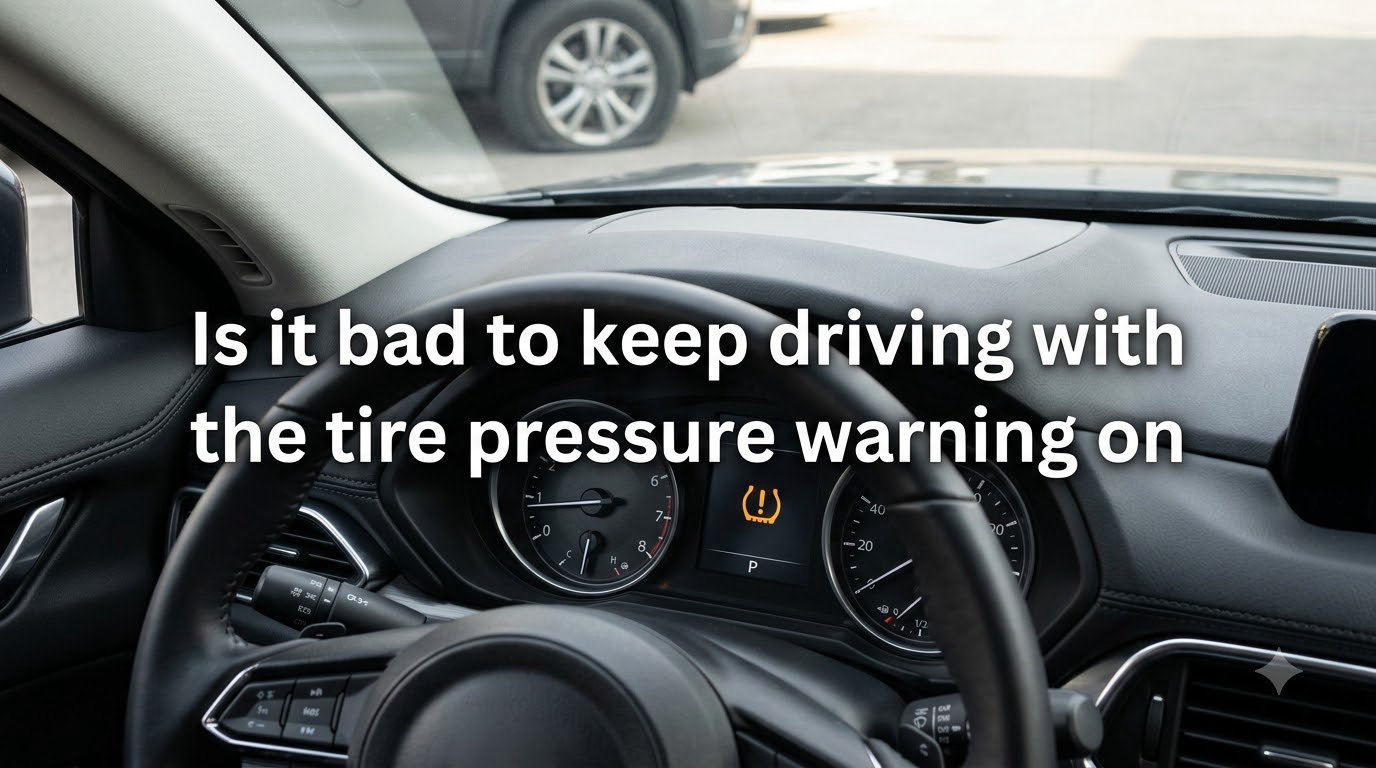
Yes, driving with the tire pressure warning light on is bad and potentially dangerous. When your TPMS (Tire Pressure Monitoring System) light illuminates, it means one or more of your tires are significantly underinflated, typically 25% or more below the manufacturer’s recommended pressure. Continuing to drive increases your risk of a tire blowout, reduces handling and braking performance, and accelerates uneven tire wear.
According to the National Highway Traffic Safety Administration (NHTSA), tires can lose up to half their air pressure before they visually appear underinflated. That means by the time you notice a flat-looking tire, you may already be driving on dangerously low pressure. The TPMS system exists precisely because your eyes alone cannot detect this level of underinflation.
In this guide, we will explain exactly what happens when you keep driving with the tire pressure warning on, how to interpret PSI thresholds, what steps to take when the light comes on, and how factors like cold weather and heavy loads affect your tires.
Table of Contents
Quick Answer: Is It Bad to Keep Driving with the Tire Pressure Warning On?
Yes, it is bad to keep driving with the tire pressure warning on. Underinflated tires overheat from excessive flexing, which weakens the tire structure and can cause a sudden blowout at highway speeds. You also lose predictable handling, your braking distances increase, fuel economy drops by up to 3% for every 1 PSI below recommended pressure, and your tires wear out prematurely along the outer edges.
If your TPMS light is on, pull over when it is safe, check your tire pressure with a gauge, and inflate to the PSI listed on the sticker inside your driver’s door jamb. If you cannot check immediately, reduce your speed below 50 mph and drive only to the nearest safe location or tire shop. Do not continue driving for extended distances.
What Is the Tire Pressure Warning Light (TPMS)?
The tire pressure warning light is part of the Tire Pressure Monitoring System, a safety feature required on all vehicles sold in the United States since 2007. It alerts you when one or more tires drop to a pressure level that compromises safety.
How TPMS Works
There are two types of TPMS systems in modern vehicles:
Direct TPMS uses physical pressure sensors mounted inside each tire. These sensors measure actual air pressure in real time and send a wireless signal to your dashboard when pressure falls below a set threshold. Most newer vehicles use direct systems because they provide accurate, tire-specific readings.
Indirect TPMS does not measure pressure directly. Instead, it monitors wheel speed through the anti-lock braking system (ABS). An underinflated tire has a smaller diameter and rotates faster than a properly inflated one. The system detects this speed difference and triggers the warning light. Indirect systems are less precise and may not tell you which tire is low.
What the Dashboard Symbols Mean
The TPMS warning light looks like a yellow horseshoe-shaped symbol with an exclamation point in the center. If this light stays on steadily, one or more tires are below the safe pressure threshold. If the light flashes for 60 to 90 seconds before staying solid, the TPMS system itself may have a fault that needs diagnosis.
What Happens If You Keep Driving with Low Tire Pressure?
Driving on underinflated tires creates a chain reaction of safety and performance problems. Here is what happens to your vehicle and tires:
1. Increased Risk of Tire Blowout
This is the most serious danger. Underinflated tires flex excessively, generating heat through friction between the tire’s internal components. As the tire heats up, the rubber weakens and the internal structure degrades. At highway speeds, this can cause a sudden blowout that sends your vehicle out of control. The NHTSA estimates that tire-related issues contribute to approximately 11,000 crashes annually in the United States.
2. Reduced Handling and Traction
Low tire pressure changes the shape of your tire’s contact patch, the area where rubber meets road. A properly inflated tire maintains a consistent, predictable footprint. An underinflated tire squirms and deforms, which dulls steering response and makes emergency maneuvers less reliable. You may notice your vehicle feels vague or wandering, especially in curves.
3. Longer Braking Distances
Underinflated tires cannot grip the road as effectively during hard braking. The tire’s tread blocks flex and squirm instead of maintaining firm contact with the pavement. This increases stopping distances, which can be the difference between avoiding an accident and colliding with another vehicle.
4. Accelerated and Uneven Tire Wear
When a tire is underinflated, the outer edges of the tread carry more load than the center. This causes the shoulders of the tire to wear down significantly faster. Mechanics on forums like r/MechanicAdvice consistently emphasize that low tire pressure leads to uneven and premature tire wear, even when the car seems to drive normally. A set of tires that should last 50,000 miles might need replacement at 30,000 miles if chronically underinflated.
5. Decreased Fuel Economy
Underinflated tires have increased rolling resistance, meaning your engine works harder to move the vehicle forward. The U.S. Department of Energy estimates that for every 1 PSI drop in pressure below the recommended level, fuel economy decreases by approximately 0.2%. For a tire that is 5 to 10 PSI low, you could be losing 1% to 3% of your fuel efficiency on every drive.
6. Hydroplaning Risk in Wet Conditions
An underinflated tire’s tread does not channel water away as effectively as a properly inflated one. The contact patch deforms in ways that trap water between the tire and road surface, increasing the likelihood of hydroplaning during rain or on wet roads.
PSI Thresholds: When Is Tire Pressure Too Low?
Not all low tire pressure situations are equally dangerous. Understanding PSI ranges helps you make informed decisions about when to stop driving and when to proceed cautiously to the nearest air source.
| Pressure Range | Status | What to Do |
|---|---|---|
| At or above recommended PSI | Safe | Continue driving normally. Check monthly. |
| 1-3 PSI below recommended | Monitor | Inflate soon. Light may not trigger yet. |
| 4-7 PSI below recommended (25% loss) | Caution | TPMS light will likely activate. Reduce speed below 50 mph and drive directly to the nearest air source. |
| 8-15 PSI below recommended | Warning | Stop driving as soon as safely possible. Significant blowout and handling risk. Use a portable inflator or spare tire. |
| Below 20 PSI | Dangerous | Do not continue driving. Tire may be structurally compromised. Call roadside assistance or install your spare. |
Your vehicle’s recommended tire pressure is printed on a sticker inside the driver’s door jamb, not on the tire sidewall. The number on the sidewall is the tire’s maximum pressure, which is typically much higher than the recommended operating pressure.
How Long Can You Drive with the Tire Pressure Light On?
You should not drive any significant distance with the tire pressure light on. If you must move the vehicle, keep it under 50 mph and drive no more than a few miles to reach a safe location, gas station with an air pump, or tire shop.
The exact distance depends on how much pressure you have lost. If you are only a few PSI below the threshold, you may be able to drive cautiously for a short distance. If you have lost significant pressure, the tire could fail at any moment. Forum users on r/AskMechanics report that short distances under 5 miles at reduced speeds are generally manageable, but they strongly advise against extended driving of any kind with the light active.
If you are on a highway when the light comes on, activate your hazard lights, move to the right lane, and take the next exit. Do not continue to your destination if it is more than a few miles away.
Why Your Tire Pressure Light Might Be On
Low tire pressure is the most common reason for the TPMS light, but it is not the only one. Understanding other causes can save you from unnecessary worry or missed problems.
Temperature Drops
Tire pressure changes approximately 1 PSI for every 10 degrees Fahrenheit change in ambient temperature. A sudden cold snap can drop your tire pressure enough to trigger the light, even if your tires were properly inflated the day before. This is especially common in fall and winter when overnight temperatures plunge. If the light comes on during a cold morning and turns off after the tires warm up from driving, temperature is likely the cause.
TPMS Sensor Malfunction
TPMS sensors have batteries that typically last 5 to 10 years. When a sensor battery dies or the sensor fails, the system cannot read the tire pressure and may trigger the warning light even though your tires are fine. If your TPMS light flashes before staying solid, this usually indicates a system fault rather than low pressure.
New Tires or Recent Tire Rotation
After installing new tires or rotating your existing ones, the TPMS sensors may need to be recalibrated. Some vehicles require a manual reset through the dashboard menu, while others automatically relearn sensor positions after driving for 10 to 20 miles. Check your owner’s manual for the specific procedure.
Sensor Relearning After Tire Service
If you recently had tire service and the shop did not properly reprogram or relearn the TPMS sensors, the system may display incorrect warnings. This is a common complaint among vehicle owners and usually requires a visit to a shop with proper TPMS diagnostic equipment.
What to Do When Your Tire Pressure Warning Comes On
Follow these steps when you see the TPMS warning light illuminate on your dashboard:
Step 1: Reduce Speed Immediately. Take your foot off the accelerator and slow to below 50 mph. Avoid sudden braking or sharp steering inputs. Turn on your hazard lights if you are on a highway.
Step 2: Find a Safe Place to Pull Over. Look for a parking lot, rest area, or wide shoulder. Do not stop in a travel lane or on a narrow shoulder next to fast-moving traffic.
Step 3: Visually Inspect All Four Tires. Walk around the vehicle and look for obvious signs of a flat, bulging sidewall, or objects embedded in the tread. Keep in mind that a tire can lose up to half its pressure without looking noticeably flat to the naked eye.
Step 4: Check Pressure with a Gauge. Remove the valve cap from each tire and press a tire gauge firmly onto the valve stem. Compare the reading to the recommended PSI on the driver’s door jamb sticker. A quality digital gauge costs under ten dollars and is worth keeping in your glove compartment.
Step 5: Inflate to the Correct PSI. If you have access to an air compressor or gas station air pump, inflate the low tire(s) to the recommended pressure. Most gas station air pumps have built-in gauges, but bringing your own ensures accuracy.
Step 6: Reset the TPMS Light if Needed. Some vehicles require a manual TPMS reset after inflating tires. This is usually done through a button under the steering column or in the vehicle settings menu. The light should turn off after driving a few miles if pressure is correct.
Step 7: Visit a Tire Shop if the Light Persists. If the TPMS light stays on after inflating all tires to the correct pressure, you may have a slow leak, a damaged sensor, or a puncture that needs professional repair. Do not ignore a persistent light.
The Real Cost of Driving on Underinflated Tires
Beyond the immediate safety risks, chronically driving on underinflated tires hits your wallet in several ways.
Fuel Waste
The Department of Energy states that properly inflated tires can improve gas mileage by up to 3%. If you are driving on tires that are 5 to 10 PSI below recommended pressure, you are losing roughly 1% to 3% of your fuel efficiency. Over a year of driving 12,000 miles, that adds up to wasted fuel you could have avoided with a five-minute inflation check.
Shortened Tire Lifespan
Underinflated tires wear out significantly faster, particularly along the outer tread edges. A tire that should last 50,000 miles under normal conditions might need replacing at 30,000 miles or sooner if chronically low on pressure. For a set of four tires, this means replacing them a year or two earlier than necessary.
Higher Replacement Costs
When you factor in premature tire replacement, the cost of driving on low pressure adds up quickly. A single new tire can range from modest to expensive depending on your vehicle. Replacing an entire set early because of preventable uneven wear is an avoidable expense.
How Cold Weather Affects Tire Pressure
Cold weather is one of the most common reasons the TPMS light activates, and understanding why can save you unnecessary trips to the tire shop.
Tire pressure drops about 1 PSI for every 10-degree decrease in ambient temperature. If you inflated your tires to 35 PSI during a warm afternoon and overnight temperatures dropped 30 degrees, your tires could lose 3 PSI and potentially trigger the TPMS warning light the next morning.
This is not a false alarm. Your tires genuinely have less pressure in cold conditions, and driving on them before they warm up means operating below the recommended PSI. The pressure increases somewhat as the tires heat up from driving, but starting a trip with low pressure still exposes you to the risks described above during those first miles.
Check and adjust your tire pressure during cold snaps, ideally in the morning before driving when the tires are cold. This gives you the most accurate reading and ensures you start each trip at the correct pressure.
Frequently Asked Questions
Is it okay to drive with a low tire pressure warning?
No, it is not safe to drive with a low tire pressure warning. The TPMS light activates when one or more tires are significantly underinflated, increasing your risk of a blowout, reducing handling and braking performance, and causing premature tire wear. You should check your tire pressure and inflate to the recommended PSI as soon as possible.
How long can I drive with a low tire pressure light on?
You should not drive any significant distance with the tire pressure light on. If you must move the vehicle, keep it under 50 mph and drive no more than a few miles to reach a safe location or tire shop. The exact safe distance depends on how much pressure you have lost, but extended driving is never recommended.
Can I drive 200 miles with low tire pressure?
No, driving 200 miles with low tire pressure is extremely dangerous and not recommended. Underinflated tires overheat, lose traction, and can blow out at any time. If your TPMS light is on, drive only the shortest distance necessary to reach a safe location or tire service center at reduced speeds.
Is 29 PSI too low to drive on?
It depends on your vehicle’s recommended pressure, which is typically between 30 and 35 PSI for most passenger cars. At 29 PSI, you are likely 1 to 6 PSI below the recommended level, which is in the caution zone. You can drive carefully to the nearest air pump, but you should inflate to the correct PSI as soon as possible.
Is 40 PSI too high to drive?
For most passenger cars and light trucks, 40 PSI is above the recommended tire pressure but still within the tire’s maximum rated capacity. Overinflation reduces the contact patch, causes uneven center tread wear, and gives a harsher ride. Check your door jamb sticker for the recommended PSI and adjust accordingly.
Is it safe to drive with a 20 PSI tire?
No, driving with a tire at 20 PSI is dangerous. At this pressure level, the tire is severely underinflated and at high risk of overheating, structural failure, and blowout. Do not continue driving. Install your spare tire or call roadside assistance to get to a tire shop safely.
Why is my tire pressure light still on after filling tires?
The light may stay on for several reasons: the tires were not inflated to the correct PSI, the TPMS sensors need to be reset or relearned, one sensor has a dead battery, there is a slow leak you have not detected, or the TPMS system itself has a fault. Check the pressure in all four tires including the spare, and if the light persists, visit a tire shop for diagnosis.
Conclusion
Driving with the tire pressure warning on is not something to take lightly. The TPMS light is your vehicle’s way of telling you that your tires are unsafe, and ignoring it puts you at risk for blowouts, loss of control, and costly tire damage. The answer to whether it is bad to keep driving with the tire pressure warning on is clear: yes, it is bad, and you should address it immediately.
Keep a tire gauge in your glove compartment, check your pressure monthly, and take the TPMS light seriously every time it appears. A few minutes of maintenance can prevent a dangerous situation on the road and save you money on fuel and premature tire replacement.