
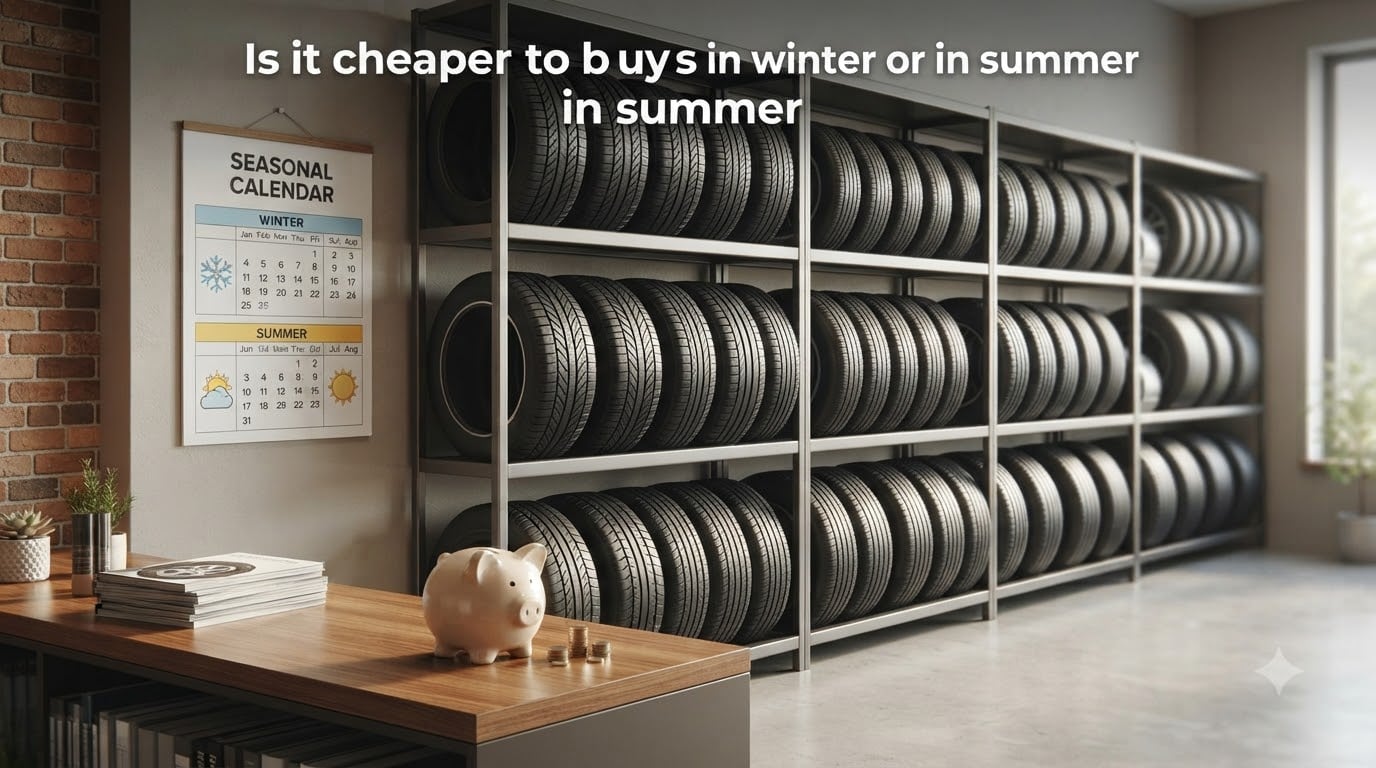
When drivers ask us is it cheaper to buy tires in winter or summer, they are usually trying to time a set of four tires around the calendar to save real money. The honest answer is that yes, the season you buy in changes the price you pay, but the gap is not the same everywhere. In snow-belt states the swing between winter and summer can hit 20-40% on a full set, while in the Sun Belt the seasonal gap shrinks to almost nothing. In this guide I will walk through why tire prices move with the calendar, which months typically deliver the deepest discounts, and how to decide whether off-season buying makes sense for your climate and driving pattern.
By the end you will know which three months of 2026 are the cheapest, what the dollar savings actually look like on a typical passenger tire set, and which questions to bring to your installer so you do not accidentally buy two-year-old inventory at a “discount.”
Table of Contents
Quick Answer: Is It Cheaper to Buy Tires in Winter or Summer?
Winter is usually the cheaper season to buy tires in regions that have a real winter. Demand drops once snow stops falling, retailers clear leftover inventory, and installer labor gets discounted during slow weeks. In warm-weather climates without a winter tire season, the price gap between seasons is much smaller and timing matters less.
Why winter usually wins on price:
- Off-season demand drop lowers base prices
- Retailers run clearance on last-year inventory
- Installer labor and mount-and-balance rates fall during slow weeks
- Manufacturer rebates cluster in spring and again in fall
Why Tire Prices Move With the Seasons
Tires follow a basic supply-and-demand curve. When drivers are rushing to install a set before a long road trip or a snowstorm, retailers raise prices because they can. When the calendar is quiet, the same retailers cut prices because storage space and aging inventory cost them money every week.
The seasonal demand cycle looks like this for most of the snow-belt United States. Spring brings a wave of drivers swapping winter tires back to all-season or summer tires. Late summer and early fall bring another wave as drivers prepare for cold weather. Those two waves create a clear peak-and-trough pattern.
Three forces drive the actual price you see on the shelf.
Inventory clearance. Tire models change every year. Manufacturers release new lines in late summer, which means the previous year’s models need to move out. Retailers cut prices on closeout tires by 15-40% to clear shelf space.
Manufacturer rebates. Tire brands run mail-in rebate promotions to keep factories running steadily through the year. Those rebates cluster in two windows: March-April and October-November. The October-November window often overlaps with closeout pricing on winter models.
Installer labor demand. Mounting, balancing, and road-force balancing all take shop time. During peak season (early spring and early fall) shops are booked out days in advance, and labor rates hold firm. During slow weeks in mid-summer or deep winter, shops often discount labor or throw in free services to keep technicians busy.
Winter Buying: The Pros and Cons
Buying in winter (December through early March in snow-belt regions) gives you the deepest discounts on most tire categories, including all-season tires that you will actually drive on right away.
The pros of winter buying. Base prices on closeout winter models drop the most because retailers need shelf space for spring inventory. Installer wait times are short, often same-day, and shops are willing to negotiate. Bundled services like free tire rotations, free flat repair, and discounted alignment are easier to get in winter.
The cons of winter buying. If you want winter tires specifically, you are buying them at the end of their season and storing them for 9-10 months. That requires a dry storage space and a second set of wheels, which adds cost. Selection of winter-specific inventory thins out by mid-February, and the deepest discounts usually go to the sizes that move slowly.
The other tradeoff is inventory age. The best deals in late winter are often on tires that have been sitting on a rack since the previous fall. Always check the DOT date code before you buy.
Summer Buying: The Pros and Cons
Buying in summer (May through early September) is the peak season for tire sales in snow-belt markets because drivers are preparing for road trips and want fresh rubber before winter returns.
The pros of summer buying. Selection is widest in summer because new model year inventory is on the shelf. You can road-test the tires immediately. Spring and early-summer manufacturer rebates often apply, and you get the freshest DOT dates because the tires just arrived from the factory.
The cons of summer buying. Base prices are higher because demand is up. Installer wait times stretch from same-day to several days out. Shops have less reason to negotiate on labor or bundle free services. Popular sizes and performance tiers can sell out and force you into a compromise.
For drivers in warm climates without a winter tire season, summer buying is essentially the only option, and the seasonal price swing is small enough that timing matters less than shopping the rebate calendar.
Winter vs Summer Buying at a Glance
| Factor | Winter Buying | Summer Buying |
|---|---|---|
| Base price trend | Lower (closeout and slow-season) | Higher (peak demand) |
| Installer wait time | Short, often same-day | Several days in peak months |
| Labor negotiation room | High | Low |
| Manufacturer rebates | Modest, fall/winter promos | Strong, spring rebates |
| Selection of current-year stock | Thinning, more closeouts | Widest |
| Freshness (DOT date code) | Check carefully | Usually fresh |
| Storage required for off-type tires | Yes if buying winter tires | Yes if buying summer tires |
| Climate fit for snow-belt drivers | Buy all-season, not winter, in winter | Buy all-season or summer in summer |
| Climate fit for Sun Belt drivers | Neutral | Neutral |
The Cheapest Months to Buy Tires in 2026
If you map the demand cycle onto the rebate calendar, three windows consistently produce the deepest discounts on passenger tires in snow-belt markets.
February and early March. This is the post-winter lull. Drivers have already swapped to all-season or summer tires, and retailers need to clear winter inventory before spring. Expect closeout pricing on winter models and negotiated labor on all-season installs.
Late June through early August. Mid-summer is the slowest stretch for tire shops in snow-belt regions. Demand is low, installer schedules are open, and many shops run mid-summer promotions to keep technicians working. Discounts of 10-20% off install packages are common.
October through mid-November. The fall pre-winter rush arrives late in this window, so the first two weeks of October are still a buyer’s market. Manufacturer fall rebates stack on top of seasonal promotions. By mid-November prices firm up as snow-belt drivers scramble.
The worst months for pricing are mid-March through April (spring swap peak) and the second half of November (pre-winter panic). Both windows are when shops know they can hold prices firm.
How Big Is the Seasonal Price Gap?
The honest band for off-season savings on a set of four passenger tires is 15-40%, depending on category and tire size. Performance tires and larger rim diameters tend to discount less because demand holds up year-round. Common commuter sizes in popular fitments discount the most.
Here is what that looks like in real numbers. A typical all-season passenger tire set that lists near $800 at peak season often drops into the $480-$640 range during February closeouts or mid-summer lulls, depending on rebates and installer packages. On a 40,000-mile tire life, that is a savings of 4 to 8 cents per mile driven, which compounds quickly across two vehicles.
The gap is smaller for premium-tier tires, larger for value-tier closeouts. Run-flat tires and low-volume sizes rarely see more than 10-15% off because the buyer pool is small and steady.
Climate Matters: Snow Belt vs Sun Belt
Every seasonal pricing rule above assumes a climate with a real winter. In Sun Belt markets from Southern California across to Florida and down to South Texas, the picture changes.
In warm climates, demand for tires is essentially flat year-round. There is no winter tire swap, no fall pre-storm panic, and no spring switch-back. That flattens the seasonal discount curve to single digits. The bigger swings come from manufacturer rebate windows (March-April and October-November) rather than from seasonal demand drops.
Snow-belt drivers should also recognize that “winter buying” means buying all-season tires in winter, not buying winter tires. If you live in a region where winter tires are appropriate, you need them on the car before the first sustained snowfall, which means buying them by October at the latest. Buying winter tires in February is a clearance move that requires you to store them for nine months before they go on the car.
How to Save Money Beyond Timing the Season
Season is the biggest lever, but four other moves consistently lower the out-the-door price.
Switch to all-season tires. If you live in a region with mild winters, all-season tires eliminate the need for a second set and the storage cost that comes with off-season buying. The savings on storage often beat the seasonal discount.
Check the DOT date code. The DOT code on the sidewall ends in a four-digit week-and-year stamp like “2625” for week 26 of 2026. Tires older than two years from that stamp are technically new but practically aged stock. Ask for tires manufactured within the last 12 months, especially during closeout windows.
Negotiate the install package. Mounting, balancing, road-force balancing, new valves, and disposal of old tires are all separately priced line items. Bundling them, or asking the shop to roll them in during a slow week, often saves more than the tire discount itself.
Stack manufacturer rebates with seasonal discounts. Mail-in rebates from the tire maker usually stack on top of retailer closeout pricing. Submit the rebate the same week you buy; a meaningful share of buyers never claim their rebate paperwork.
What to Ask Your Tire Shop Before You Buy
Bring this short checklist to your installer before you commit. It keeps the conversation focused and the price honest.
- What is the DOT date code on the specific tires you are quoting me?
- Is this tire last-year’s model or current production?
- What rebates are active right now, and can they stack with any closeout pricing?
- What does the install package include, and which line items can be removed or discounted?
- What is the current installer lead time, and is there flexibility if I take a slower-day appointment?
- If I buy winter tires for storage, what is your storage program and the annual cost?
Frequently Asked Questions
When is the cheapest time of year to buy tires?
In snow-belt markets, February through early March and late June through early August are the two quietest windows. October before the pre-winter rush is a third strong window. The worst prices land in mid-March through April and the second half of November, when installer demand peaks and shops know they can hold firm on price.
Do tire prices go down in winter?
Yes, in regions with a real winter. Base prices on closeout winter models drop the most, all-season tire prices soften during the post-holiday lull, and installer labor rates fall because shop schedules are open. The savings typically run 15-40% off the same tire at spring peak, depending on size and category.
Are tires more expensive in summer?
In snow-belt markets, summer brings higher demand and firmer prices, especially from mid-March through July when drivers are prepping for road trips. Spring manufacturer rebates soften the bump, but installer wait times stretch and labor discounts disappear. Sun Belt markets see much less of a summer price bump because demand is steady year-round.
Should I buy winter tires in summer?
Buying winter tires in summer works if you have dry storage and can wait until the next cold season to install them. The savings often hit the high end of the 15-40% off-season band because retailers need to clear shelf space. If you need winter tires for the coming season, buy them by October so you are not dependent on leftover stock.
Is it cheaper to buy all-season tires in winter?
Yes, all-season tires typically discount 10-25% in February and March in snow-belt markets, and you can install them right away without storage logistics. You also get a wider selection of current-year inventory in winter than you do buying winter-specific models, which are usually heavily closeout by then.
How can I save money on tires beyond timing the season?
Stack manufacturer mail-in rebates with closeout pricing, negotiate the install package as a bundle, check the DOT date code so you do not overpay for aged stock, switch to all-season tires if your winters are mild, and ask the shop about free rotation and road-hazard programs. Bundled services often beat the sticker discount once you add them up.
The Bottom Line on Winter vs Summer Tire Pricing
To answer the original question, is it cheaper to buy tires in winter or summer: in snow-belt regions, winter buying typically wins by 15-40%, with February and the late-June-through-early-August lull as your strongest windows. In warm-weather climates the seasonal gap is small, so chase the manufacturer rebate calendar instead. Either way, check the DOT date code, negotiate the install package as a bundle, and stack rebates on closeout pricing to keep the most money in your pocket.