
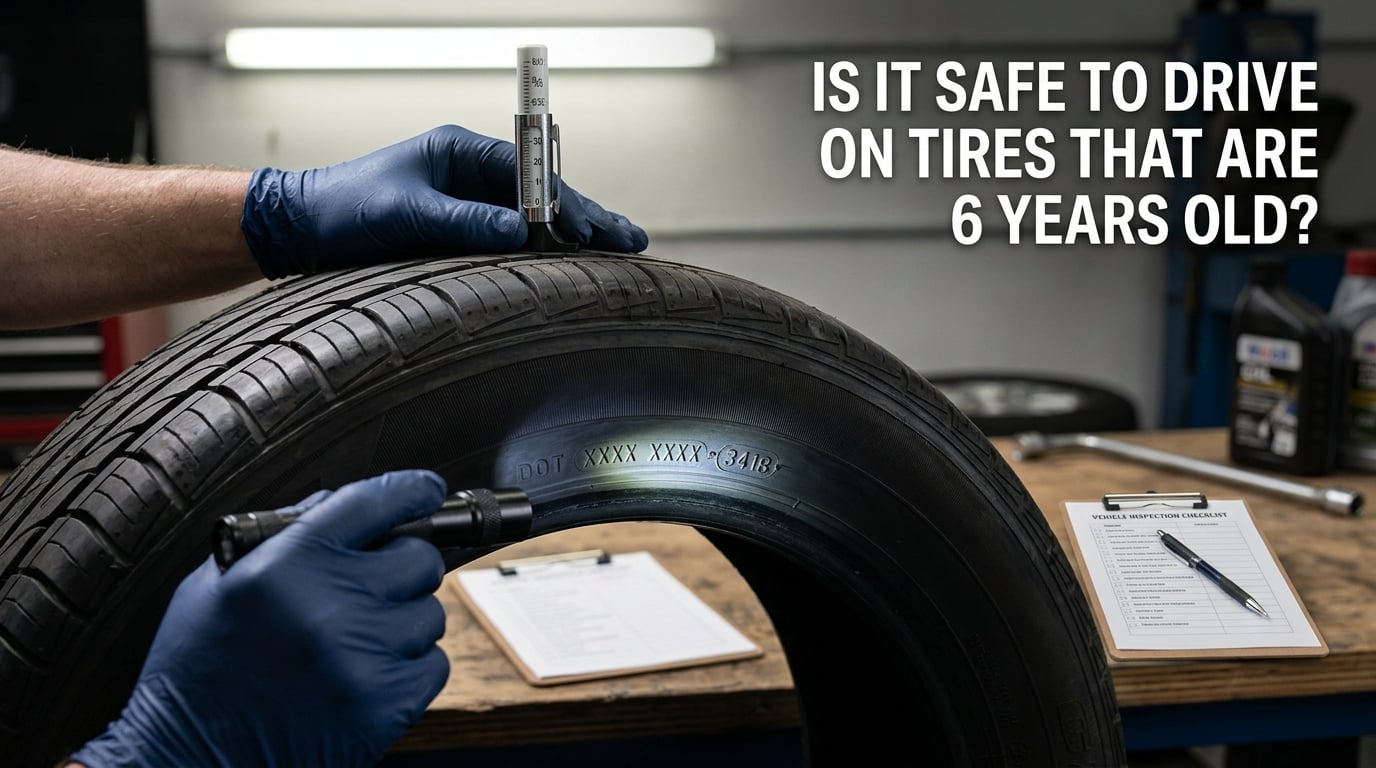
Is it safe to drive on tires that are 6 years old? The honest answer is that 6-year-old tires sit in a gray area, and most tire manufacturers and mechanics recommend having them professionally inspected, even if the tread still looks fine. Six years marks the point where rubber degradation, internal belt weakening, and sidewall deterioration start to matter more than tread depth alone.
I have spent weeks digging through manufacturer data, NHTSA guidance, and real-world owner reports to put together a clear answer. This guide walks you through what actually changes inside a tire as it ages, how to find your tire’s true age, the warning signs that mean replace-now, and the practical decision framework I would use on my own family’s vehicles.
Table of Contents
What Happens to Tires as They Age
Tire aging is not just about tread wearing down. The rubber compound itself breaks down through chemical processes that start the day a tire is manufactured, regardless of how many miles it has traveled.
The main culprit is oxidation. Oxygen molecules react with the polymers in tire rubber, causing the compound to harden and lose flexibility over time. Hard rubber cannot flex properly under load, which means reduced grip on the road and longer braking distances.
Three other factors accelerate aging:
- UV exposure: Sunlight breaks down the outer rubber layer, causing visible cracking and color fading.
- Ozone damage: Ground-level ozone attacks the surface of the rubber, producing the network of fine cracks people call dry rot.
- Heat cycles: Repeated heating and cooling from driving weakens the bonds between rubber and the steel belts inside.
The scary part is that the exterior can look fine while the interior is falling apart. Mechanics routinely find powdering rubber and separated belts inside tires that still have acceptable tread and no visible sidewall cracks. Reddit user r/MechanicAdvice reported a 12-year-old tire with great-looking tread that had completely turned to powder inside, causing a highway blowout.
Manufacturer Recommendations for 6-Year-Old Tires
Every major tire manufacturer agrees on the same general window: have tires professionally inspected at 6 years and replace them by 10 years, regardless of tread depth. The exact wording varies slightly.
Michelin recommends replacing tires when they reach 10 years old, even if they appear to be in usable condition. They advise regular inspections starting at age 6.
Bridgestone states that tires should be replaced no later than 10 years from the manufacture date and recommends monthly inspections for tires older than 6 years.
Goodyear advises that tires should be inspected at 6 years and replaced at 10 years as a general rule, regardless of remaining tread.
The National Highway Traffic Safety Administration (NHTSA) recommends that tires older than 6 years be inspected by a qualified tire professional every year. Some tire industry groups cite this 6-year mark as a starting point for heightened attention.
The key takeaway is that 6 years is the inspection checkpoint, not an automatic replacement trigger. Some 6-year-old tires still have several years of safe service left. Others, especially those exposed to heat, sun, or heavy loads, may be closer to end-of-life than the calendar suggests.
How to Read Your Tire Manufacture Date (DOT Code)
Every tire sold in the US has a DOT date code stamped on its sidewall. This code tells you the exact week and year the tire was manufactured. Here is how to find and read it.
Step 1: Locate the DOT code. Look on the sidewall of your tire for a series of letters and numbers starting with the letters “DOT.” You will usually find it on the inner sidewall of the tire, though it can also be on the outer side.
Step 2: Find the last four digits. The DOT code ends with four digits. For tires manufactured after the year 2000, the first two digits are the week of the year and the last two digits are the year.
Step 3: Decode the digits. For example, “2219” means the tire was made in the 22nd week (late May) of 2019. “0824” would mean the 8th week of February 2024.
Step 4: Check the manufacture date on all four tires. Tires on the same car can have different manufacture dates if they were replaced at different times. Always check all four.
If your tire has only three digits at the end, it was made before 2000. In that case, the rule of thumb is to replace it now, regardless of tread, since it is already well past the 10-year maximum lifespan.
Warning Signs Your Tires Are Too Old
Beyond the calendar, certain physical symptoms mean a tire is unsafe regardless of age. If you see any of these, replace the tire immediately.
Sidewall cracking: Look for a network of fine cracks, often called “weather checking” or dry rot, on the sidewall. Small surface cracks are a warning. Deep cracks that you can feel with your fingernail are a clear replace-now signal.
Tread cracking: Cracks running across the tread blocks, especially in the grooves, indicate the rubber compound is breaking down throughout the tire, not just on the surface.
Bulges and blisters: A bulge on the sidewall means the internal structure has failed and the tire can fail catastrophically at any moment. Do not drive on a bulged tire.
Vibration at highway speed: If your car vibrates above 50 mph and the vibration is not caused by balance or alignment, it can indicate belt separation inside the tire. This is a serious safety issue.
Visible color change: Tires that have gone from deep black to gray or brown are losing the protective compounds that keep the rubber flexible.
Odor: A chemical or burnt smell from a tire can indicate it is running hot because of internal degradation, even if no other signs are visible.
Tread Depth vs Tire Age: Which Matters More
This is one of the most common questions I see on forums, and it trips up a lot of drivers. The short answer is that both matter, but they affect different things.
Tread depth affects how well the tire grips the road, especially in wet conditions. Tread grooves channel water away from the contact patch. When tread wears below 4/32 inch, wet stopping distances increase noticeably. Below 2/32 inch, the tire is legally worn out in most states.
Tire age affects the rubber compound itself. Aged rubber hardens and loses its grip, regardless of how much tread is left. A 6-year-old tire with brand-new tread depth can still have the wet braking distance of a bald tire because the rubber cannot flex and conform to the road surface the way fresh rubber does.
The reason this catches people off guard is that tread looks obvious. You can see it, measure it, and it feels concrete. Rubber hardening is invisible. There is no gauge for it. A tire can pass every visual inspection and still be unsafe because of age-related compound changes.
This is exactly why manufacturers recommend replacement based on age, not just tread. A tire that is 8 years old with 8/32 inch of tread is not necessarily safer than a 2-year-old tire with 4/32 inch of tread.
Risks of Driving on Aged Tires
Driving on tires past their safe lifespan carries real, measurable risks. Here is what can go wrong.
Tread separation: The steel belts inside the tire can delaminate from the rubber, causing a chunk of tread to rip away at highway speed. This is the failure mode that turns aged tires into roadside bombs.
Blowouts: Aged sidewalls can rupture suddenly under load, especially in hot weather or when carrying heavy cargo. A blowout at highway speed can cause loss of vehicle control.
Reduced wet traction: Hardened rubber grips less effectively, particularly on wet pavement. Hydroplaning risk goes up significantly.
Longer braking distances: Tests by automotive publications have shown that aged tires with good tread can have wet braking distances 20% or more longer than new tires. That extra stopping distance can be the difference between avoiding a crash and hitting something.
Increased winter risk: Cold, hard rubber loses grip faster in winter conditions. Aged tires become nearly useless on snow and ice.
Special Cases: Garage-Stored and Low-Mileage Vehicles
A common myth is that garage-stored or low-mileage tires age more slowly. Unfortunately, this is mostly false.
Oxygen and ozone are everywhere, including inside a closed garage. UV is only one aging factor, and the others operate regardless of where the vehicle sits. Tires on a garage-kept car with 2,000 miles per year will still age on the same chemical timeline as tires on a daily driver.
Low-mileage drivers often get caught because they look at their tires and think, “These have plenty of tread, they must be fine.” By the time a low-mileage driver reaches year 8 or 10, the rubber may be severely degraded while the tread looks nearly new.
Classic and collector cars face the same issue. Even if a vehicle only comes out for weekend shows, the tires age continuously. Some classic car owners replace tires every 5 to 6 years as a matter of course, regardless of condition.
Your Tire Age Inspection Checklist
Here is the inspection routine I run through on my own family’s vehicles twice a year.
Check the DOT date code on all four tires. Note the week and year. If any tire is 6 years or older, schedule a professional inspection. If any tire is 10 years or older, replace it.
Look at the sidewalls in good light. Crouch down and visually inspect all four sidewalls for cracks, bulges, or discoloration. Run your hand over the surface to feel for fine cracking.
Check the tread for cracks across the blocks. Look at the tread surface from multiple angles. Cracks running across the tread blocks indicate compound breakdown throughout the tire.
Measure tread depth. Use a tread depth gauge (cheap at any auto parts store) on the inside, middle, and outside of each tire. Below 4/32 inch means start shopping. Below 2/32 inch means replace now.
Listen and feel on the highway. At 55 to 65 mph, note any vibration, thumping, or noise that was not there before. Persistent vibration that does not go away with balancing often points to internal damage.
Get a professional inspection at 6 years. A tire shop can dismount a tire and inspect the interior, which you cannot do at home. This is cheap, fast, and the single most useful thing you can do if your tires are 6 or more years old.
Decision framework by age:
- 0 to 5 years: Inspect annually, no replacement needed based on age alone.
- 6 years: Professional inspection recommended. Continue use if no warning signs.
- 7 to 9 years: Replace soon, especially if showing any of the warning signs above.
- 10+ years: Replace now. Do not delay.
Frequently Asked Questions
Are 6-year-old tires with good tread still good?
6-year-old tires with good tread are in a gray area. Most manufacturers recommend a professional inspection at this age, and many mechanics suggest planning for replacement within the next 1 to 4 years. Tread depth alone does not tell you whether the rubber compound is still safe.
Are 7-year-old tires still good to use?
7-year-old tires are closer to the end of their safe service life. Most manufacturers consider 10 years the absolute maximum, and many recommend replacement sooner if you drive in hot climates, carry heavy loads, or see any cracking on the sidewall or tread.
Are 10 year old tires still ok?
10-year-old tires are not safe to drive on. Every major tire manufacturer (Michelin, Bridgestone, Goodyear) recommends replacement at 10 years regardless of tread depth or visible condition. The internal belt structure has degraded by this point even if the outside looks fine.
Do tires expire after 6 years?
Tires do not automatically expire at 6 years, but 6 years is the point where manufacturers and the NHTSA recommend professional inspection. The hard expiration is 10 years. Between 6 and 10 years, condition matters more than calendar age.
How long do tires last with low mileage?
Tires last on a chemical timeline, not a mileage timeline. Even with very low annual mileage, tires should be replaced at 10 years from manufacture. Garage-stored vehicles are not exempt because oxygen and ozone cause aging regardless of UV exposure.
The Bottom Line on Driving on 6-Year-Old Tires
Is it safe to drive on tires that are 6 years old? Yes, with conditions. If your tires show no cracking, no bulges, no vibration, and a tire professional has confirmed they are sound, you can keep driving on 6-year-old tires while planning for replacement within the next few years.
The two actions I would take right now: check the DOT code on all four tires so you know exactly how old they are, and book a professional tire inspection if any of them are 6 years or older. That single inspection is the difference between guessing and knowing whether your tires are safe.