
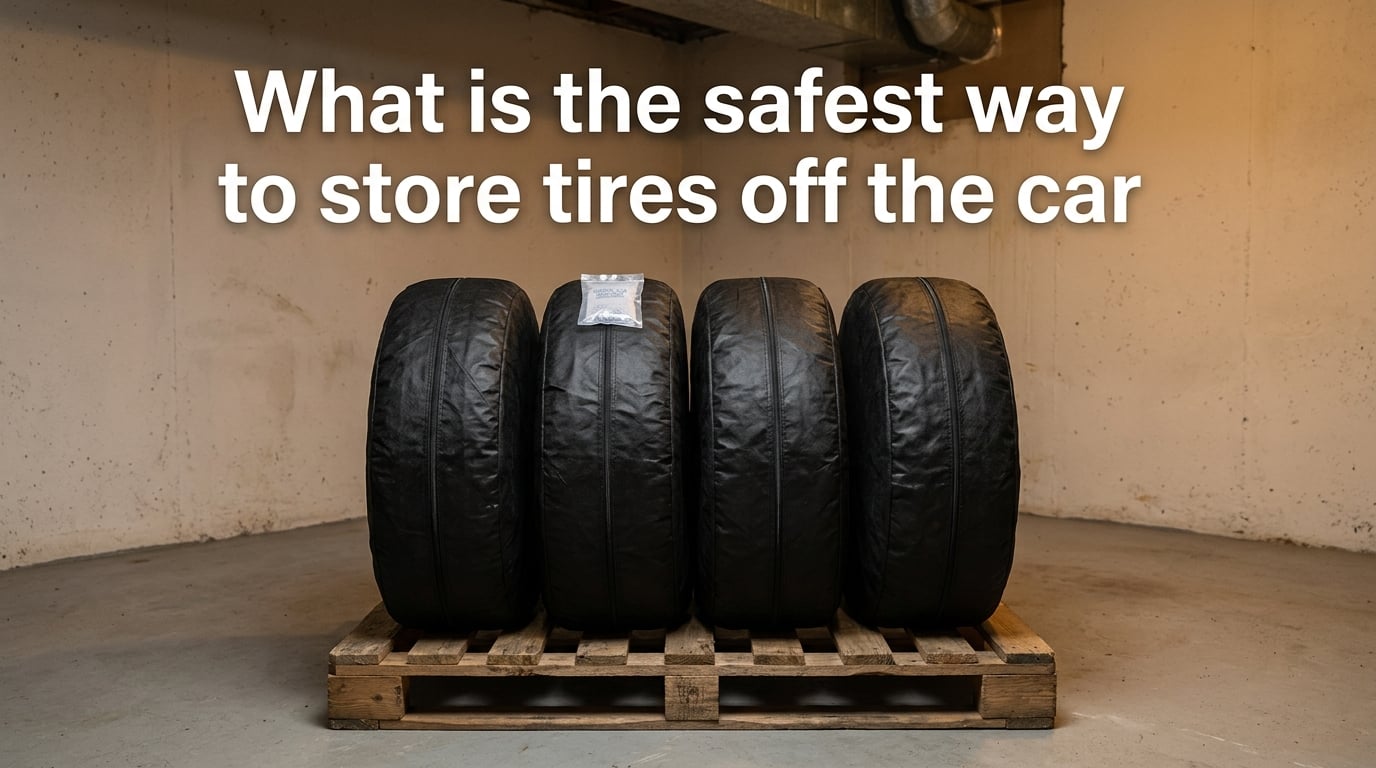
If you just swapped seasonal tires and now have a stack of four (or eight) rubber donuts sitting in your garage, you probably want to know the safest way to store tires off the car. I have been through this routine every spring and fall for over a decade, and the short answer is simple: clean each tire, seal it in an airtight bag, and store it upright in a cool, dry, dark spot away from sunlight, ozone, and chemicals. Done right, that routine keeps tires flexible and road-ready for years. Done wrong, you get sidewall cracks, flat spots, and an expensive replacement well before the tread wears out.
This guide walks through exactly what I do and what the tire manufacturers recommend. We will cover the five safest practices at a glance, then a full step-by-step process, plus answers to the questions readers ask most on Reddit and tire forums: vertical versus horizontal, bagging versus bare, and how long tires really last in storage.
Table of Contents
Safety Snapshot: The 5 Safest Practices for Storing Tires Off the Car
Before we dig in, here is the TL;DR. These five habits are what keep stored tires safe and road-ready for the next changeover.
- Clean and dry each tire before it goes into storage to remove brake dust, road grime, and oils that can speed up rubber degradation.
- Bag every tire in an airtight cover to slow evaporation of the protective oils inside the rubber compound.
- Choose a cool, dry, dark location between roughly 50 and 70 degrees Fahrenheit with stable humidity.
- Keep tires upright (vertical) when unmounted, and at correct pressure when mounted on rims.
- Stay away from ozone makers and petroleum products: no electric motors, no furnaces, no solvents in the same room.
Those five points cover about 90 percent of safe storage. The remaining 10 percent is in the details below, especially around tire age and how to inspect stored tires before remounting them.
Why Proper Tire Storage Matters
Tires are not cheap, and a good set can run into four figures. Improper storage quietly destroys them even when the tread looks fine.
The main culprit is dry rot. Dry rot happens when the rubber’s protective oils evaporate and the surface oxidizes, leaving hairline cracks on the sidewall. Those cracks spread into the structural cords and eventually cause a blowout, even at normal highway speeds. UV light, heat, ozone, and solvents all accelerate the process. A tire that should last ten years can crack in three if it sits in a hot garage next to a furnace.
The good news: storage damage is almost entirely preventable. I have seen 9-year-old Michelin tires stored properly come out of a bag still supple and safe, while neighbors’ tires sitting on a porch in arizona sun split open after a single summer. Conditions, not age, drive most of the loss.
Step-by-Step: How to Store Tires Off the Car
Here is the exact routine I follow every changeover. Each step is short, but skipping any of them cuts into the lifespan of your tires.
Step 1: Mark the Position Before Removal
Before the wheel comes off, use a piece of chalk or a paint pen to write the position on the sidewall: FR, FL, RR, RL (front-right, front-left, rear-right, rear-left). When you remount in fall, you keep the same tires rotating to the same corners, which preserves even wear. It is a small habit that pays off in a longer overall life for the set.
Step 2: Clean Each Tire Thoroughly
Spray each tire with water and use a tire brush or soft scrub pad to remove brake dust, mud, and road tar. Rinse and let them dry completely. Brake dust is metallic and corrosive, and road grime traps moisture against the rubber, both of which speed up dry rot.
Skip the tire shine. Most dressings contain petroleum distillates or silicone that can actually dry out the rubber over months of contact. A bare, clean tire stores better than a dressed one.
Step 3: Dry Them Completely
Moisture trapped inside a storage bag is the enemy. Let each tire air dry for at least an hour after washing, longer if you live somewhere humid. I wipe them down with a microfiber towel to speed this up. If you bag a wet tire, you are essentially creating a humidity chamber that grows mold and accelerates rubber breakdown.
Step 4: Bag Each Tire Individually
Slide each tire into a large, opaque, airtight bag. Tire shop yellow bags work great if you can get them. Otherwise, heavy-duty black yard bags, large contractor trash bags, or dedicated tire totes all do the job. Squeeze out excess air, then seal with tape or a zip tie.
The bag keeps oxygen and ozone off the rubber and slows oil evaporation. A small silica gel packet tossed inside each bag (the kind that come in shoe boxes) absorbs any residual moisture.
Step 5: Choose the Right Storage Location
Pick a spot that is cool, dry, dark, and climate-stable. A basement, climate-controlled garage, or interior closet works well. The ideal range is roughly 50 to 70 degrees Fahrenheit, with humidity below 60 percent.
Skip the attic, the carport, and any spot near a water heater, furnace, or window with direct sun. Heat and UV are the two biggest destroyers of stored tires.
Step 6: Position Tires Correctly
Stand unmounted tires upright, like books on a shelf. If they are mounted on rims, you can stand them up or hang them on a wall-mounted tire rack. Stacking works too, but limit stacks to four tires high to prevent the bottom ones from deforming. Rotating the stack every couple of months keeps pressure points from setting in.
Keep mounted tires inflated to the vehicle’s recommended pressure. Lower pressure during storage invites flat spots on the contact patch.
Mounted vs Unmounted Tires: Storage Differences
The biggest fork in any storage plan is whether your tires are still on the wheels or not. Each setup has its own rules.
| Factor | Mounted (on rims) | Unmounted (off rims) |
|---|---|---|
| Bagging | Bag the whole wheel-and-tire assembly, or skip the bag and just cover loosely | Always bag individually; exposed sidewalls lose oils fast |
| Best position | Hang on wall hooks or stack horizontally (rims protect the shape) | Stand upright vertically, never stack flat without support |
| Inflation | Maintain vehicle-recommended PSI; do not deflate | Not applicable |
| Space needed | Larger footprint, harder to fit four in a closet | Stack-friendly; can stack 4 high if rotated |
| Easiest changeover | Swap wheels; no remounting fee | Requires remounting and balancing each swap |
| Risk of flat spots | Lower; rims distribute weight | Higher; never store a heavy tire on top of an unmounted one for long |
If your budget allows, keeping a second set of wheels and storing mounted tires is the easiest long-term option. You skip the changeover fee twice a year and the mounted format is more forgiving of imperfect storage conditions.
Best Storage Locations (and Which to Avoid)
Not every spot in your house is equal. Here is how the usual options stack up.
Climate-controlled basement: The gold standard. Stable temperature, low humidity, no sunlight. This is where I store mine.
Insulated, dry garage: Excellent if temperature stays roughly between 32 and 90 degrees Fahrenheit year-round. Unheated garages work in most climates as long as the tires stay dry. If the garage gets above 100 degrees in summer or below -20 in winter, consider moving the tires inside.
Shed: Fine in mild climates, risky in extreme ones. Avoid sheds with metal roofs, which radiate heat in summer and cold in winter. Wood-framed sheds with insulation are better.
Attic: Bad choice. Attics run hot in summer and cold in winter, with wild swings that age rubber fast.
Outdoors / carport: Worst choice. UV rays, rain, and temperature swings all attack the tire at once. Only acceptable for short-term storage (under a month) if covered.
How to Position Stored Tires: Stand, Stack, or Hang
Whether you store tires vertically or horizontally depends on whether they are mounted.
Unmounted tires: Always stand upright. Stacking unmounted tires puts the full weight of the upper tires on the sidewalls of the lower ones, which can deform the carcass. If you must stack, keep it to four high, rotate the stack every two months, and put a piece of cardboard between each tire to distribute weight.
Mounted tires: Stacking is fine because the metal rim carries the load. You can also hang them on a wall rack, which saves floor space. Hooks designed for tires slide through the center bore of the rim.
Either way, never store a tire on its tread face long-term. That position invites flat spots in the contact patch, which feel like a bumpy ride for the first few miles until the tire warms up and smooths out.
Should You Bag Tires Before Storing?
This is the most debated point on tire forums, and the answer is yes for unmounted tires, no big deal for mounted ones.
Bagging unmounted tires is genuinely protective. The bag slows ozone contact, keeps dust off, and reduces oil evaporation. Without a bag, unmounted tires in dry climates can develop micro-cracks in just two to three years. With a bag, the same tires can last a decade.
Mounted tires already have a layer of metal and rubber protecting the air chamber, so they tolerate bare storage better. A loose fabric cover or old bedsheet keeps dust off without trapping moisture.
Reddit users in cold climates often report success bagging with simple black contractor trash bags, then sealing the bag around the tire valve stem. It is cheap, reusable, and works just as well as a branded tire tote.
Storage Mistakes That Damage Tires
Most of these mistakes only show up months later, which makes them easy to repeat. Avoid them and your tires will outlive your car.
- Storing near ozone sources. Electric motors, furnaces, sump pumps, central vacuum units, and air purifiers all produce small amounts of ozone that crack rubber. Keep stored tires at least a few feet away or in a separate room.
- Storing on hot concrete or asphalt in direct sun. Blacktop absorbs heat and re-radiates it into the tire, cooking oils out of the rubber. Use wooden pallets, shelving, or a tire rack.
- Using petroleum-based cleaners or dressings. Products containing petroleum distillates, solvents, or some silicone dressings can leach the plasticizers out of rubber over time.
- Using stored tires as a workbench, seat, or ash tray. Tires are not furniture. Weight, sharp tools, and cigarette heat all damage the sidewall.
- Skipping cleaning. Brake dust is metallic and corrosive. A dirty tire going into storage is a tire that ages faster.
- Forgetting to maintain inflation on mounted tires. A flat-mounted tire sitting for months develops a permanent flat spot that no amount of driving will fully smooth out.
How Long Can You Store Tires Before They Go Bad?
Stored properly, tires last 6 to 10 years. The industry rule of thumb, set by the U.S. Tire Manufacturers Association, is to replace any tire that is more than 10 years old, regardless of tread depth.
You can find the manufacturing date on the sidewall as a four-digit DOT code. The last four digits are the week and year: “2319” means the 23rd week of 2019. Tires made before 2000 used a three-digit code, but those are over two decades old now and should not be on the road.
Can tires dry rot in three years? Yes, if conditions are bad. A tire sitting in direct sun, near a furnace, or in contact with solvents can develop visible sidewall cracks that fast. Under good storage, three years is no problem at all. I have mounted 5-year-old stored tires that looked brand new.
Before remounting stored tires, inspect the sidewalls for cracks, check the DOT date, and look for uneven deformation. If you see hairline cracks deeper than a credit-card thickness, replace the tire. Surface bloom (a waxy gray film) is normal and goes away with normal driving.
Frequently Asked Questions
Should tires be stored vertically or horizontally?
Stand unmounted tires vertically (upright) so the sidewall supports the weight. Stacking unmounted tires horizontally can deform the lower tires over time. Mounted tires can be stacked horizontally because the metal rim carries the load, or hung vertically on a wall rack. Either orientation is safe if the tire is mounted.
How long can tires be stored before they go bad?
Properly stored tires last 6 to 10 years. The U.S. Tire Manufacturers Association recommends replacing any tire older than 10 years regardless of tread depth. Storage conditions matter more than calendar age: a cool, dry, dark, bagged tire outlasts a bare tire in a hot garage by years.
Is it okay to store tires in an unheated garage?
Yes, as long as the garage stays dry and the temperature stays above about -20 degrees Fahrenheit. Cold itself does not damage rubber, but freeze-thaw cycles combined with moisture can speed up cracking. If your garage leaks, has a concrete floor that sweats, or gets extreme temperature swings, move the tires to a basement or interior closet.
Is it better to store tires in bags or not?
Yes for unmounted tires, optional for mounted tires. An airtight bag slows ozone contact, keeps dust and moisture off, and reduces oil evaporation. Heavy-duty black contractor trash bags work as well as branded tire totes. Mounted tires tolerate bare storage better because the wheel and tire sidewall protection is already in place.
Can you keep tires from dry rotting?
Yes. Clean them, bag them, store them in a cool dry dark place, and keep them away from ozone sources and petroleum products. These four habits prevent the conditions that cause dry rot in the first place. Tires stored this way can easily reach 8 to 10 years without visible cracking.
How long can you store tires before they dry rot?
Under good storage conditions, dry rot does not appear for 6 to 10 years. Under poor conditions (heat, sun, ozone, solvents), dry rot can show up in as little as 2 to 3 years. The first sign is hairline cracks on the sidewall, often starting near the lettering.
Can you save dry rotted tires?
No, not safely. Once the sidewall rubber has cracked through, the structural cords are exposed to moisture and load stress. Tire dressings and silicone sprays only mask the surface temporarily; they do not restore the rubber compound. Replace any tire with visible sidewall cracking deeper than a hair’s width before remounting it.
Can tires dry rot in 3 years?
Yes, if conditions are bad. Heat above 90 degrees Fahrenheit, direct sunlight, ozone from electric motors, and contact with petroleum products can all cause visible sidewall cracking in 2 to 3 years. Tires stored cool, dark, dry, and bagged typically do not show dry rot in that time.
The Safest Tire Storage Plan in Summary
The safest way to store tires off the car is not complicated, but it does require a few minutes of effort at every changeover. Clean each tire, dry it, bag it, and place it upright in a cool, dry, dark spot away from ozone, solvents, and sunlight. Skip those steps and you risk dry rot, cracking, and an early replacement.
Before you call the job done, write the position on each sidewall (FR, FL, RR, RL) so you can remount in the same spots. Check the DOT date code and replace anything over 10 years old. Inspect the sidewalls for hairline cracks before mounting them back on the car. That is the full routine, and it costs nothing but ten minutes and a few contractor trash bags.
Done well, the tires you store this season will still be safe and flexible when you swap them back on two, four, even six years from now. That is the kind of return on a few minutes of work that is hard to beat.