
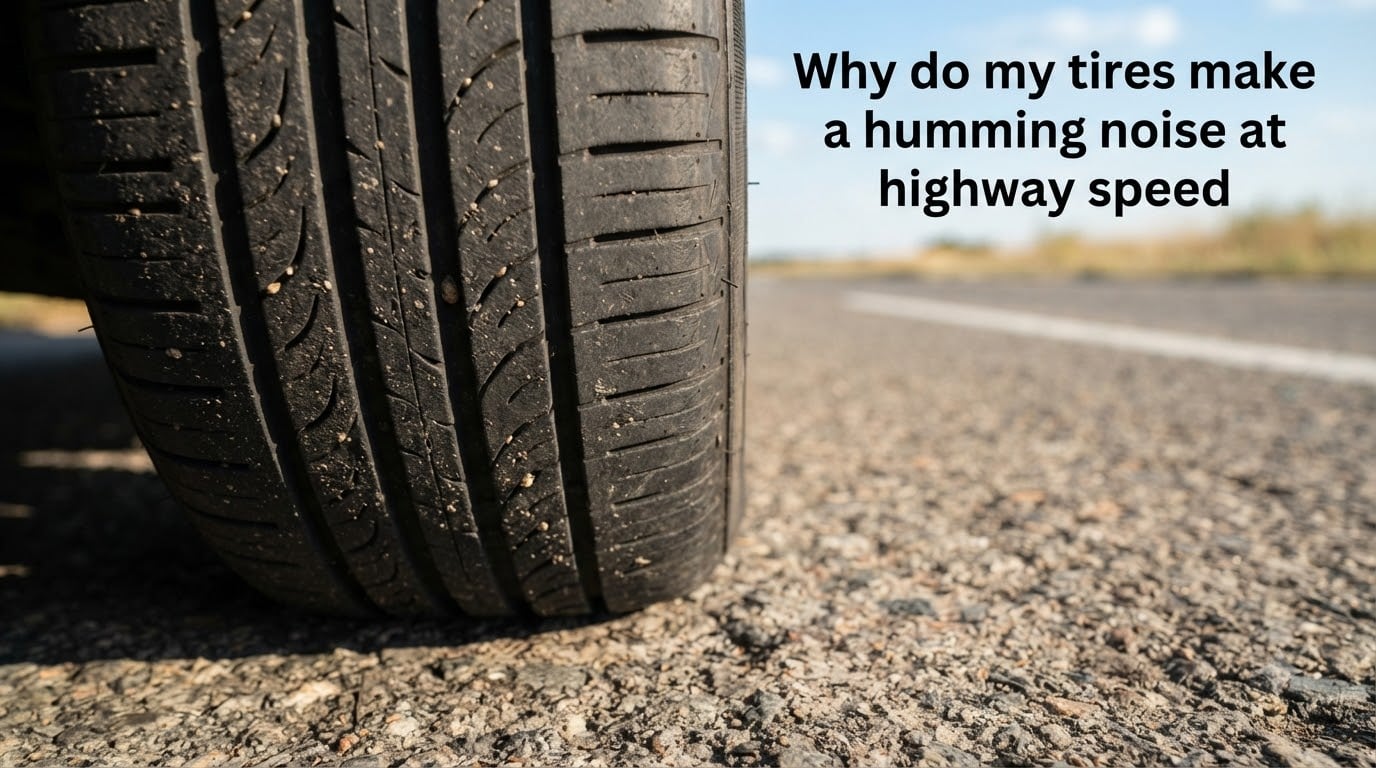
If you’ve noticed a persistent humming noise from your tires at highway speed, you’re not alone. Tire humming is one of the most common complaints from drivers, and the cause can range from harmless tread pattern noise to a failing wheel bearing that needs immediate attention. This guide explains why your tires make a humming noise at highway speed, how to diagnose the cause yourself, and what to do about it.
Table of Contents
What Causes Tires to Hum at Highway Speed
A humming noise from your tires at highway speed is most often caused by the tire’s tread pattern interacting with the road surface. Aggressive, all-terrain, or worn tires are the usual culprits, but improper tire pressure, wheel alignment issues, balance problems, or a failing wheel bearing can also produce the same hum.
Here are the most common causes of tire humming at highway speed:
- Tread pattern and tire type – Aggressive or all-terrain tread designs create more road contact noise than smooth touring tires.
- Tire pressure problems – Over-inflated or under-inflated tires change the contact patch and increase noise.
- Uneven tire wear – Cupping, feathering, or flat spots from poor alignment amplify humming.
- Wheel bearing failure – A worn bearing produces a hum that often changes when you turn the steering wheel.
- Wheel imbalance or misalignment – Causes vibration that drivers perceive as a low hum at speed.
- New tire break-in – Fresh tires can be louder for the first 500-1,000 miles while the tread surface scrubs in.
Tread Pattern and Tire Type: The Number One Cause
Tread pattern is the single biggest factor in how much noise your tires produce. Tires with aggressive, deep grooves and large tread blocks – like all-terrain or mud-terrain tires – generate significantly more noise than highway or touring tires with tightly packed, symmetrical patterns.
There are three main tread designs, and each behaves differently at highway speed:
- Symmetric tread – The quietest option. Common on touring and highway tires. Even contact and low noise.
- Asymmetric tread – Slightly louder. Used on performance and all-season tires. Balances wet grip with noise.
- Directional tread – Can be the loudest. V-shaped grooves channel water well but create more air turbulence and hum.
If you recently switched from highway tires to all-terrain tires, a noticeable increase in humming at highway speed is completely normal. The more aggressive the tread, the more noise you’ll hear – especially above 40 mph.
Tire Pressure and Road Noise
Tire pressure has a direct impact on road noise. Over-inflated tires (3-5 PSI above the manufacturer’s spec) produce a harsher, more pronounced hum because the contact patch shrinks and the center of the tread bears more load. Under-inflated tires create excess flex in the sidewalls, which generates a flapping or droning sound at speed.
Check your tire pressure at least once a month and before long highway trips. The recommended PSI is printed on a sticker inside the driver’s door jamb – not on the tire sidewall (that number is the tire’s maximum, not the vehicle’s recommended pressure).
Wheel Bearing vs Tire Noise: How to Tell the Difference
This is the diagnostic question most drivers struggle with. A worn wheel bearing and a noisy tire can sound almost identical at highway speed, but there are key differences that help you tell them apart.
The turning test is the most reliable at-home method. Here’s how to do it:
- Drive at the speed where the hum is loudest (usually 40-60 mph).
- Gently swerve left, then right, shifting the vehicle’s weight side to side.
- If the noise gets louder when you turn left, the right-side bearing may be failing (more load on that side).
- If the noise gets louder when you turn right, suspect the left-side bearing.
- If the noise stays the same regardless of direction, it’s more likely the tires.
Other clues that point to a wheel bearing rather than tires:
- The hum changes or disappears at certain speeds, then returns.
- You feel play or looseness in the steering wheel.
- A grinding or growling noise accompanies the hum.
- The noise is louder from one specific wheel.
A bad wheel bearing is a safety issue. If you suspect bearing failure, have a mechanic inspect it as soon as possible. Driving on a failed bearing can cause the wheel to seize or separate from the vehicle.
Tire Wear and Uneven Wear Patterns
Worn tires are louder than new ones – and uneven wear makes the problem worse. Several wear patterns produce distinct humming or buzzing noises at highway speed:
- Cupping (scalloped wear) – Caused by worn shocks or struts. Creates a rhythmic thumping or humming that gets louder with speed.
- Feathering – Tread edges are worn to a sharp angle on one side. Usually caused by misalignment. Produces a whining or humming sound.
- Center wear – From chronic over-inflation. The tire’s contact patch is narrow and noisy.
- Edge wear – From chronic under-inflation. Creates excess sidewall flex and droning.
If you run your hand across the tread surface and feel ridges, scallops, or sharp edges, that uneven wear is likely contributing to the highway hum. A tire rotation may help temporarily, but badly worn tires typically need replacement.
Wheel Alignment and Balancing Issues
When your wheels are out of alignment, the tires scrub against the road at an angle instead of rolling straight. This creates a continuous humming or droning noise that increases with speed. Common symptoms include the vehicle pulling to one side and rapid, uneven tire wear.
Wheel imbalance causes a different kind of noise – usually a vibration you feel through the steering wheel or seat, accompanied by a low hum. This typically appears at specific speed bands (often 50-65 mph) and may fade at higher or lower speeds.
Getting an alignment check and tire balance is one of the most affordable diagnostic steps you can take. Most shops charge a modest fee for alignment checks, and rebalancing four tires is a quick service. If the hum disappears after balancing, you’ve found your answer.
Speed-Specific Noise Diagnosis
Different causes of tire hum tend to show up at different speed ranges. This quick-reference table can help you narrow down the problem:
| Speed Range | Likely Cause | What to Check |
|---|---|---|
| 25-40 mph | Tire pressure, early wear pattern | Check PSI against door-jamb spec. Inspect tread depth. |
| 40-55 mph | Wheel imbalance, alignment issue | Feel for steering vibration. Check for uneven tread wear. |
| 55-70 mph | Tread pattern noise, wheel bearing | Do the turning test. Note if noise changes with steering input. |
| 70+ mph | Aggressive tread, aerodynamic noise | Expected with all-terrain tires. Touring tires should be quiet here. |
| All speeds | Worn bearing, severe wear, damaged tire | Inspect tire for bulges or flat spots. Listen for grinding. |
This table covers common patterns, but individual vehicles can vary. Use it as a starting point, not a definitive diagnosis.
New Tires and the Break-In Period
If you just had new tires installed and they’re humming louder than expected, don’t panic. New tires often sound louder for the first 500-1,000 miles while the tread surface wears down its outermost layer – a process sometimes called tread scrub-in.
During manufacturing, tires have a slightly textured release compound on the surface. As you drive, this wears off and the tread blocks settle into their natural shape. The noise should decrease noticeably after a few weeks of normal driving.
However, if the humming persists beyond 1,000 miles or gets worse, something else may be wrong. Common causes of excessive new-tire noise include incorrect tire size, poor installation (improper torque or balance), or a mismatch between the tire type and your driving expectations.
How to Stop Your Tires from Humming
Reducing tire hum depends on the cause. Here are the most effective fixes, ranked from easiest to most involved:
- Check and correct tire pressure – Inflate to the manufacturer’s recommended PSI. This alone often reduces highway hum significantly.
- Rotate your tires – Moving tires to different positions evens out wear patterns and can quiet down a noisy tread.
- Get an alignment – Correcting alignment eliminates tire scrub and reduces droning noise.
- Rebalance your tires – Fixes vibration-based humming at specific speed bands.
- Replace worn tires – If tread depth is below 4/32 inch or wear is severely uneven, new tires are the only real fix.
- Choose a quieter tire type – When replacing tires, look for touring or highway patterns with closed shoulder blocks and variable-pitch tread designs. These are engineered to minimize road noise.
When to See a Mechanic
Not all tire noise requires professional help, but some situations demand prompt attention. Take your vehicle to a mechanic if you notice any of the following:
- The hum is accompanied by a grinding, growling, or clicking noise.
- The noise changes dramatically when you turn the steering wheel.
- You feel play or looseness in the steering wheel at highway speed.
- The vehicle pulls strongly to one side.
- You see bulges, cracks, or uneven wear patterns on the tire sidewall.
- The noise appeared suddenly after hitting a pothole or curb.
A diagnostic visit typically includes a visual tire inspection, wheel bearing check, alignment measurement, and balance test. Addressing the problem early prevents more expensive repairs down the road – and keeps you safe if the cause is a failing wheel bearing.
Frequently Asked Questions
Why are my tires so loud on the highway?
Tires are loudest on the highway because higher speeds amplify the sound of tread blocks hitting the pavement. Aggressive or all-terrain tread patterns create more air turbulence and road contact noise than smooth touring tires. Tire pressure, wear patterns, and wheel bearing condition also affect highway noise levels.
Why does my car make a humming noise when I drive?
A humming noise while driving is usually caused by the tire tread pattern, uneven tire wear, or a worn wheel bearing. Tread noise is consistent and proportional to speed. Bearing noise often changes when you turn the steering wheel. Start by checking tire pressure and tread condition, then do the turning test to rule out a bad bearing.
How do I stop my tires from humming?
Start by inflating your tires to the manufacturer’s recommended PSI. Rotate your tires to even out wear patterns. Get a wheel alignment and balance check if the hum persists. If your tires are worn below 4/32 inch or have aggressive tread, switching to a touring or highway tire will make the biggest difference in cabin noise.
Is tire noise normal at high speed?
Yes, some tire noise at highway speed is completely normal. All tires produce sound as the tread blocks contact the road surface. The amount of noise depends on the tire type – all-terrain and mud-terrain tires are significantly louder than touring or highway tires. A sudden increase in noise, however, may signal a problem like uneven wear or a failing wheel bearing.
What does a bad wheel bearing sound like?
A bad wheel bearing typically produces a grinding, growling, or humming noise that gets louder as you speed up. The key difference from tire noise is that bearing noise often changes when you turn the steering wheel – it gets louder when you load the affected side. You may also feel vibration in the steering wheel or notice play when you rock the wheel.
How do you tell if a tire is unbalanced vs a bad bearing?
An unbalanced tire usually causes vibration in the steering wheel or seat at specific speed bands (typically 50-65 mph) and may produce a rhythmic hum. A bad bearing makes a constant grinding or growling noise that changes when you turn. The turning test is the best way to tell: swerve gently at speed. If the noise changes with steering input, suspect the bearing. If it stays constant, it is likely a balance or tire issue.
Conclusion
Tire humming at highway speed is one of those problems that ranges from completely harmless to genuinely unsafe. The most common cause is the tread pattern itself – especially if you’re running all-terrain or aggressive tires – but it can also point to uneven wear, pressure problems, alignment issues, or a failing wheel bearing. If you want to know why your tires make a humming noise at highway speed, start with a tire pressure check and the turning test. Those two steps alone will tell you whether you’re dealing with normal tire noise or something that needs a mechanic’s attention.